

On This Day in Pop: October 26, 1965
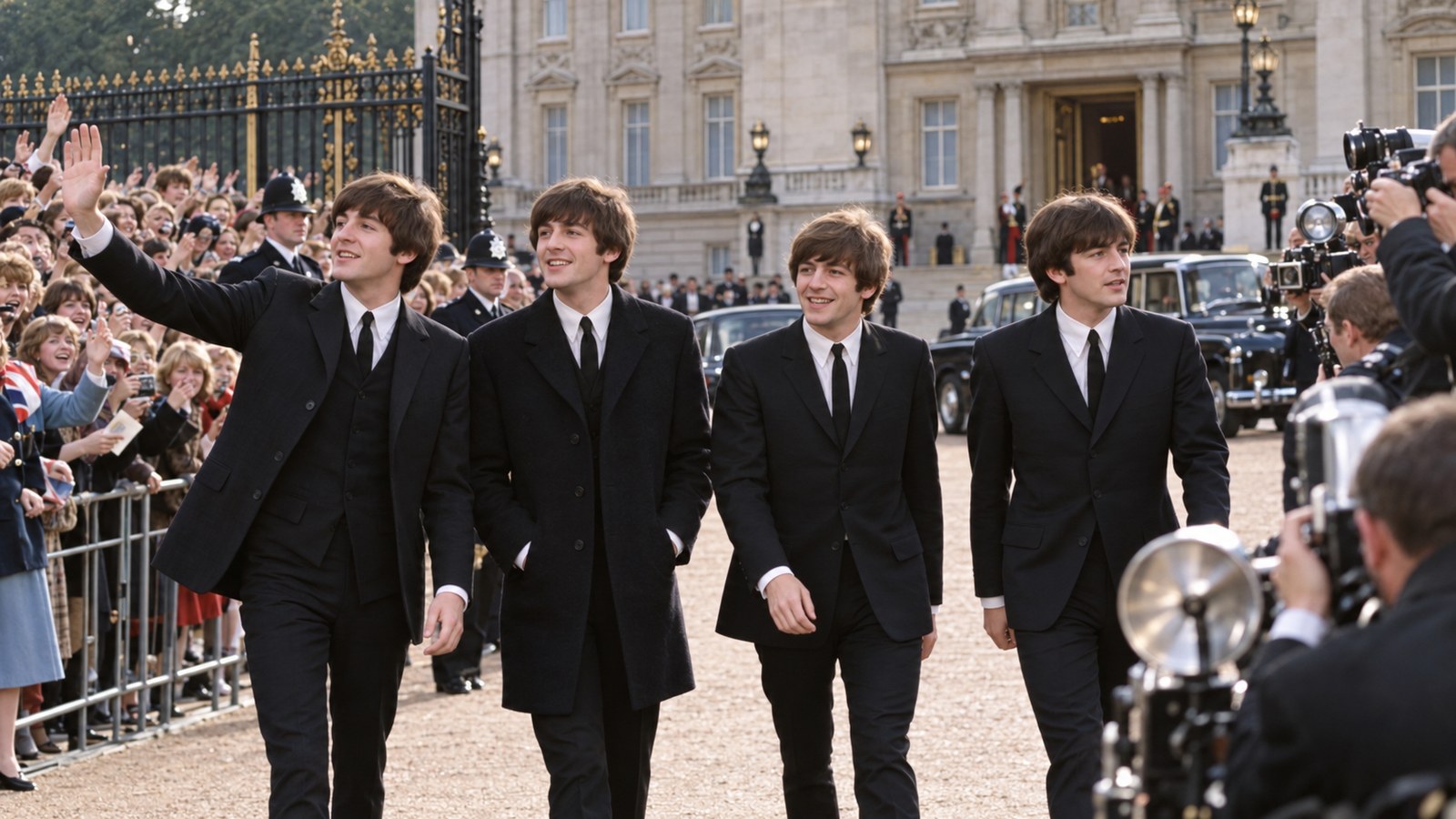
On October 26, 1965, the Beatles received their Member of the Order of the British Empire insignia at Buckingham Palace. John Lennon, Paul McCartney, George Harrison and Ringo Starr arrived in dark suits as crowds gathered outside the palace. Queen Elizabeth II presented the insignia during an investiture that placed four pop musicians inside a traditional state ceremony. Prime Minister Harold Wilson had recommended the awards after the band’s international success brought extraordinary attention and export income to Britain. The announcement prompted some previous recipients to protest what they saw as a lowered standard. The date captures the event before later reputation made its consequences look inevitable, when audiences encountered a new release, performance or institution with only the expectations available at the time.
The honor showed how rapidly youth entertainment had moved from supposed fad to national asset. It also exposed disagreement about class, culture and whether commercial popular music deserved recognition associated with military and civic service. Popular culture is never made by a famous name alone. Writers, performers, producers, technicians, broadcasters, retailers, venues and audiences shape what becomes visible and what survives. Their collaboration also determines which experiments reach the public and which disappear before they can build momentum. Looking at those conditions turns an anniversary from a list entry into a record of choices, limits and competing interests.
The ceremony generated intense coverage, and the band treated the day with a mixture of pride and humor. Lennon returned his medal in 1969 as a political protest, giving the object another public meaning. That afterlife matters because influence does not move in a straight line. Reruns, reissues, new technology, criticism and community memory can change the meaning of a work long after its first appearance. Durable pop history therefore holds creative achievement beside questions of labor, access, power and representation.
The investiture remains a vivid collision between pop modernity and inherited ritual. The palace did not make the Beatles culturally important; their presence showed that official Britain could no longer ignore a change already made by audiences. Returning to this October date means separating what participants knew then from what later audiences added. Recordings, photographs, broadcasts and recollections keep the moment active, but they also select and reshape it. That distinction protects against hindsight: a chart position, premiere, publication, concert or opening may become a neat milestone later, but the people present still faced uncertainty. Reading the moment in both directions—through its original conditions and its accumulated meanings—keeps celebration from replacing history. The distance between the immediate event and its continuing interpretation is what makes this episode worth revisiting.
The Beatles collected their MBEs on October 26, 1965.
On October 26, 1965, the Beatles received their Member of the Order of the British Empire insignia at Buckingham Palace. John Lennon, Paul McCartney, George Harrison and Ringo Starr arrived in dark suits as crowds gathered outside the palace.
The ceremony took place at Buckingham Palace.
The honor showed how rapidly youth entertainment had moved from supposed fad to national asset. It also exposed disagreement about class, culture and whether commercial popular music deserved recognition associated with military and civic service.
John Lennon returned his insignia in 1969.
The ceremony generated intense coverage, and the band treated the day with a mixture of pride and humor. Lennon returned his medal in 1969 as a political protest, giving the object another public meaning.
Explore more of "On This Day ..."
Discover more events from the same date across news, politics, technology, sports, and other fields. Each link highlights significant moments that shaped history on different fronts.