

On This Day in Pop: November 13, 1940
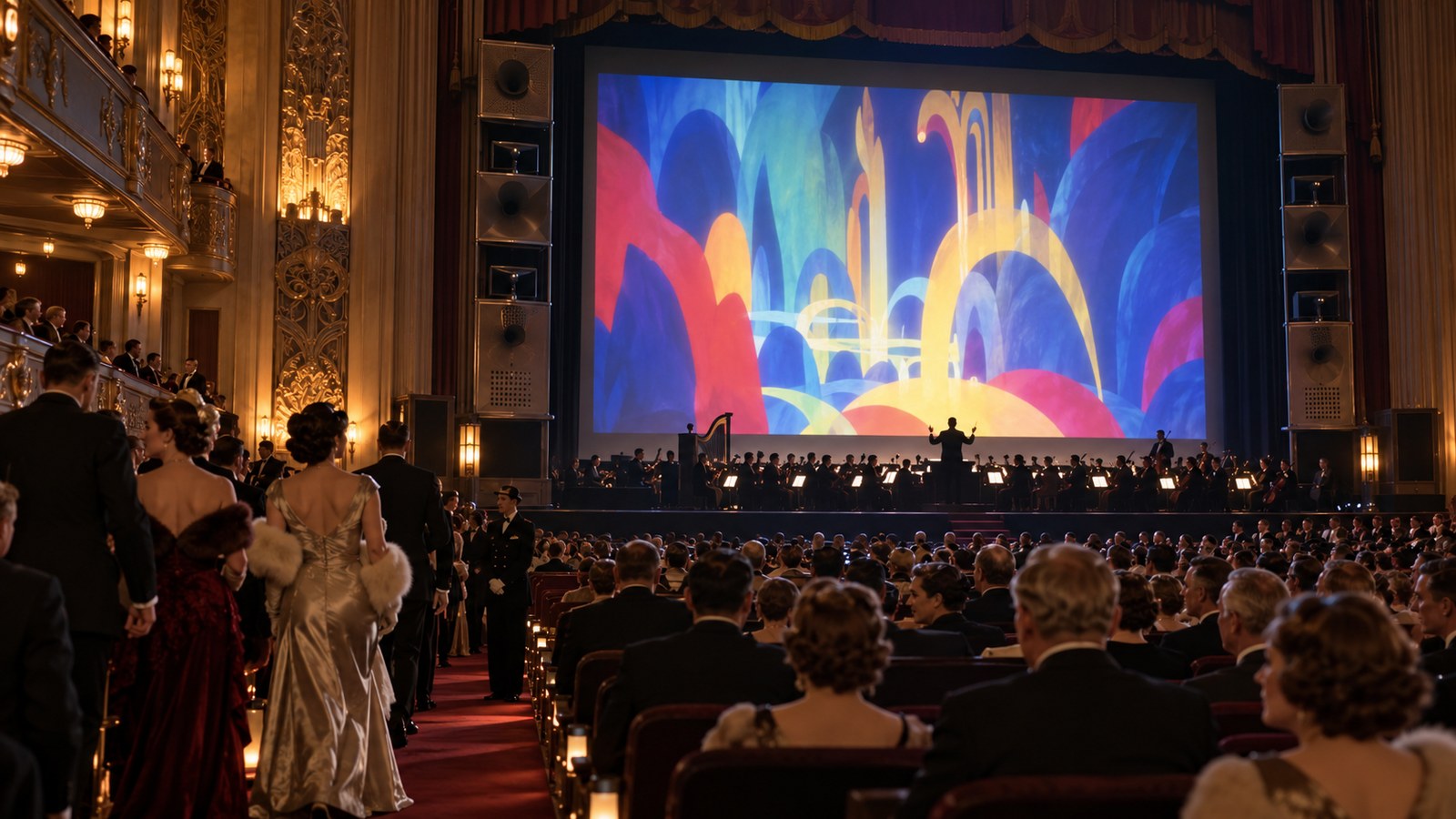
On November 13, 1940, Walt Disney’s Fantasia premiered at the Broadway Theatre in New York. The roadshow presentation joined animation to performances by Leopold Stokowski and the Philadelphia Orchestra, with Deems Taylor introducing eight musical sequences. Disney’s Fantasound installation placed channels around the auditorium for an early stereophonic experience. The project grew from a planned revival of The Sorcerer’s Apprentice and expanded into an experiment in visualizing concert music. Hundreds of artists, technicians and musicians worked across radically different styles and technical problems. The date captures the event before later reputation made its consequences look inevitable, when audiences encountered a new release, performance or institution with only the expectations available at the time.
The premiere asked movie audiences to experience a feature as a curated concert rather than a conventional narrative. Its ambition also included dated racial imagery in one sequence that the studio later removed, a reminder that formal innovation does not erase cultural harm. Popular culture is never made by a famous name alone. Writers, performers, producers, technicians, broadcasters, retailers, venues and audiences shape what becomes visible and what survives. Their collaboration also determines which experiments reach the public and which disappear before they can build momentum. Looking at those conditions turns an anniversary from a list entry into a record of choices, limits and competing interests.
The expensive sound system limited the original roadshow, and wartime conditions weakened foreign returns. Reissues gradually built the film’s reputation, while Fantasia 2000 renewed the idea of an evolving animated concert. That afterlife matters because influence does not move in a straight line. Reruns, reissues, new technology, criticism and community memory can change the meaning of a work long after its first appearance. Durable pop history therefore holds creative achievement beside questions of labor, access, power and representation.
The first night remains a benchmark for collaboration between music, sound engineering and animation. Its strongest passages do not illustrate scores literally; they create new visual structures that invite audiences to hear familiar works differently. Returning to this November date means separating what participants knew then from what later audiences added. Recordings, photographs, broadcasts and recollections keep the moment active, but they also select and reshape it. That distinction protects against hindsight: a chart position, premiere, publication, concert or opening may become a neat milestone later, but the people present still faced uncertainty. Reading the moment in both directions—through its original conditions and its accumulated meanings—keeps celebration from replacing history. The distance between the immediate event and its continuing interpretation is what makes this episode worth revisiting.
Fantasia premiered on November 13, 1940.
On November 13, 1940, Walt Disney's Fantasia premiered at the Broadway Theatre in New York. The roadshow presentation joined animation to performances by Leopold Stokowski and the Philadelphia Orchestra, with Deems Taylor introducing eight musical sequences.
The Broadway Theatre hosted the premiere.
The premiere asked movie audiences to experience a feature as a curated concert rather than a conventional narrative. Its ambition also included dated racial imagery in one sequence that the studio later removed, a reminder that formal innovation does not erase cultural harm.
Fantasound provided an early multichannel presentation.
The expensive sound system limited the original roadshow, and wartime conditions weakened foreign returns. Reissues gradually built the film's reputation, while Fantasia 2000 renewed the idea of an evolving animated concert.
Explore more of "On This Day ..."
Discover more events from the same date across news, politics, technology, sports, and other fields. Each link highlights significant moments that shaped history on different fronts.