

On This Day in Pop: December 28, 1895
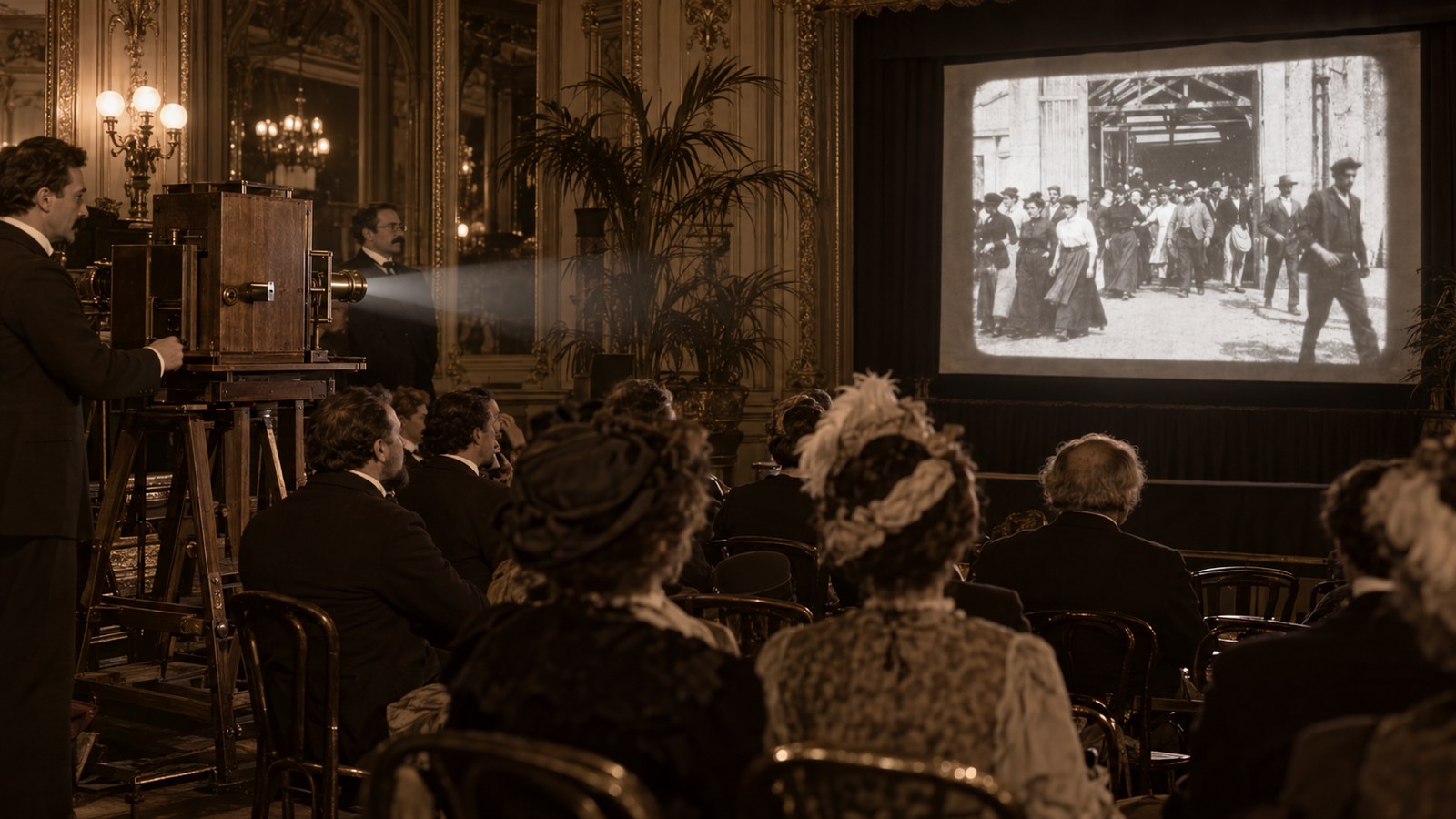
On December 28, 1895, the Lumière brothers presented a paid public program of projected motion pictures in Paris. A small audience in the Salon Indien du Grand Café watched ten short films made with the Cinématographe, including workers leaving the Lumière factory. Moving-image devices already existed, but the combination of portable camera, projector and group exhibition offered a practical social model for cinema. The date captures the event before later reputation made its consequences look inevitable, when audiences encountered a new release, performance or institution with only the expectations available at the time.
What happened that day depended on more than the famous names now attached to it. Writers, performers, producers, designers, technicians, venues, broadcasters, distributors and audiences all shaped what became visible and what survived. Their decisions affected tone, access, presentation and the practical chance that an experiment could reach the public. Publicity and reviews then added another layer, translating specialized work into expectations that ordinary people carried into a theater, shop, concert hall or living room. Those expectations could help a work travel, narrow the way it was understood or leave important contributors outside the story. Looking at those conditions turns an anniversary from a list entry into a record of collaboration, limits and competing interests.
Lumière operators traveled internationally to screen and record local scenes, while rival inventors and exhibitors rapidly expanded the new medium. That afterlife matters because influence does not move in a straight line. Reruns, reissues, new technology, criticism and community memory can change the meaning of a work long after its first appearance. Durable pop history therefore holds creative achievement beside questions of labor, access, power and representation.
The program matters less as a single invention than as a public arrangement: strangers sat together in darkness and discovered that ordinary movement could become an attraction. Returning to this December date means separating what participants knew then from what later audiences added. Recordings, photographs, broadcasts and recollections keep the moment active, but they also select and reshape it. Anniversaries often compress the people, labor and disagreement behind a familiar image, so revisiting the evidence helps restore texture without pretending every uncertainty can be resolved. That distinction protects against hindsight: a chart position, premiere, publication, concert or opening may become a neat milestone later, but the people present still faced uncertainty. Reading the moment in both directions—through its original conditions and its accumulated meanings—keeps celebration from replacing history. The distance between the immediate event and its continuing interpretation is what makes this episode worth revisiting.
The paid Paris screening was December 28, 1895.
On December 28, 1895, the Lumière brothers presented a paid public program of projected motion pictures in Paris. A small audience in the Salon Indien du Grand Café watched ten short films made with the Cinématographe, including workers leaving the Lumière factory.
It took place at the Grand Café.
What happened that day depended on more than the famous names now attached to it. Writers, performers, producers, designers, technicians, venues, broadcasters, distributors and audiences all shaped what became visible and what survived.
The Cinématographe served as camera, printer and projector.
Lumière operators traveled internationally to screen and record local scenes, while rival inventors and exhibitors rapidly expanded the new medium. That afterlife matters because influence does not move in a straight line.
Explore more of "On This Day ..."
Discover more events from the same date across news, politics, technology, sports, and other fields. Each link highlights significant moments that shaped history on different fronts.