

On This Day in Science: January 28, 1986
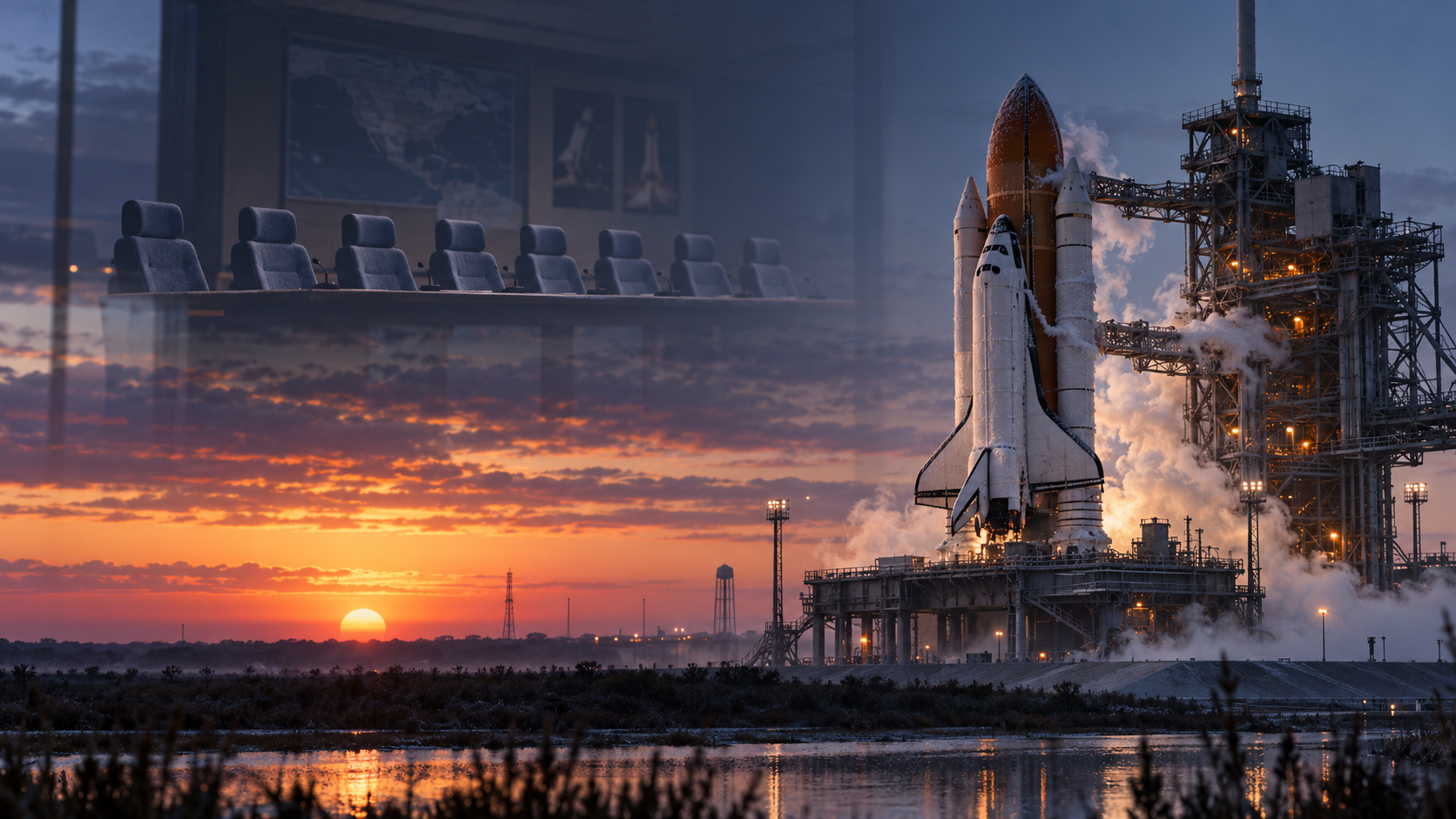
On January 28, 1986, space shuttle Challenger lifted off from Kennedy Space Center on mission STS-51L. Seventy-three seconds later, the vehicle broke apart, killing Francis Scobee, Michael Smith, Ellison Onizuka, Judith Resnik, Ronald McNair, Gregory Jarvis, and Christa McAuliffe. The launch took place after an unusually cold night, with ice visible around the pad. Millions watched because McAuliffe, a teacher selected for NASA’s Teacher in Space project, was expected to conduct lessons from orbit. The public setting made the loss immediate, but its causes had developed long before launch morning.
The presidential Rogers Commission found that sealing O-rings in a joint of the right solid rocket booster did not respond properly in the cold. Hot gas escaped after liftoff, eroded the seals, and eventually produced a flame that damaged the external tank and its attachment. The shuttle stack then failed under aerodynamic loads. Engineers at contractor Morton Thiokol had warned about the effect of low temperature and initially recommended against launch. During management discussions, that recommendation was reversed. The accident therefore joined a technical vulnerability to flawed communication and decision-making.
NASA grounded the shuttle fleet for nearly three years. The solid rocket booster joints were redesigned, a new Office of Safety, Reliability, and Quality Assurance was created, launch decision processes changed, and crews received pressure suits and a limited escape system for some flight conditions. The Rogers Commission also criticized a culture in which schedule pressure and previous flights without catastrophe encouraged acceptance of known erosion. Repeated success had been mistaken for proof that the design was safe, even though the warning signs persisted.
Challenger returned to public memory as a lesson in both engineering and institutional ethics. The crew’s research plans ranged from satellite deployment to studies of Halley’s Comet, fluids, and education, but the mission never reached orbit. Remembering the seven people means resisting dramatic simplification and examining the chain that failed them. January 28 shows why evidence must travel clearly from specialists to decision-makers, why uncertainty cannot be converted into permission by pressure, and why organizations must treat near misses as information. The enduring scientific responsibility is not merely to investigate after disaster, but to create systems in which warnings can stop action beforehand. Teaching the case remains valuable because the hardware failure cannot be separated from the meetings, incentives, and communication paths around it. That systems view is applicable far beyond spaceflight wherever complex technology meets deadline pressure.
Cold-stiffened O-rings in the right solid rocket booster joint failed to seal, allowing hot gas to escape.
The resulting flame damaged the external tank and attachment, after which aerodynamic forces broke the vehicle apart.
Engineers had evidence that low temperature threatened joint performance and initially recommended delaying the launch.
Management pressure and weak communication reversed that recommendation, making the accident an organizational failure as well as a hardware failure.
NASA redesigned booster joints, revised safety oversight and launch decisions, and added protective equipment and limited escape options.
The deeper lesson is to act on near misses and uncertainty before repeated success normalizes a known hazard.
Explore more of "On This Day ..."
Discover more events from the same date across news, politics, technology, sports, and other fields. Each link highlights significant moments that shaped history on different fronts.