

On This Day in Science: February 23, 1941
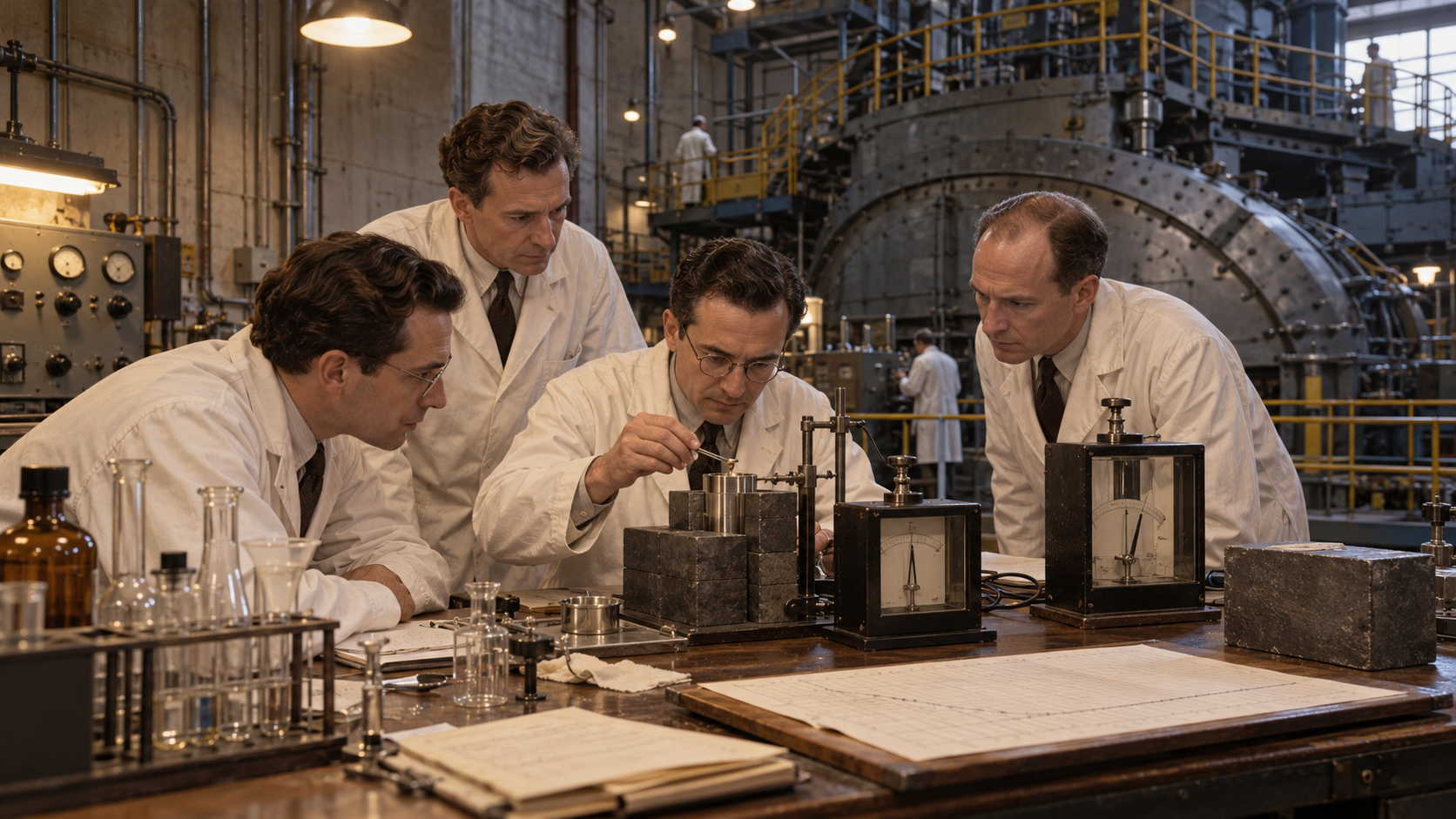
During the night of February 23–24, 1941, chemist Glenn Seaborg and colleagues at the University of California, Berkeley, chemically identified element 94, later named plutonium. A few months earlier, researchers had bombarded uranium with deuterons in the university’s 60-inch cyclotron and detected radioactive products. The crucial February experiment separated a tiny amount of the new element and showed that its chemical behavior differed from uranium and the recently identified neptunium. The work extended the periodic table beyond naturally familiar elements through nuclear reactions created in a laboratory.
The team included Seaborg, Joseph Kennedy, Arthur Wahl, and physicist Emilio Segrè. Their material began as uranium-238 that absorbed particles and passed through a sequence of radioactive transformations. Because the amount was far too small to see, identification depended on chemistry and radiation measurements. The researchers changed oxidation states, used carrier substances, and tested which compounds moved together through separation steps. A characteristic pattern of alpha decay and chemical behavior provided the evidence that element 94 had been isolated from its neighbors.
The new element’s most consequential isotope was plutonium-239, which could undergo fission after absorbing a neutron. That property made the research strategically important during World War II. The findings were kept secret, and plutonium production became a major part of the Manhattan Project, leading to reactors, large separation plants, and nuclear weapons. The same element later became a fuel and heat source in civilian reactors and deep-space missions. Its history therefore links fundamental nuclear chemistry to technologies carrying profound benefits, hazards, and political consequences.
Seaborg and his collaborators placed plutonium within a new actinide series, a reorganization that clarified the chemistry of heavy elements and eventually reshaped the printed periodic table. The element was named after Pluto, following uranium and neptunium in an astronomical sequence. The February identification mattered not because a dramatic sample appeared, but because careful experiments made an invisible product scientifically distinct. It also demonstrates that discovery and responsibility can arrive together. Knowing that a nucleus exists is a scientific achievement; deciding how societies produce, secure, use, and remember its material is a continuing human task. The anniversary also highlights the difference between a first result and a finished understanding. A successful observation can settle one question while opening several harder ones, and even a failed objective can return measurements that reshape later designs. Preserved data, specimens, photographs, and hardware allow new generations to revisit the work with better tools. Science advances through that continuity, where a specific date marks progress without pretending that inquiry stopped there.
The Berkeley team worked with quantities too small to see and relied on chemical separations and radioactive decay.
Different oxidation behavior distinguished element 94 from uranium and neptunium.
Uranium targets bombarded in the 60-inch cyclotron produced nuclei that transformed into plutonium.
Chemists then followed the new material through repeated reactions to establish its identity.
Plutonium-239's ability to undergo fission made the element central to wartime nuclear work.
Plutonium later served in reactors and spacecraft power systems while requiring extraordinary security and stewardship.
Explore more of "On This Day ..."
Discover more events from the same date across news, politics, technology, sports, and other fields. Each link highlights significant moments that shaped history on different fronts.