

On This Day in Science: May 30, 1971
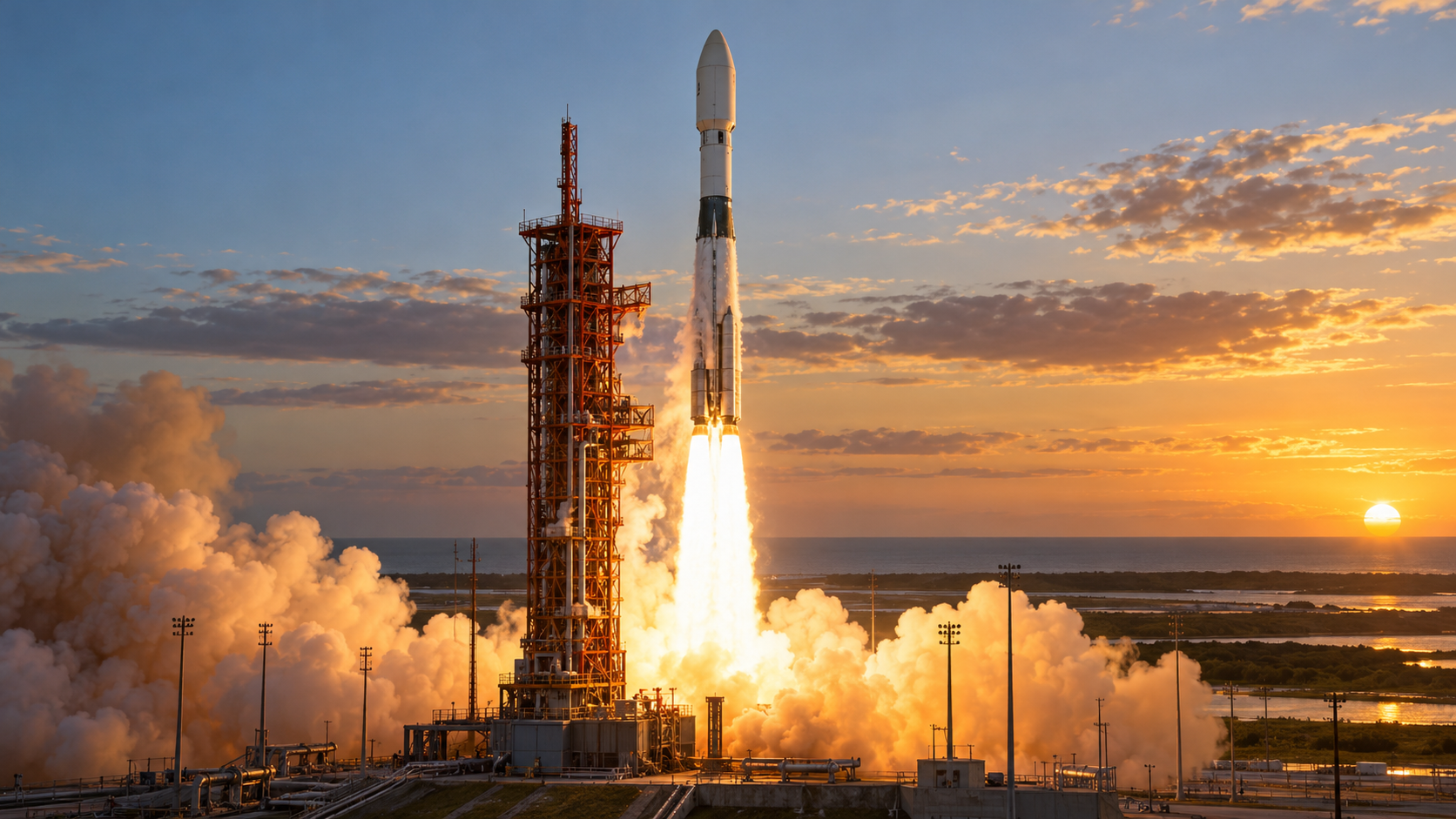
On May 30, 1971, NASA launched Mariner 9 from Cape Canaveral aboard an Atlas-Centaur rocket. Its identical partner, Mariner 8, had been lost during launch three weeks earlier, leaving Mariner 9 to carry the program’s principal orbital survey alone. The spacecraft was equipped with cameras, infrared and ultraviolet spectrometers, and a radiometer to study the Martian surface and atmosphere.
Mariner 9 reached Mars on November 14 and became the first spacecraft to enter orbit around another planet. A global dust storm hid almost the entire surface at arrival. Instead of exhausting its imaging plan on featureless haze, controllers delayed much of the photography and monitored the atmosphere as the dust settled.
When visibility improved, the orbiter revealed a planet far more geologically varied than the cratered landscapes seen by earlier flybys. Images showed immense volcanoes, the canyon system later named Valles Marineris, layered polar deposits, and channels suggesting ancient flowing water. Mariner 9 also photographed the small moons Phobos and Deimos.
The mission mapped about eighty-five percent of Mars and returned more than seven thousand images. Its launch began the transition from brief planetary encounters to sustained global observation, where patience and reprogramming could turn an apparent obstacle into atmospheric science. Seen across a longer timeline, scientific milestones are junctions rather than isolated beginnings. Earlier experiments, tools, and institutions made the work possible, while later teams tested limits and carried the result into new settings. What survives is a traceable chain of evidence, correction, and application that allows one moment to remain relevant as knowledge and technology continue to change. The anniversary highlights the difference between a first result and a finished understanding. A successful observation can settle one question while opening several harder ones, and even a failed objective can reshape later designs. Preserved data, specimens, photographs, and hardware allow new generations to revisit the work with better tools. Science advances through that continuity rather than stopping on a memorable date. Its calendar date is an entry point, not an endpoint. The people involved worked with the instruments, assumptions, and social conditions of their time, and later research has both extended and corrected their conclusions. Separating what was known that day from what became clear afterward protects the history from myth and shows how cumulative evidence turns an episode into lasting scientific knowledge. For science history, the event also shows how evidence moves from an observation or engineered test into a durable body of knowledge. Instruments supplied measurements, specialists debated interpretation, and later work refined what the first result could mean. Archives preserve the early record while new methods let researchers ask different questions of it. That continuing revision is the process through which a dated milestone remains scientifically useful.
Mariner 9 launched after its twin was lost to an upper-stage failure.
The surviving spacecraft inherited the core mapping and atmospheric objectives.
A global storm obscured Mars when the spacecraft arrived.
Controllers waited for visibility instead of spending the imaging plan on featureless haze.
Later images exposed giant volcanoes, canyons, channels, polar layers, and two moons.
Orbital coverage changed Mars from scattered flyby strips into a connected planetary landscape.
Explore more of "On This Day ..."
Discover more events from the same date across news, politics, technology, sports, and other fields. Each link highlights significant moments that shaped history on different fronts.