

On This Day in Science: July 30, 2020
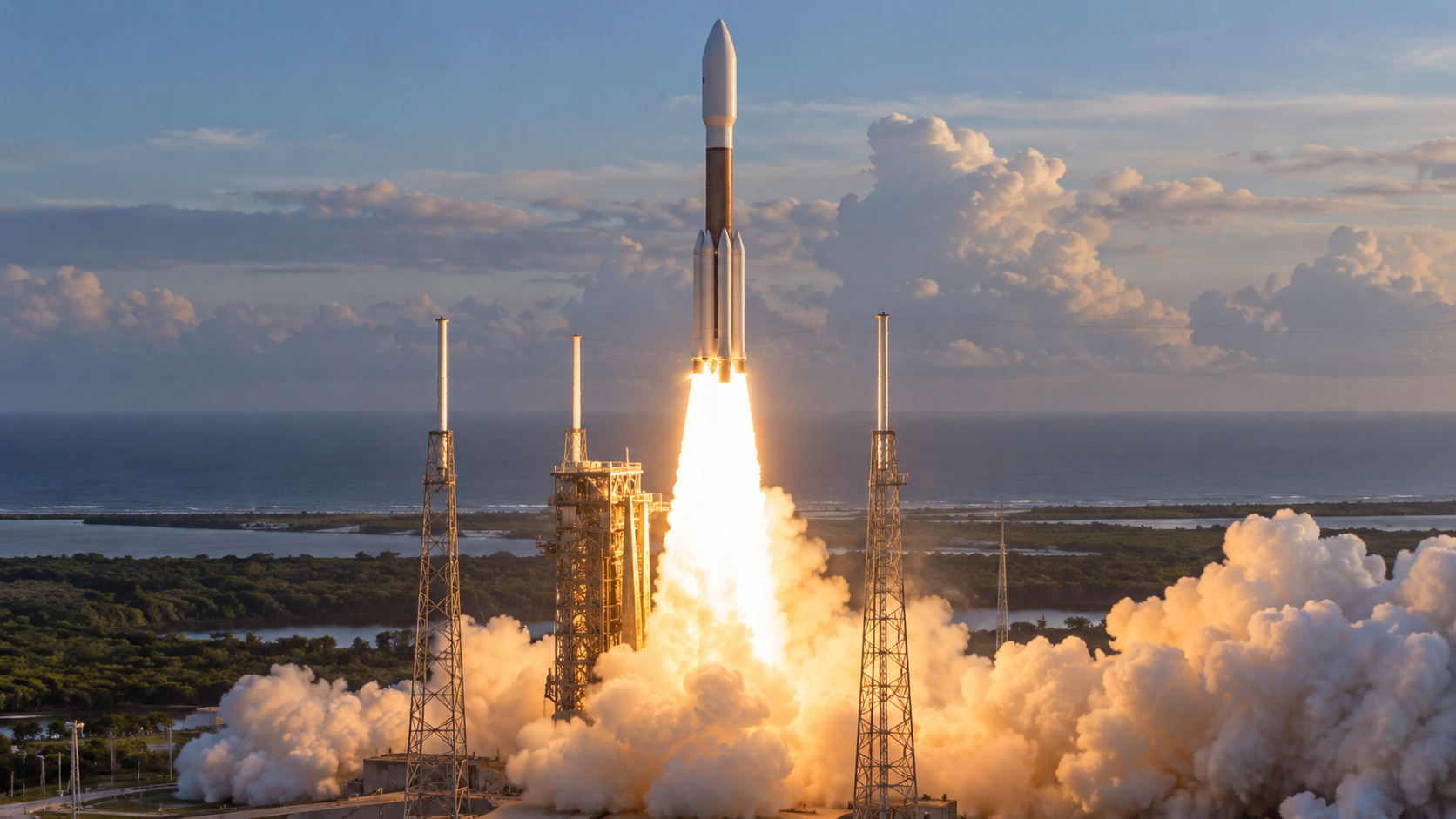
On July 30, 2020, an Atlas V rocket launched NASA’s Perseverance rover from Cape Canaveral. The Mars 2020 mission aimed for Jezero Crater, a basin that once held a lake and river delta. The payload also carried the small Ingenuity helicopter attached beneath the rover.
Perseverance was built to investigate the geology and past habitability of the site, search for signs of ancient microbial life, and collect carefully documented rock and soil cores for possible return by future missions. Its instruments include cameras, spectrometers, a weather station, ground-penetrating radar, and an experiment that produced oxygen from Martian carbon dioxide.
After nearly seven months in space, the spacecraft entered the atmosphere on February 18, 2021. A guided aeroshell, supersonic parachute, terrain-relative navigation, and rocket-powered sky crane delivered the rover to the surface. Ingenuity later completed the first powered, controlled flights on another planet and became an aerial scout.
The launch began a mission connecting robotic field geology with a longer sample-return strategy. Perseverance stores selected cores in sealed tubes rather than analyzing every question onboard. That approach treats Mars exploration as a sequence across missions, where context recorded by one rover can guide laboratories on Earth if samples are eventually retrieved. Seen across a longer timeline, scientific milestones are junctions rather than isolated beginnings. Earlier experiments, tools, and institutions made the work possible, while later teams tested limits and carried the result into new settings. What survives is a traceable chain of evidence, correction, and application that allows one moment to remain relevant as knowledge and technology continue to change. The anniversary highlights the difference between a first result and a finished understanding. A successful observation can settle one question while opening several harder ones, and even a failed objective can reshape later designs. Preserved data, specimens, photographs, and hardware allow new generations to revisit the work with better tools. Science advances through that continuity rather than stopping on a memorable date. Its calendar date is an entry point, not an endpoint. The people involved worked with the instruments, assumptions, and social conditions of their time, and later research has both extended and corrected their conclusions. Separating what was known that day from what became clear afterward protects the history from myth and shows how cumulative evidence turns an episode into lasting scientific knowledge. For science history, the event also shows how evidence moves from an observation or engineered test into a durable body of knowledge. Instruments supplied measurements, specialists debated interpretation, and later work refined what the first result could mean. Archives preserve the early record while new methods let researchers ask different questions of it. That continuing revision is the process through which a dated milestone remains scientifically useful.
Jezero Crater preserves sediments deposited where a river entered a lake.
Such environments can concentrate and preserve chemical evidence of past habitability.
The rover drills cores and seals them in clean tubes.
A later campaign would be needed to transport selected material to Earth.
Ingenuity traveled folded under Perseverance's chassis.
Its flights tested powered aviation in the thin Martian atmosphere.
Explore more of "On This Day ..."
Discover more events from the same date across news, politics, technology, sports, and other fields. Each link highlights significant moments that shaped history on different fronts.