

On This Day in Science: December 1, 1959
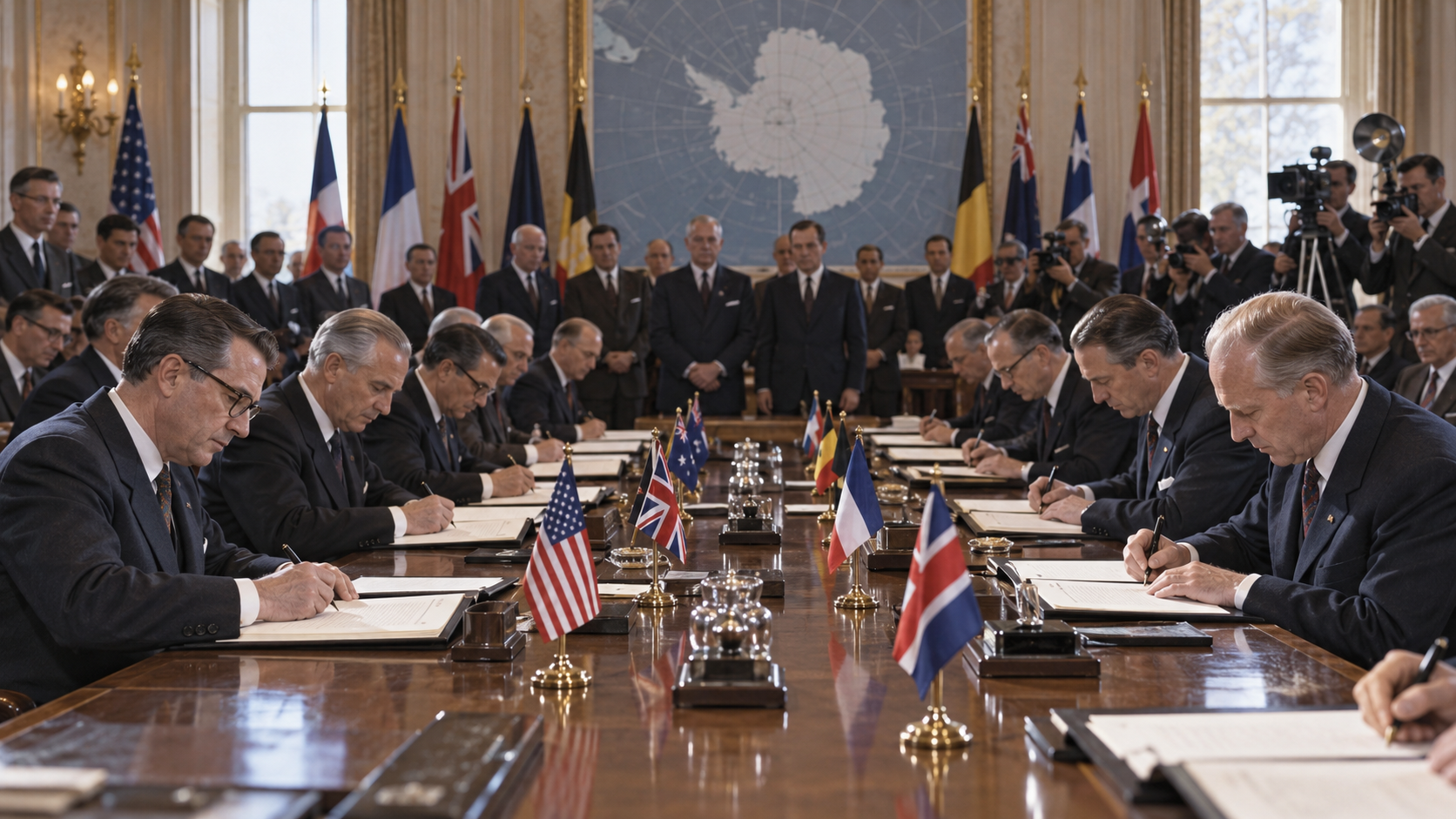
On December 1, 1959, representatives of twelve nations signed the Antarctic Treaty in Washington, D.C. The agreement grew from cooperation during the International Geophysical Year of 1957–1958.
The treaty prohibited military activity, nuclear explosions, and radioactive-waste disposal in Antarctica. It protected freedom of scientific investigation and required participating nations to share plans and results.
Inspection provisions allowed observers to visit stations, ships, and equipment, creating an unusual system of transparency during the Cold War. Territorial claims were neither accepted nor extinguished.
The treaty entered into force in 1961 and became the foundation of the wider Antarctic Treaty System, which later added environmental protections and rules for managing human activity. The surviving record remains scientifically valuable. The anniversary also shows why scientific milestones depend on records that later researchers can inspect. Instruments, notebooks, images, specimens, and engineering reports preserve what was measured, what remained uncertain, and how conclusions changed when better methods became available. Placed in a longer timeline, the event was a junction rather than a finished answer. Earlier discoveries and technical work made it possible, while later teams tested its limits and applied the result in new settings. That sequence of evidence and revision turns one date into a durable part of scientific history. The episode separates a first demonstration from mature understanding. A successful observation or flight can settle one question while exposing harder problems in reliability, interpretation, safety, and scale. Preserved data let later generations revisit the achievement without confusing what was known then with what became clear afterward. Its calendar date is an entry point rather than an endpoint. The people involved worked with the tools, assumptions, institutions, and social conditions of their time. Later research extended some conclusions and corrected others, showing how science advances by keeping evidence open to comparison. What makes the event important is not only priority, but the ability of others to check, repeat, compare, or build on the result. That process can reveal limitations hidden by the excitement of a first success and explains why careful archives and transparent measurements matter. Modern interpretations benefit from evidence the original participants did not possess. New instruments and analytical methods recover additional detail, while historical scholarship clarifies questions of credit, context, and consequence. Holding the original achievement and later corrections together produces the most accurate account. The milestone also became part of a continuing research program rather than an isolated success. Later investigators refined the measurements, compared independent evidence, and adapted the underlying methods to different questions. That long afterlife is essential to understanding both the achievement and the limits of what one date can represent.
The International Geophysical Year showed that rival nations could operate research stations cooperatively.
The treaty turned that temporary collaboration into a durable legal framework.
Military measures and nuclear tests were barred south of sixty degrees latitude.
Personnel and equipment could still support peaceful research and logistics.
Later agreements addressed seals, marine resources, and environmental protection.
Consensus meetings continue adapting the framework to tourism, conservation, and new research.
Explore more of "On This Day ..."
Discover more events from the same date across news, politics, technology, sports, and other fields. Each link highlights significant moments that shaped history on different fronts.