

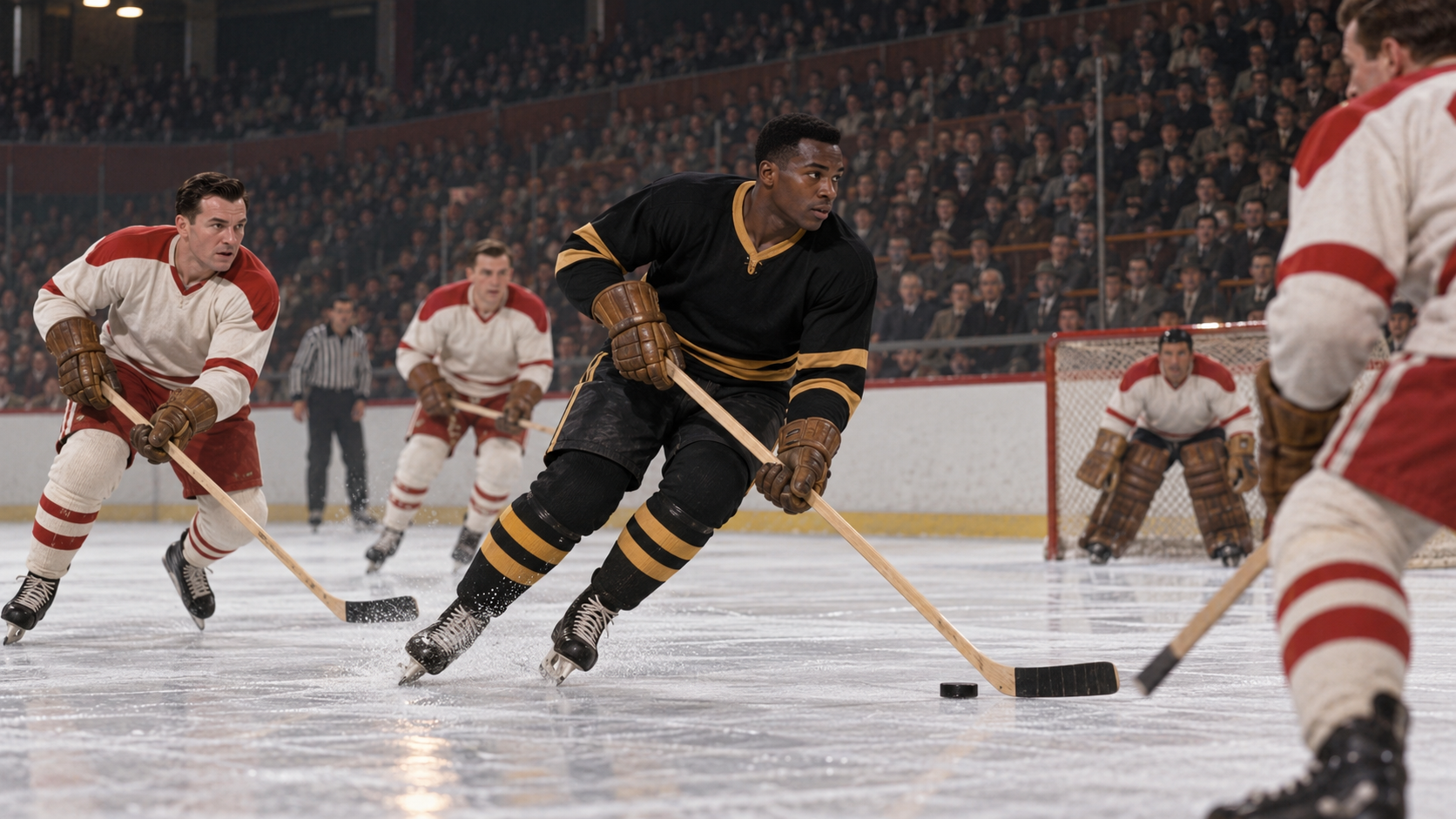
On This Day in Sports: January 18, 1958
On January 18, 1958, Willie O’Ree skated for the Boston Bruins against the Montreal Canadiens and became the first Black player in National Hockey League history. The game took place at the Montreal Forum, one of hockey’s most intimidating stages, and O’Ree joined a Bruins lineup chasing an established Canadiens powerhouse. He did not record a point that night, but his presence changed the league forever. More than a decade after Jackie Robinson integrated Major League Baseball, professional hockey finally had its own breakthrough at the highest level.
O’Ree’s route to that moment demanded remarkable persistence. Raised in Fredericton, New Brunswick, he had played through Canada’s junior and minor-league systems while facing racism that ranged from taunts to physical abuse. He also carried a secret that made his accomplishment even more extraordinary: a puck injury had left him blind in his right eye. NHL rules barred players who were blind in one eye, so O’Ree learned to compensate, kept the injury private and adjusted his skating and awareness to protect his vulnerable side.
The Bruins used O’Ree in two games during the 1957–58 season, then brought him back for a longer stay in 1960–61. Across 45 NHL games he totaled four goals and ten assists, but most of his professional career unfolded in the minor leagues, where he became a productive scorer and fan favorite. The small number of NHL appearances did not diminish the barrier he broke. For young Black athletes who had rarely seen themselves represented in major professional hockey, O’Ree proved that the league’s color line was not permanent.
His influence grew even larger after his playing days. Beginning in 1998, O’Ree served as an NHL diversity ambassador, introducing the sport to children in communities that hockey had often overlooked. He was inducted into the Hockey Hall of Fame as a builder in 2018, and the Bruins later retired his number 22. The anniversary of his debut now represents both a historic first and an unfinished mission: expanding access, confronting discrimination and making the rink a place where talent matters more than background. O’Ree’s story is especially powerful because recognition arrived gradually. For many years his achievement received far less attention than other integration milestones in North American sport. His later work gave the anniversary new meaning, connecting the courage required in 1958 with practical efforts to provide equipment, instruction and encouragement to the next generation of players.
O’Ree made his NHL debut at the Montreal Forum, skating for Boston in a 3–0 victory over the Canadiens.
He had lost most of the sight in his right eye after being struck by a puck, yet adapted his game well enough to reach hockey’s top league.
The forward played 45 NHL games over parts of two seasons and recorded four goals and ten assists.
O’Ree endured racial abuse throughout his career, but refused to let it drive him away from the sport.
As the NHL’s diversity ambassador, he spent decades helping young people from underrepresented communities discover hockey.
His Hall of Fame induction and the retirement of number 22 in Boston recognized an impact that extended far beyond his playing statistics.
Explore more "On This Day in Sports"
Discover more landmark games, records, championships, and turning points from sports history. Each day revisits the athletes, teams, and moments that shaped competition and culture.