

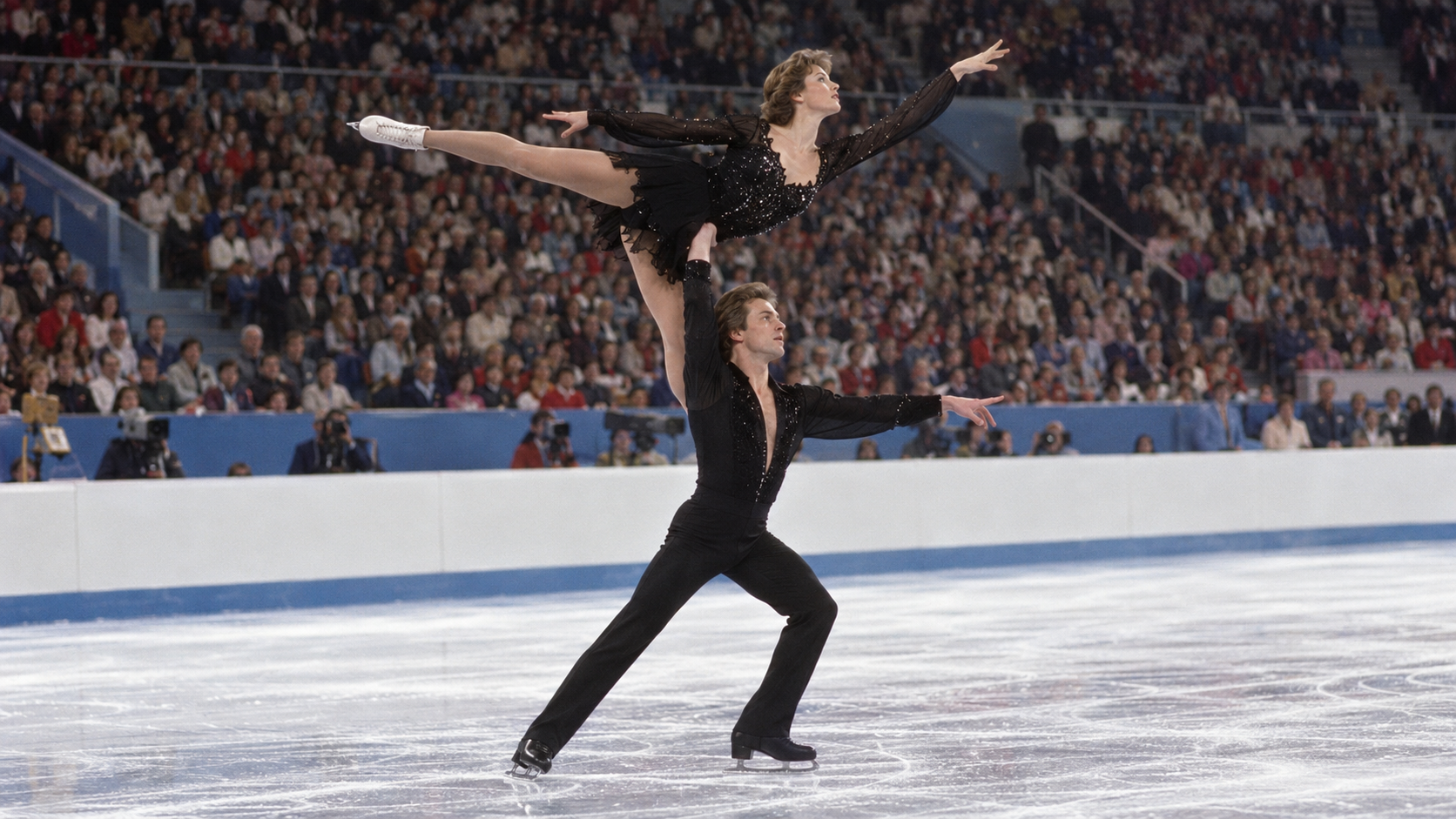
On This Day in Sports: February 14, 1984
On February 14, 1984, Jayne Torvill and Christopher Dean won Olympic ice-dance gold in Sarajevo with a free dance set to Maurice Ravel’s Boléro. The British pair began kneeling together on the ice, then unfolded through a continuous sequence of synchronized edges, lifts and turns. Their performance blended athletic control with a dramatic narrative in a way that made the compulsory patterns and technical structure of ice dance feel like theater.
The music created a practical problem because Boléro ran longer than the permitted free-dance time. Torvill and Dean spent the opening seconds moving on their knees before their skates began traveling across the ice, allowing the official timing to start later. From there, the choreography built with the music’s repeated rhythm until the pair collapsed together in the final pose.
The judges rewarded the performance with unanimous first-place marks and a historic collection of perfect 6.0 scores, including top artistic-impression marks from every judge. The gold completed an undefeated Olympic season and confirmed the pair as the dominant ice dancers of their era. Millions watched on television, and the routine reached an audience far beyond traditional figure-skating followers.
Boléro changed expectations for what an ice-dance program could communicate. Later scoring systems moved beyond the 6.0 scale, and technical requirements continued to evolve, but the performance remained a reference point for musical interpretation and storytelling. Torvill and Dean returned to Olympic competition a decade later, yet their Sarajevo routine endured as the work most closely associated with their names and with Valentine’s Day in sports history.
The routine used Ravel’s Boléro and built its movement around the music’s repeating rhythm.
The pair began on their knees so the opening seconds would not count against the skating time limit.
Every judge awarded the highest artistic-impression mark of 6.0.
Torvill and Dean received unanimous first-place votes and won the gold medal.
The performance drew a vast television audience beyond figure skating’s usual following.
Boléro remains an international benchmark for ice-dance artistry and musical interpretation.
Explore more "On This Day in Sports"
Discover more landmark games, records, championships, and turning points from sports history. Each day revisits the athletes, teams, and moments that shaped competition and culture.