

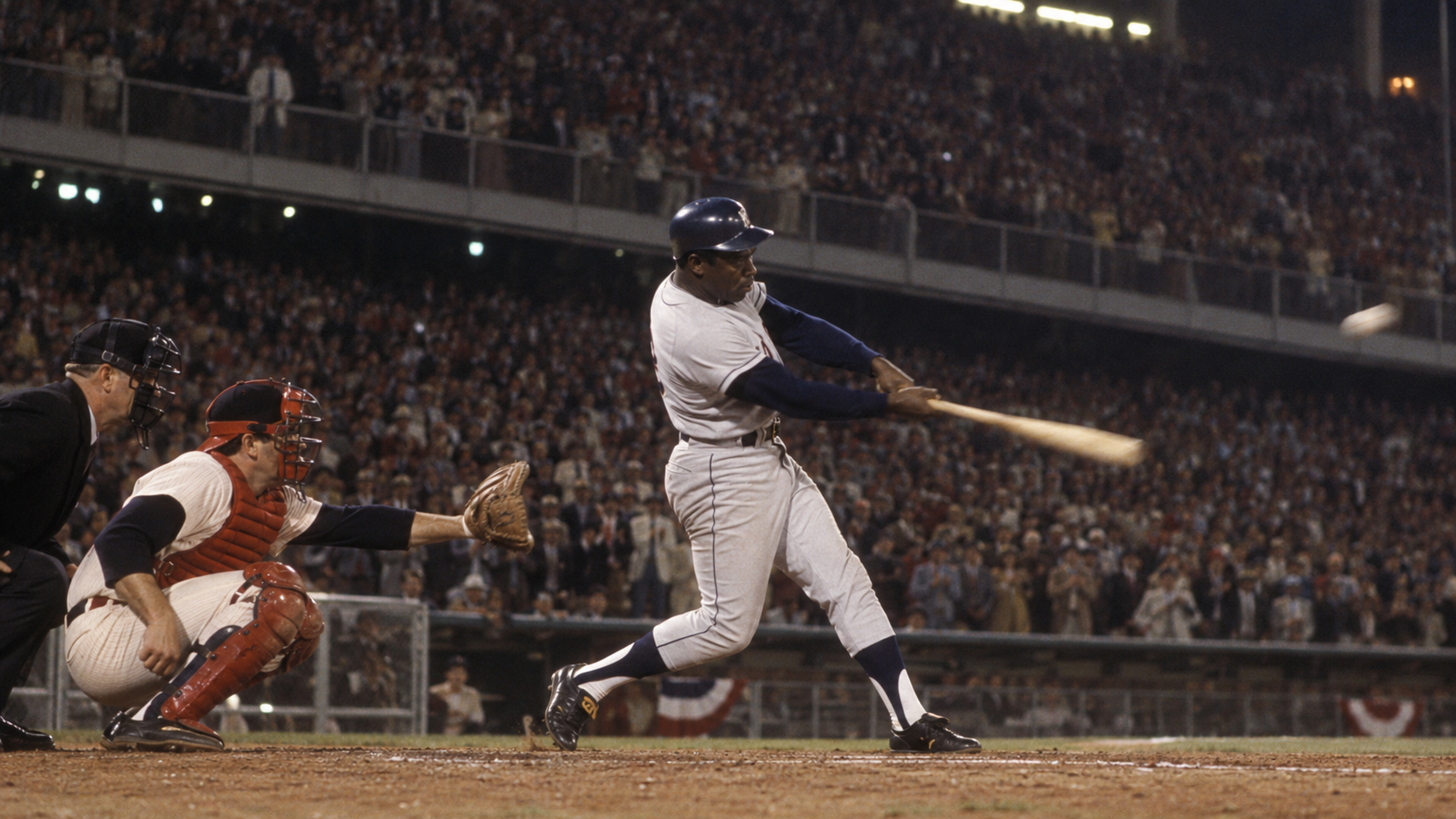
On This Day in Sports: April 8, 1974
On April 8, 1974, Hank Aaron drove a pitch from Los Angeles left-hander Al Downing over the left-center-field wall in Atlanta. The fourth-inning swing was the 715th home run of Aaron’s major-league career, moving him past Babe Ruth and giving baseball a new all-time home run leader. A stadium-record crowd of 53,775 erupted as the ball disappeared.
Aaron’s path around the bases became one of sport’s defining images. Two young fans briefly joined him between second and third, teammates waited at home plate, and his mother embraced him when he reached the celebration. Broadcasters allowed the sound of the crowd to carry the moment. Fireworks followed, then an on-field ceremony interrupted the game for several minutes.
The joy existed beside a harsher story. Aaron had received racist abuse and death threats throughout the chase, particularly as he approached a record associated with one of America’s most mythologized players. He endured that pressure while continuing to perform at age forty. The record therefore became a statement about persistence, dignity and belonging as much as power hitting.
Aaron finished his career with 755 home runs and remained baseball’s recognized career leader for more than three decades. No. 715 endures because it fused a precise athletic act with national meaning. One compact swing ended a 39-year reign, rewarded two decades of consistency and placed Aaron permanently at the center of American sports history.
Aaron hit No. 715 off Al Downing.
The home run came in the fourth inning.
A stadium-record crowd of 53,775 attended.
The ball cleared the left-center-field wall.
Aaron passed Babe Ruth’s total of 714.
He finished his career with 755 home runs.
Explore more "On This Day in Sports"
Discover more landmark games, records, championships, and turning points from sports history. Each day revisits the athletes, teams, and moments that shaped competition and culture.