

On This Day in Sports: April 28, 1967
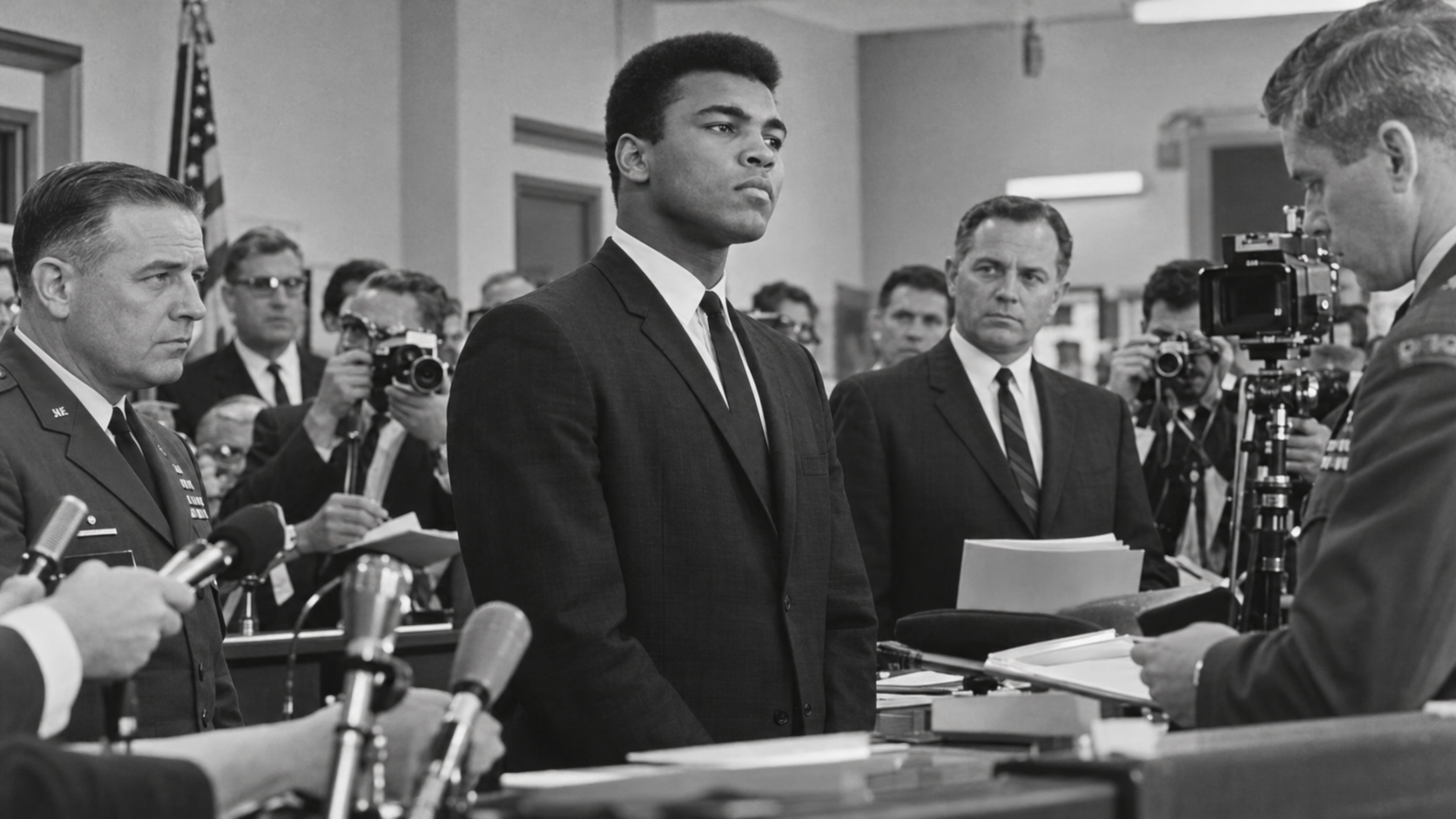
On April 28, 1967, heavyweight champion Muhammad Ali refused induction into the United States Army in Houston. When his name was called, he did not step forward. Ali maintained that his religious beliefs made him a conscientious objector to war. The decision immediately placed one of sport’s most visible champions in direct conflict with the government during the Vietnam War.
Authorities arrested Ali, and boxing commissions moved to suspend his license and strip his title. In June he was convicted of draft evasion, sentenced to five years in prison and fined $10,000. He remained free while appealing, but he was effectively barred from boxing for more than three years—prime competitive seasons for a 25-year-old undefeated champion.
Public reaction was harsh, especially before opposition to the war became widespread. Ali spoke on college campuses and defended his position, transforming his athletic fame into a platform for religious freedom, racial justice and political dissent. His refusal cost him money and acclaim at the moment he could have maximized both, giving the stance lasting moral weight.
Ali returned to boxing in 1970, and the Supreme Court unanimously overturned his conviction in 1971. He later regained the heavyweight championship and became one of the world’s most recognized athletes. The induction-center refusal remains essential to that legacy because it showed that his courage was not limited to the ring—and that conviction could require accepting enormous personal loss.
Ali refused induction in Houston.
He was 25 and the undefeated heavyweight champion.
His boxing license and title were taken away.
A jury convicted him of draft evasion.
He lost more than three years of his prime.
The Supreme Court overturned his conviction in 1971.
Explore more "On This Day in Sports"
Discover more landmark games, records, championships, and turning points from sports history. Each day revisits the athletes, teams, and moments that shaped competition and culture.