

On This Day in Sports: May 11, 1997
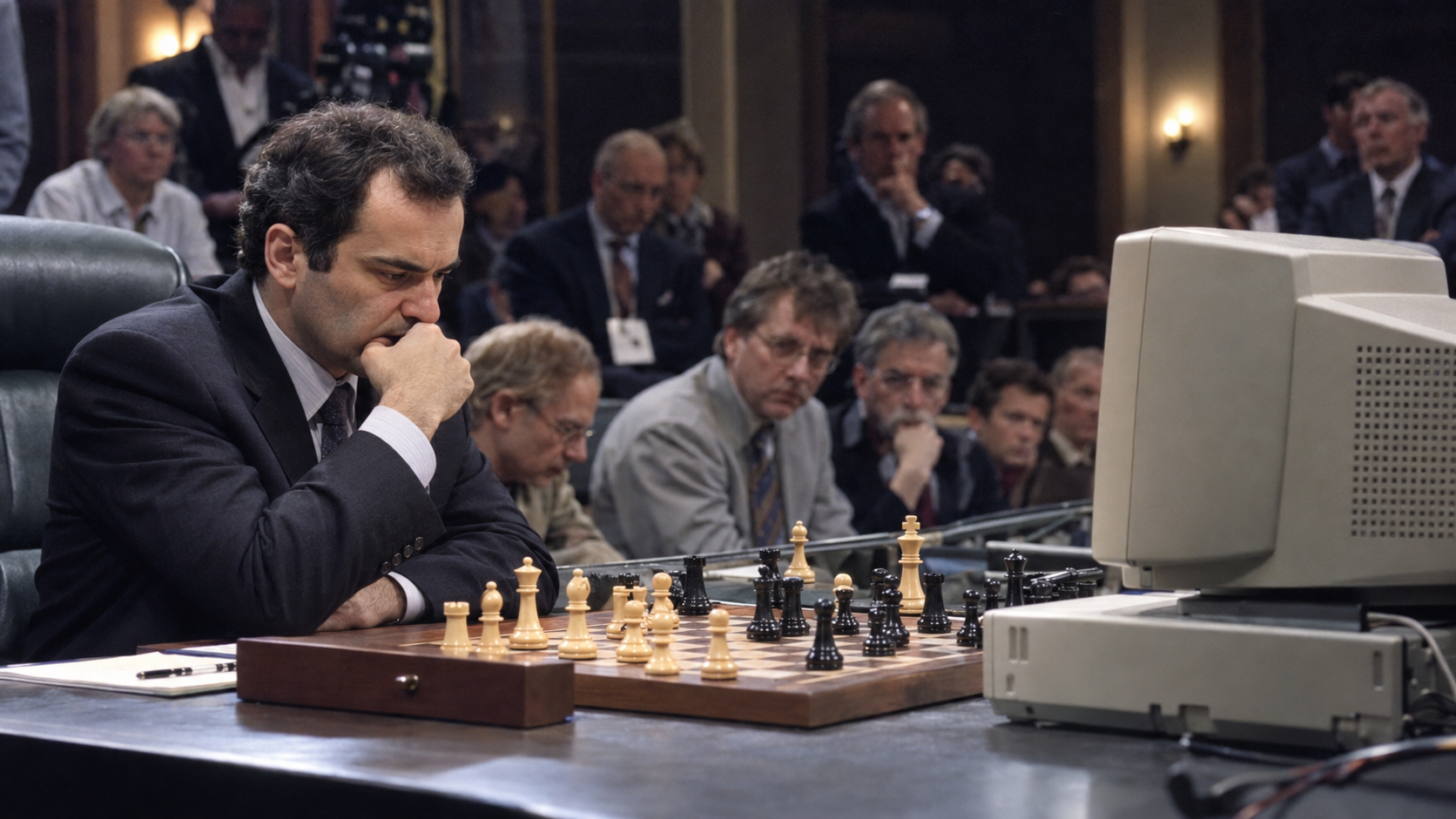
On May 11, 1997, IBM’s Deep Blue defeated Garry Kasparov in the sixth and final game of their rematch in New York, winning the match 3½-2½. It was the first time a computer had beaten a reigning world chess champion in a match conducted under standard tournament conditions. Kasparov resigned after only nineteen moves, ending a confrontation watched far beyond the traditional chess audience. The public record fixes the central details with unusual clarity: Deep Blue won the six-game match 3½-2½. The final game lasted 19 moves. Together, those facts explain why May 11, 1997 stands apart from the ordinary flow of a season and deserves to be remembered as a distinct historical moment.
The decisive game turned when Kasparov chose a risky line of the Caro-Kann Defense and allowed a knight sacrifice that exposed his king. Deep Blue’s preparation recognized the position and applied immediate pressure. Within less than an hour, the champion saw no workable defense. His early resignation contrasted sharply with the immense computing effort behind the machine, which could examine roughly 200 million positions each second. Two further details help reconstruct how the achievement unfolded: The rematch was held in New York. Kasparov had beaten Deep Blue in 1996. They move the story beyond a headline by showing the pressure, setting and competitive choices that shaped the decisive action in real time.
Kasparov had defeated an earlier version of Deep Blue in 1996, even after losing the opening game. IBM’s team then rebuilt both hardware and chess preparation for the rematch. Grandmaster consultants helped shape openings while specialized processors accelerated calculation. The victory therefore came not from an autonomous intelligence alone, but from a collaboration among engineers, chess experts and a machine designed for a narrow competitive task. The wider context is equally important. The machine evaluated about 200 million positions per second. It was the first match loss by a reigning world champion to a computer. Those points connect one day’s performance to a longer career, institution or rivalry and clarify why the event continued to matter after the immediate celebration had ended.
The match became a cultural milestone in debates about human judgment and machine capability. Chess did not lose its meaning; elite players instead absorbed computer analysis into daily preparation, and later programs grew far stronger than Deep Blue. What changed on May 11 was the public sense of scale. A champion associated with extraordinary calculation had been surpassed in a formal match, making the future of human-computer competition suddenly visible. Seen from today, the milestone remains compelling because it joins a measurable result with the uncertainty of live competition. Nothing about the outcome was guaranteed beforehand. That combination of preparation, opportunity and execution is what transformed the date from another entry on the schedule into lasting sports history.
Deep Blue won the six-game match 3½-2½.
The final game lasted 19 moves.
The rematch was held in New York.
Kasparov had beaten Deep Blue in 1996.
The machine evaluated about 200 million positions per second.
It was the first match loss by a reigning world champion to a computer.
Explore more "On This Day in Sports"
Discover more landmark games, records, championships, and turning points from sports history. Each day revisits the athletes, teams, and moments that shaped competition and culture.