

On This Day in Sports: May 29, 1953
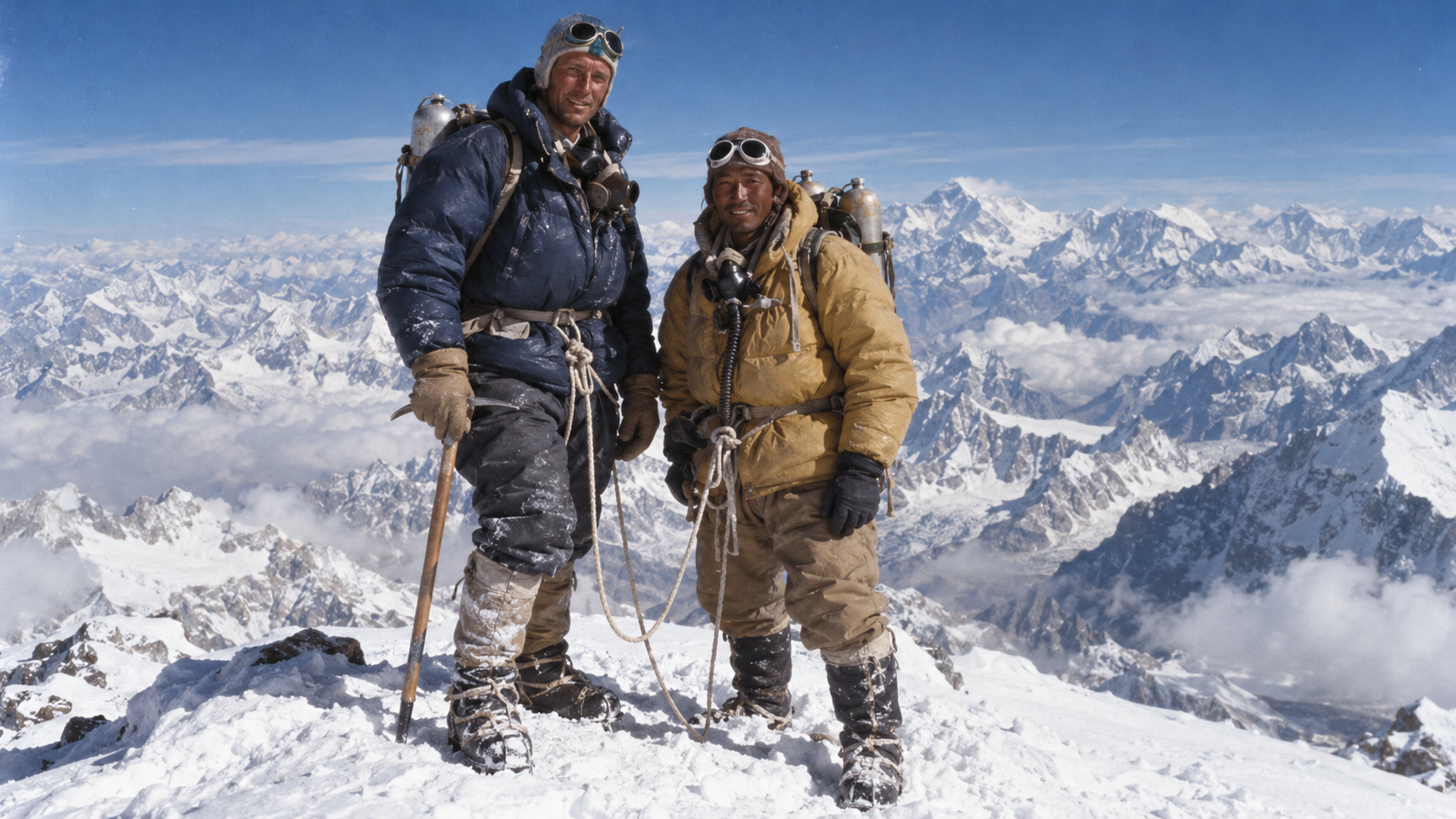
On May 29, 1953, Edmund Hillary and Tenzing Norgay reached the summit of Mount Everest, completing the first confirmed ascent of the world’s highest mountain. They arrived at approximately 11:30 in the morning after climbing the southeast ridge from Nepal. The two spent only about fifteen minutes on top, taking photographs and leaving small tokens before beginning the dangerous descent. The public record fixes the central details with unusual clarity: Hillary and Tenzing summited at about 11:30 a.m. They climbed by the southeast ridge. Together, those facts explain why May 29, 1953 stands apart from the ordinary flow of a season and deserves to be remembered as a distinct historical moment.
Their success depended on an enormous expedition led by John Hunt. Hundreds of porters moved food, tents and oxygen equipment through the approach, while climbing teams established camps and tested the upper route. Tom Bourdillon and Charles Evans had made an earlier summit attempt but turned back. Hillary and Tenzing then advanced from the South Col and confronted the final steep rock step that now bears Hillary’s name. Two further details help reconstruct how the achievement unfolded: John Hunt led the expedition. The climbers used supplemental oxygen. They move the story beyond a headline by showing the pressure, setting and competitive choices that shaped the decisive action in real time.
Tenzing, a Nepali-Indian Sherpa with extensive Himalayan experience, and Hillary, a New Zealand beekeeper and mountaineer, functioned as a rope team rather than competing claimants. Questions about who stepped onto the summit first followed them for years, but both emphasized that the achievement was shared. Their partnership helped redirect some public recognition toward Sherpa expertise, though inequities in expedition storytelling remained. The wider context is equally important. They spent roughly 15 minutes on the summit. The ascent was the first confirmed climb of Everest. Those points connect one day’s performance to a longer career, institution or rivalry and clarify why the event continued to matter after the immediate celebration had ended.
News reached Britain on the morning of Queen Elizabeth II’s coronation and became a global symbol of exploration. Later climbers would ascend faster, without supplemental oxygen and by harder routes, but no improvement could replace the first confirmed arrival. Hillary and Tenzing turned the summit from a point seen only from below into a place human beings had reached together. Seen from today, the milestone remains compelling because it joins a measurable result with the uncertainty of live competition. Nothing about the outcome was guaranteed beforehand. That combination of preparation, opportunity and execution is what transformed the date from another entry on the schedule into lasting sports history.
Hillary and Tenzing summited at about 11:30 a.m.
They climbed by the southeast ridge.
John Hunt led the expedition.
The climbers used supplemental oxygen.
They spent roughly 15 minutes on the summit.
The ascent was the first confirmed climb of Everest.
Explore more "On This Day in Sports"
Discover more landmark games, records, championships, and turning points from sports history. Each day revisits the athletes, teams, and moments that shaped competition and culture.