

On This Day in Sports: June 18, 2000
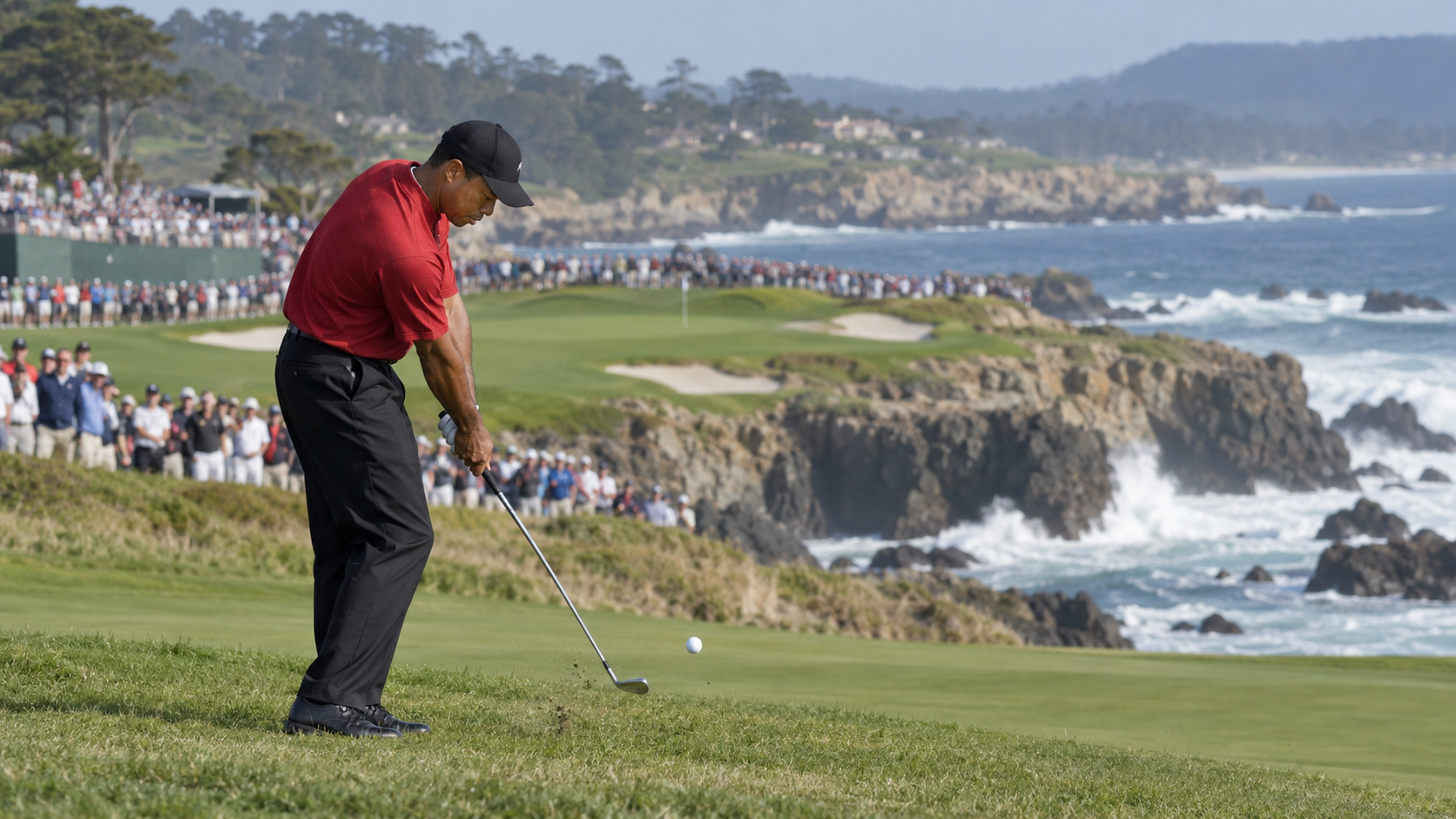
On June 18, 2000, Tiger Woods completed a 15-stroke victory in the U.S. Open at Pebble Beach. He shot 12-under-par 272, while no other player finished under par. The margin was the largest in major-championship history and turned one of golf’s most demanding tests into a display of unmatched control. The public record fixes the central details with unusual clarity: Woods finished at 12-under 272. He won by 15 strokes. Together, those facts explain why June 18, 2000 stands apart from the ordinary flow of a season and deserves to be remembered as a distinct historical moment.
Wind, thick rough and firm greens punished the field, but Woods combined extraordinary driving with precise iron play and resilient putting. His third-round 65 created a ten-shot lead. Even after a triple bogey earlier in the championship, he responded without losing command, distancing himself from Ernie Els and Miguel Ángel Jiménez. Two further details help reconstruct how the achievement unfolded: Pebble Beach hosted the championship. No other player finished under par. They move the story beyond a headline by showing the pressure, setting and competitive choices that shaped the decisive action in real time.
The victory began what became known as the Tiger Slam. Woods won the Open Championship, PGA Championship and 2001 Masters to hold all four professional major titles at once. At Pebble Beach, however, the scale of dominance was clear before that larger sequence existed: every difficult condition seemed to separate him further from the field. The wider context is equally important. The margin is the largest in major history. The victory began the Tiger Slam sequence. Those points connect one day’s performance to a longer career, institution or rivalry and clarify why the event continued to matter after the immediate celebration had ended.
Comparisons across eras are never exact, yet the 15-shot margin supplies a number that requires little interpretation. It exceeded Old Tom Morris’s long-standing major record and set a modern standard unlikely to be approached. Woods did more than win at a famous course; he changed expectations for what supremacy in elite golf could look like. Seen from today, the milestone remains compelling because it joins a measurable result with the uncertainty of live competition. Nothing about the outcome was guaranteed beforehand. That combination of preparation, opportunity and execution is what transformed the date from another entry on the schedule into lasting sports history. It also reveals how records and championships depend on teammates, opponents, officials, venues and rules that shape the opportunity. Preserving those surrounding details helps explain both the achievement itself and the reason later generations still discuss it.
Woods finished at 12-under 272.
He won by 15 strokes.
Pebble Beach hosted the championship.
No other player finished under par.
The margin is the largest in major history.
The victory began the Tiger Slam sequence.
Explore more "On This Day in Sports"
Discover more landmark games, records, championships, and turning points from sports history. Each day revisits the athletes, teams, and moments that shaped competition and culture.