

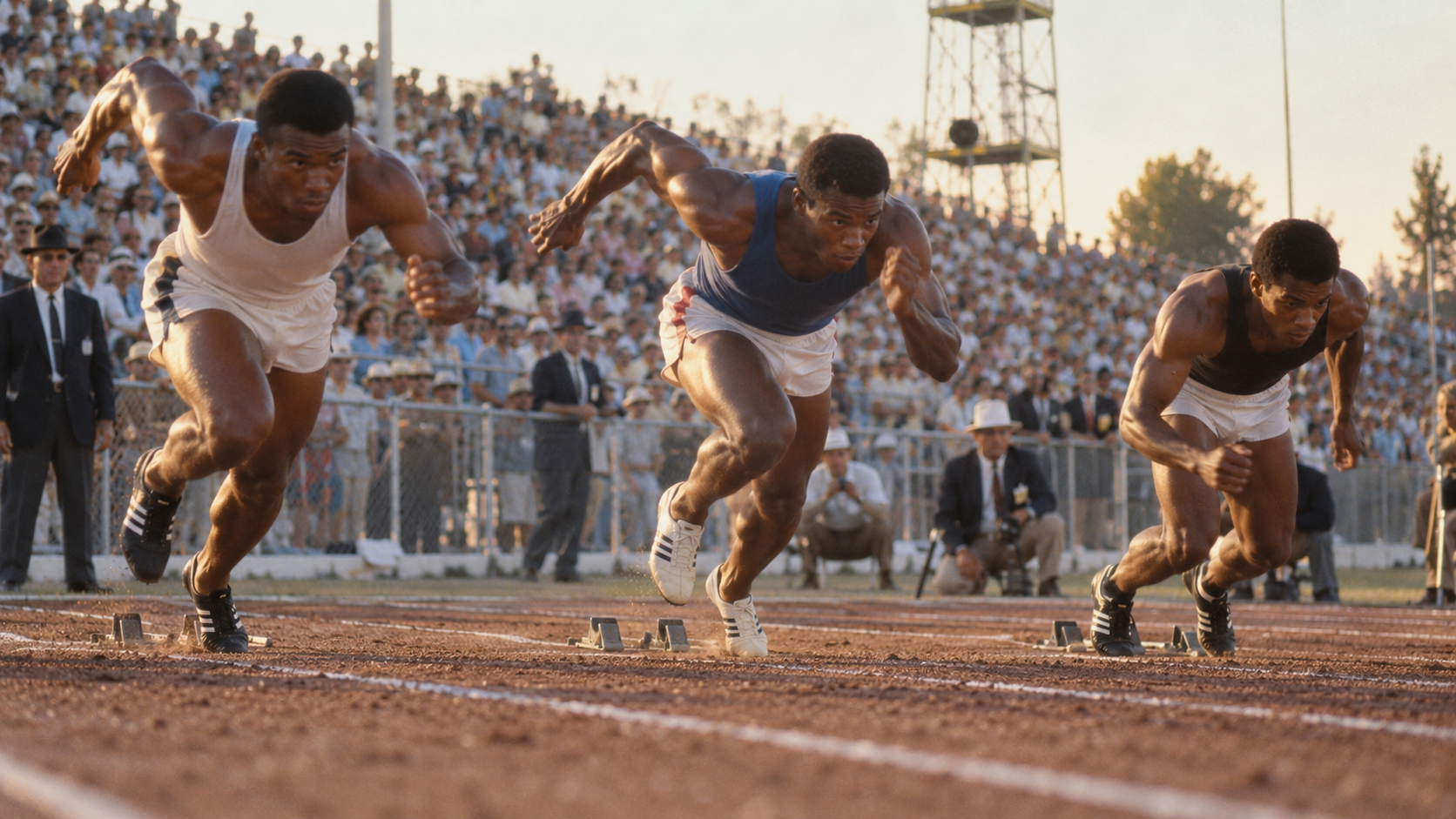
On This Day in Sports: June 20, 1968
On June 20, 1968, three American sprinters recorded legal hand-timed 9.9-second performances in the 100 meters at the U.S. championships in Sacramento. Jim Hines, Ronnie Ray Smith and Charlie Greene all broke the recognized 10-second barrier during heats and semifinals. The gathering became known as the Night of Speed. The public record fixes the central details with unusual clarity: Hines ran a hand-timed 9.9. Smith also recorded 9.9. Together, those facts explain why June 20, 1968 stands apart from the ordinary flow of a season and deserves to be remembered as a distinct historical moment.
Armin Hary’s 10.0 had stood as the benchmark, and several athletes had previously matched it. Sacramento’s fast track, warm conditions and elite field created an extraordinary sequence. Hines ran 9.9 in a heat; Smith matched it in another; Greene then did the same in a semifinal, compressing a historic threshold into a few hours. Two further details help reconstruct how the achievement unfolded: Greene matched the mark in a semifinal. The meet took place in Sacramento. They move the story beyond a headline by showing the pressure, setting and competitive choices that shaped the decisive action in real time.
Hand timing starts when an official reacts to the gun and is less precise than fully automatic timing, so later record systems distinguished between the methods. Hines settled the electronic question at the Mexico City Olympics by winning in 9.95, the first automatically timed sub-10 performance recognized as a world record. The wider context is equally important. The performances had legal wind. Hines later ran an automatic 9.95 at the Olympics. Those points connect one day’s performance to a longer career, institution or rivalry and clarify why the event continued to matter after the immediate celebration had ended.
Modern sprinters have run substantially faster, but ten seconds remains a defining line for elite men’s sprinting. The Sacramento meet changed the barrier from a theoretical limit into a repeatable human achievement. Three men crossing it on the same evening showed that the event had entered a new technical and athletic era. Seen from today, the milestone remains compelling because it joins a measurable result with the uncertainty of live competition. Nothing about the outcome was guaranteed beforehand. That combination of preparation, opportunity and execution is what transformed the date from another entry on the schedule into lasting sports history. It also reveals how records and championships depend on teammates, opponents, officials, venues and rules that shape the opportunity. Preserving those surrounding details helps explain both the achievement itself and the reason later generations still discuss it.
Hines ran a hand-timed 9.9.
Smith also recorded 9.9.
Greene matched the mark in a semifinal.
The meet took place in Sacramento.
The performances had legal wind.
Hines later ran an automatic 9.95 at the Olympics.
Explore more "On This Day in Sports"
Discover more landmark games, records, championships, and turning points from sports history. Each day revisits the athletes, teams, and moments that shaped competition and culture.