

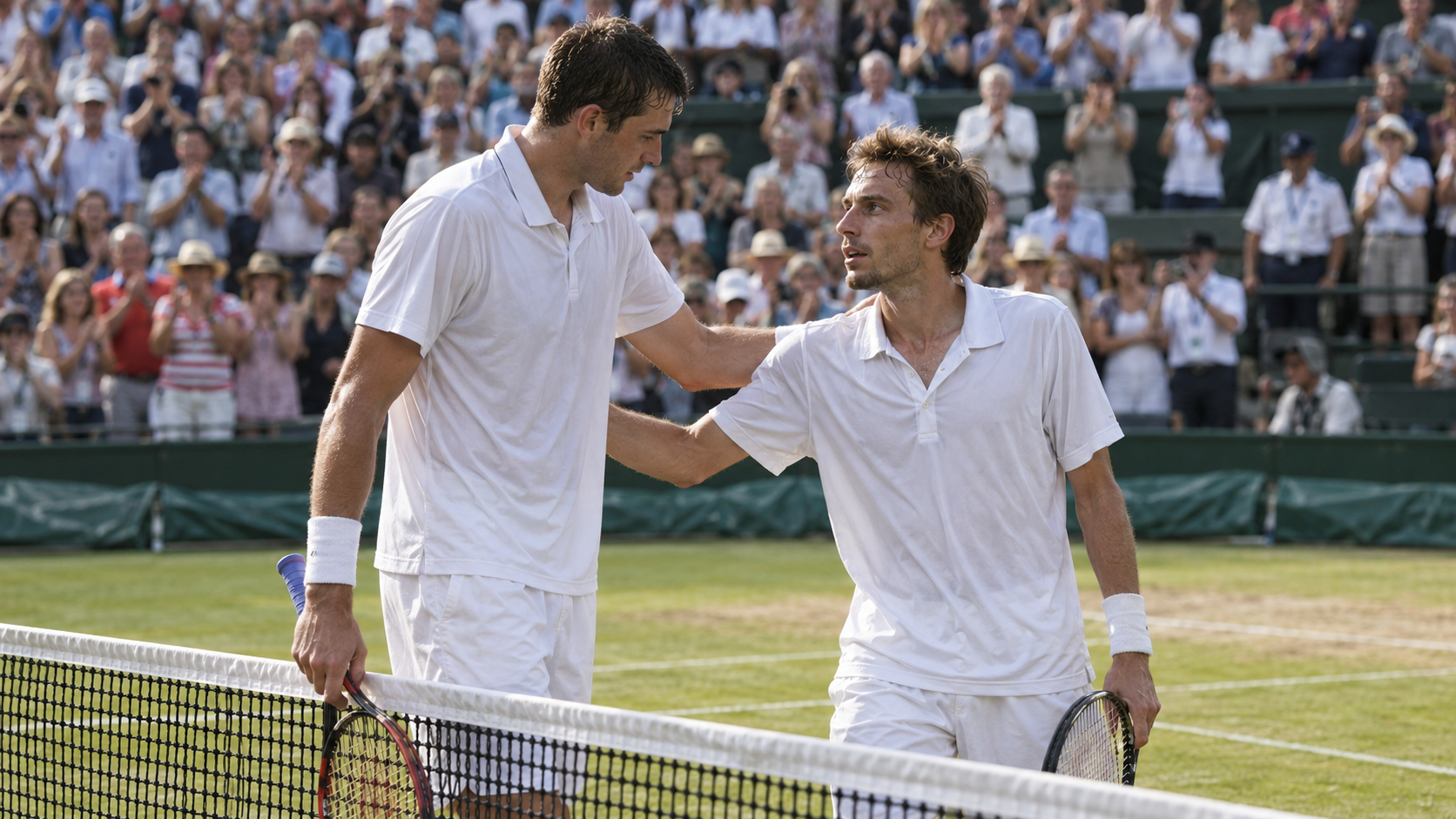
On This Day in Sports: June 24, 2010
On June 24, 2010, John Isner finally defeated Nicolas Mahut in the longest match in tennis history. The Wimbledon first-round contest lasted 11 hours 5 minutes across three days. Isner won 6-4, 3-6, 6-7, 7-6, 70-68 when he struck a backhand passing-shot winner on Court 18. The public record fixes the central details with unusual clarity: The match lasted 11 hours 5 minutes. It was played across three days. Together, those facts explain why June 24, 2010 stands apart from the ordinary flow of a season and deserves to be remembered as a distinct historical moment.
Play had begun on June 22 and was suspended for darkness after four sets. The next day, the fifth set alone continued for more than seven hours before darkness stopped it at 59-59. With no final-set tiebreak then available, both players repeatedly held serve as the scoreboard eventually malfunctioned under numbers it was not designed to display. Two further details help reconstruct how the achievement unfolded: Isner won the fifth set 70-68. The match contained 183 games. They move the story beyond a headline by showing the pressure, setting and competitive choices that shaped the decisive action in real time.
The match contained 183 games. Isner served 113 aces and Mahut 103, both far beyond the previous record. Fatigue altered movement and shot selection, but neither player could create the two-game margin required to win. When it ended, the exhausted opponents received an on-court ceremony rather than the usual quick exit. The wider context is equally important. Isner served 113 aces. The contest took place on Court 18. Those points connect one day’s performance to a longer career, institution or rivalry and clarify why the event continued to matter after the immediate celebration had ended.
Wimbledon later introduced a deciding-set tiebreak, ensuring that the 70-68 score is unlikely to be repeated. Isner lost his next match in straight sets, an unsurprising consequence of the ordeal. The marathon survives as an extreme demonstration of competitive persistence and of rules allowing a match to expand beyond any expected human scale. Seen from today, the milestone remains compelling because it joins a measurable result with the uncertainty of live competition. Nothing about the outcome was guaranteed beforehand. That combination of preparation, opportunity and execution is what transformed the date from another entry on the schedule into lasting sports history. It also reveals how records and championships depend on teammates, opponents, officials, venues and rules that shape the opportunity. Preserving those surrounding details helps explain both the achievement itself and the reason later generations still discuss it.
The match lasted 11 hours 5 minutes.
It was played across three days.
Isner won the fifth set 70-68.
The match contained 183 games.
Isner served 113 aces.
The contest took place on Court 18.
Explore more "On This Day in Sports"
Discover more landmark games, records, championships, and turning points from sports history. Each day revisits the athletes, teams, and moments that shaped competition and culture.