

On This Day in Sports: July 5, 1975
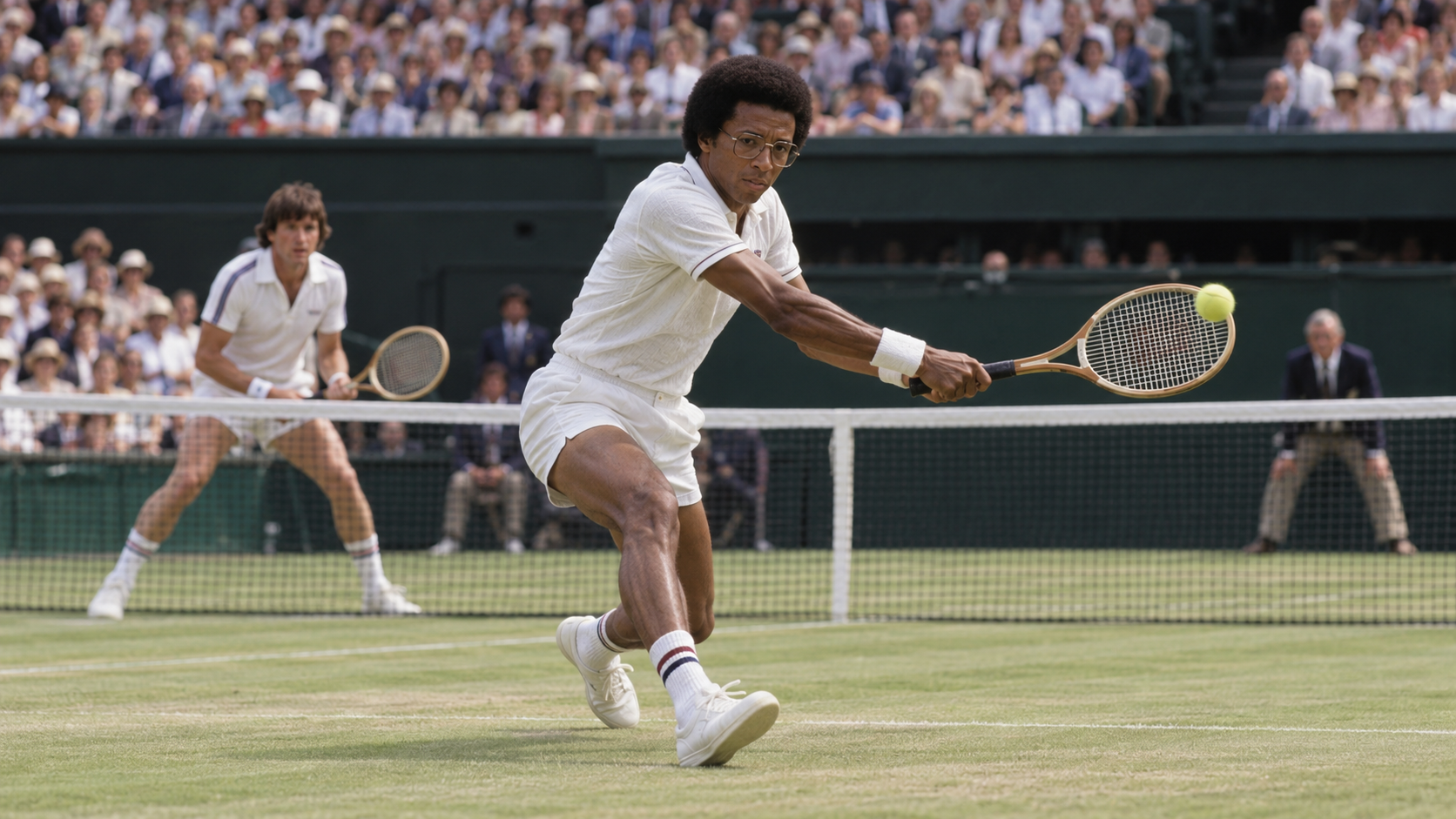
On July 5, 1975, Arthur Ashe defeated defending champion Jimmy Connors 6-1, 6-1, 5-7, 6-4 to win the Wimbledon men’s singles championship. Ashe used patient slices, changes of pace and controlled aggression to disrupt the heavily favored Connors. The victory made him the first Black man to win the singles title at the All England Club. The public record fixes the central details with unusual clarity: Ashe won in four sets. Connors entered as defending champion. Together, those facts explain why July 5, 1975 stands apart from the ordinary flow of a season and deserves to be remembered as a distinct historical moment.
Connors was the top seed and had dominated men’s tennis during 1974, while the sixth-seeded Ashe was 31 and seeking a defining major championship. Ashe and his advisers developed a deliberate tactical plan that avoided feeding Connors the fast, flat shots he preferred. Two further details help reconstruct how the achievement unfolded: Ashe was seeded sixth. He was 31 years old. They move the story beyond a headline by showing the pressure, setting and competitive choices that shaped the decisive action in real time.
Ashe raced through the first two sets by keeping the ball low and varying speed. Connors recovered to take the third, but Ashe held his nerve in the fourth and served out the match. The contrast between measured strategy and explosive returning shaped every phase of the final. The wider context is equally important. He became the first Black male singles champion at Wimbledon. It was his third major singles title. Those points connect one day’s performance to a longer career, institution or rivalry and clarify why the event continued to matter after the immediate celebration had ended.
The championship completed Ashe’s collection of three major singles titles and became the most celebrated victory of his career. His achievement carried significance beyond the scoreboard because of his leadership in civil rights, education and international human rights. Centre Court became the setting for both tactical mastery and representation. Seen from today, the milestone remains compelling because it joins a measurable result with the uncertainty of live competition. Nothing about the outcome was guaranteed beforehand. That combination of preparation, opportunity and execution transformed the date from another entry on the schedule into lasting sports history. It also reveals how records and championships depend on teammates, opponents, officials, venues and rules that shape the opportunity. Preserving those surrounding details helps explain both the achievement itself and the reason later generations still discuss it. The date therefore offers a useful window into how sporting excellence is created, witnessed and remembered.
Ashe won in four sets.
Connors entered as defending champion.
Ashe was seeded sixth.
He was 31 years old.
He became the first Black male singles champion at Wimbledon.
It was his third major singles title.
Explore more "On This Day in Sports"
Discover more landmark games, records, championships, and turning points from sports history. Each day revisits the athletes, teams, and moments that shaped competition and culture.