

On This Day in Sports: July 7, 1985
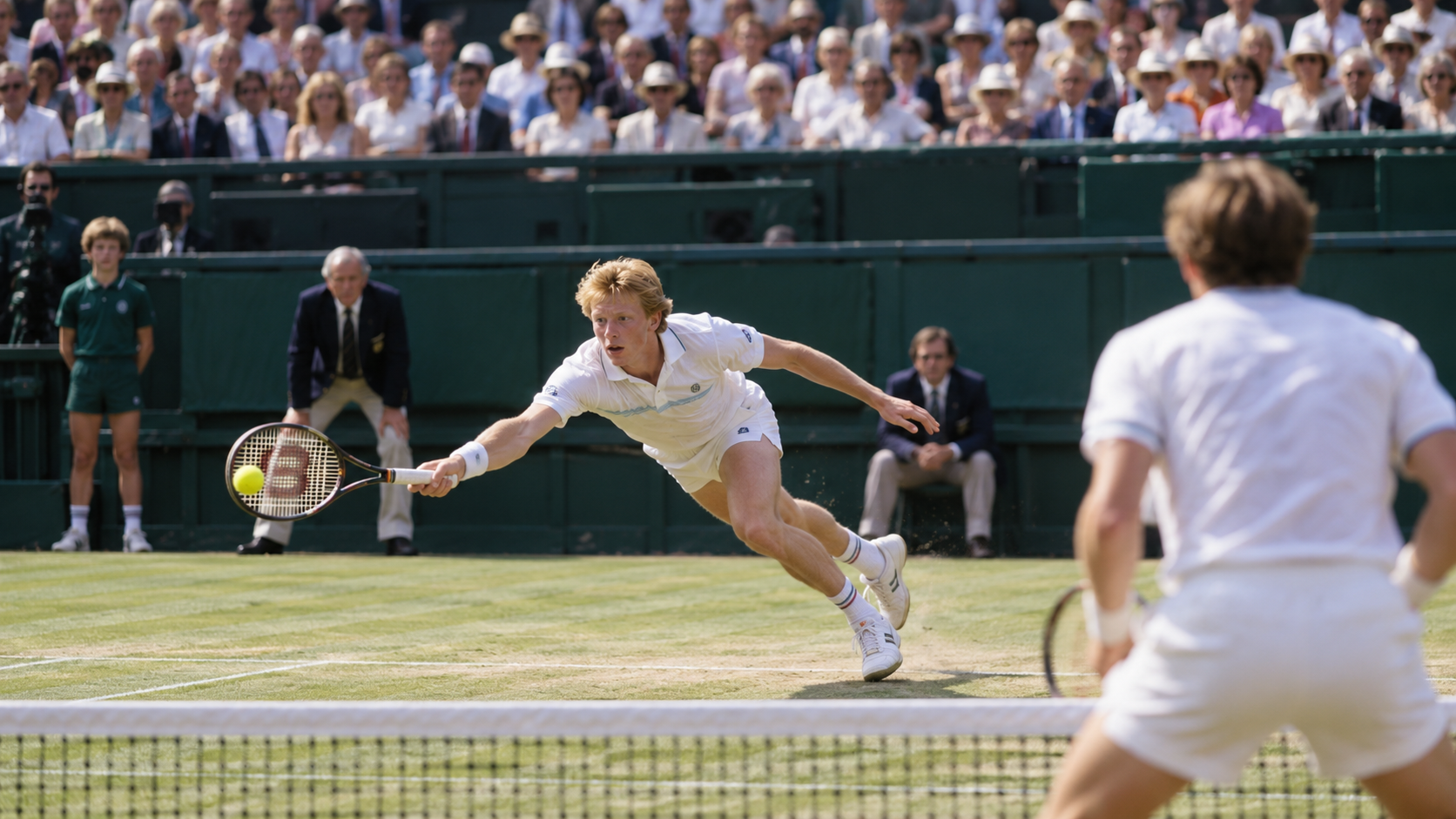
On July 7, 1985, 17-year-old Boris Becker defeated Kevin Curren 6-3, 6-7, 7-6, 6-4 to win the Wimbledon men’s singles championship. The unseeded West German attacked with a powerful serve, diving volleys and fearless movement across Centre Court. At 17 years and 227 days, he became the youngest men’s singles champion in tournament history. The public record fixes the central details with unusual clarity: Becker won in four sets. He was 17 years and 227 days old. Together, those facts explain why July 7, 1985 stands apart from the ordinary flow of a season and deserves to be remembered as a distinct historical moment.
Becker had won the Queen’s Club warm-up event but entered Wimbledon ranked twentieth and therefore unseeded. He survived demanding early rounds, including a two-day comeback against Joakim Nyström. Curren reached the final by defeating both John McEnroe and Jimmy Connors in straight sets. Two further details help reconstruct how the achievement unfolded: He entered the tournament unseeded. Kevin Curren was the runner-up. They move the story beyond a headline by showing the pressure, setting and competitive choices that shaped the decisive action in real time.
The final turned on two tiebreaks and Becker’s ability to keep attacking after losing the second set. He took the third-set breaker and broke Curren late in the fourth. A final unreturned serve completed a breakthrough that seemed to arrive years ahead of schedule. The wider context is equally important. Becker was the first German men’s champion. He won Wimbledon three times. Those points connect one day’s performance to a longer career, institution or rivalry and clarify why the event continued to matter after the immediate celebration had ended.
Becker was also the first German and first unseeded man to claim the singles trophy. He successfully defended the title in 1986 and won again in 1989, building a deep association with Centre Court. His 1985 run changed expectations about how quickly a teenager could command men’s tennis. Seen from today, the milestone remains compelling because it joins a measurable result with the uncertainty of live competition. Nothing about the outcome was guaranteed beforehand. That combination of preparation, opportunity and execution transformed the date from another entry on the schedule into lasting sports history. It also reveals how records and championships depend on teammates, opponents, officials, venues and rules that shape the opportunity. Preserving those surrounding details helps explain both the achievement itself and the reason later generations still discuss it. The date therefore offers a useful window into how sporting excellence is created, witnessed and remembered.
Becker won in four sets.
He was 17 years and 227 days old.
He entered the tournament unseeded.
Kevin Curren was the runner-up.
Becker was the first German men’s champion.
He won Wimbledon three times.
Explore more "On This Day in Sports"
Discover more landmark games, records, championships, and turning points from sports history. Each day revisits the athletes, teams, and moments that shaped competition and culture.