

On This Day in Sports: July 29, 1996
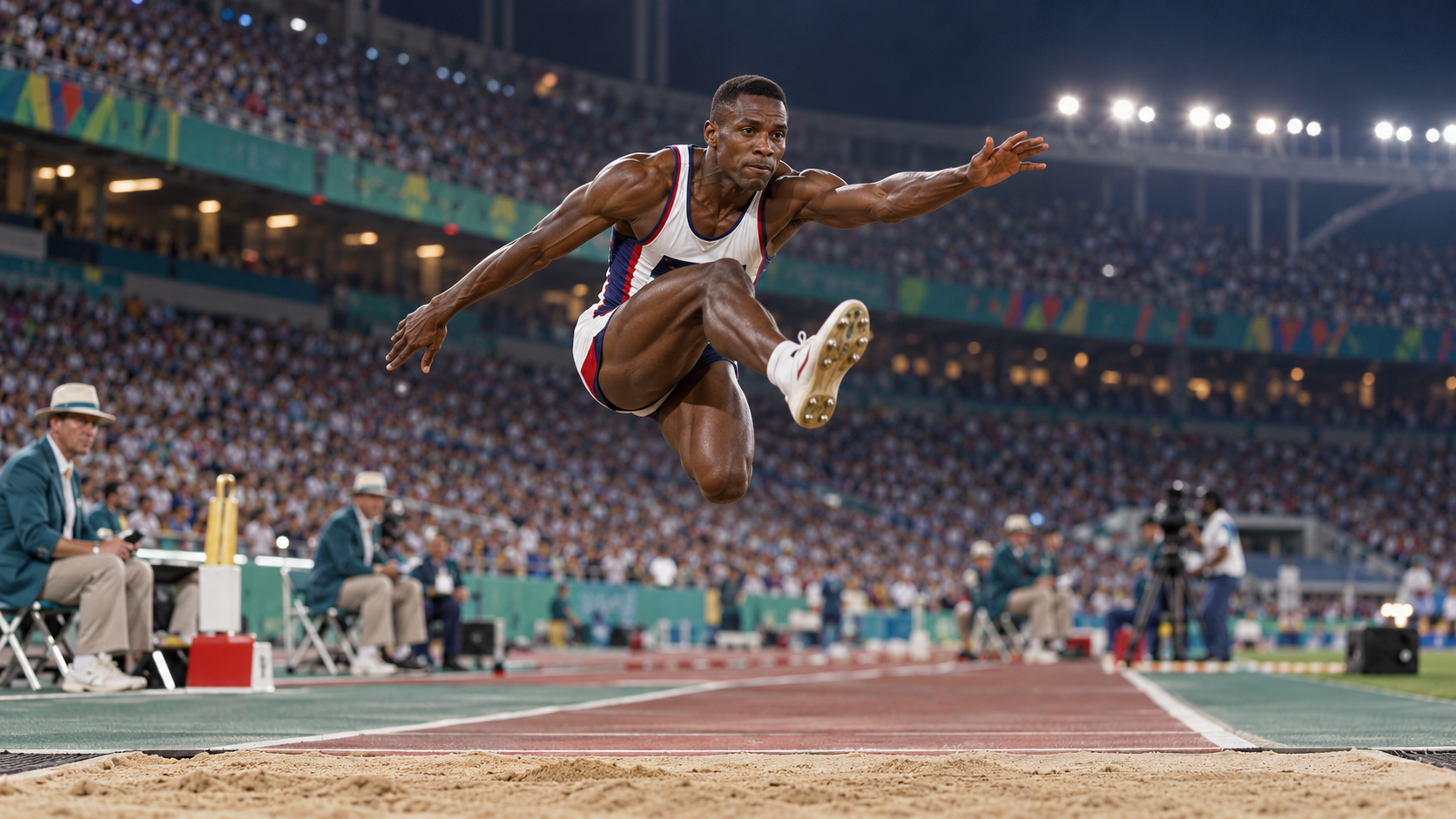
On July 29, 1996, Carl Lewis won his fourth consecutive Olympic gold medal in the men’s long jump at Centennial Olympic Stadium in Atlanta. At age 35, he produced a winning leap of 8.50 meters in the third round. The result extended a championship sequence that had begun at the 1984 Los Angeles Games. The public record fixes the central details with unusual clarity: Lewis jumped 8.50 meters. He was 35 years old. Together, those facts explain why July 29, 1996 stands apart from the ordinary flow of a season and deserves to be remembered as a distinct historical moment.
Lewis entered Atlanta without the automatic status of his earlier Olympics and had narrowly qualified at the U.S. trials. Defending world champion Iván Pedroso was injured, while American world-record holder Mike Powell failed to reach the final after hurting himself in qualifying. Two further details help reconstruct how the achievement unfolded: James Beckford won silver. It was Lewis’s fourth straight long-jump gold. They move the story beyond a headline by showing the pressure, setting and competitive choices that shaped the decisive action in real time.
Lewis fouled his first attempt, reached 8.14 meters on his second and then took the lead with 8.50. James Beckford of Jamaica responded with 8.29 for silver, but no one came close enough to dislodge the veteran. Lewis declined his remaining attempts after the fifth round. The wider context is equally important. The streak began in 1984. Lewis finished with nine Olympic gold medals. Those points connect one day’s performance to a longer career, institution or rivalry and clarify why the event continued to matter after the immediate celebration had ended.
The victory gave Lewis nine Olympic gold medals across sprinting and jumping and made him one of the few athletes to win the same individual event at four consecutive Games. His 12-year reign joined technique, speed and competitive longevity in a way track and field had rarely seen. Seen from today, the milestone remains compelling because it joins a measurable result with the uncertainty of live competition. Nothing about the outcome was guaranteed beforehand. That combination of preparation, opportunity and execution transformed the date from another entry on the schedule into lasting sports history. It also reveals how records and championships depend on teammates, opponents, officials, venues and rules that shape the opportunity. Preserving those surrounding details helps explain both the achievement itself and the reason later generations still discuss it. The date therefore offers a useful window into how sporting excellence is created, witnessed and remembered.
Lewis jumped 8.50 meters.
He was 35 years old.
James Beckford won silver.
It was Lewis’s fourth straight long-jump gold.
The streak began in 1984.
Lewis finished with nine Olympic gold medals.
Explore more "On This Day in Sports"
Discover more landmark games, records, championships, and turning points from sports history. Each day revisits the athletes, teams, and moments that shaped competition and culture.