

On This Day in Sports: August 1, 1936
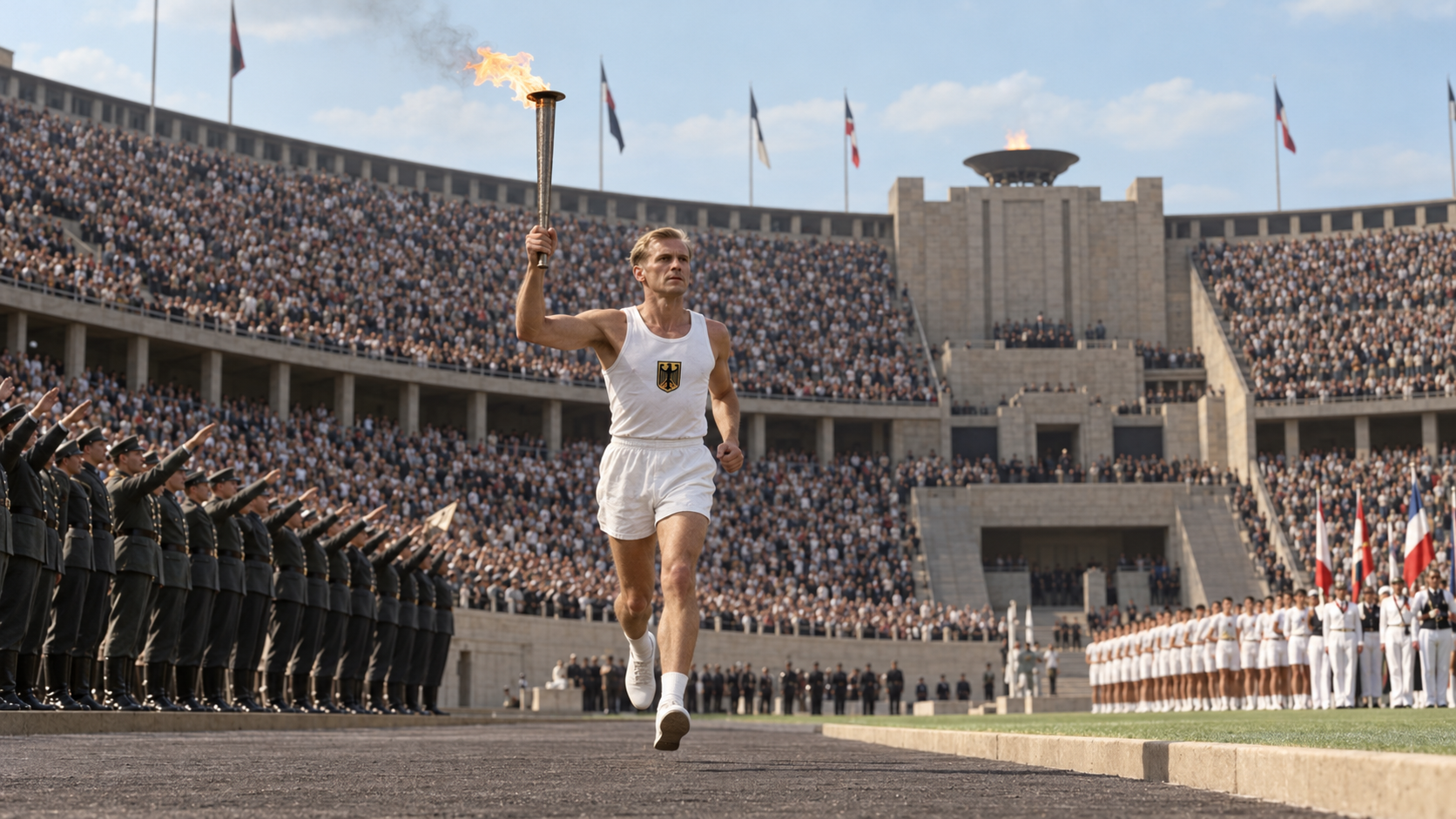
On August 1, 1936, the Games of the XI Olympiad opened in Berlin before a vast crowd at the new Olympic Stadium. Adolf Hitler formally declared the Games open after a ceremony designed to project Nazi Germany’s power. Runner Fritz Schilgen completed the first Olympic torch relay by lighting the stadium cauldron. The public record fixes the central details with unusual clarity: The Games ran from August 1 through August 16. Fritz Schilgen lit the Olympic cauldron. Together, those facts explain why August 1, 1936 stands apart from the ordinary flow of a season and deserves to be remembered as a distinct historical moment.
Berlin had been awarded the Olympics in 1931, before the Nazi Party took power. By 1936 the regime used new venues, ceremonies and international broadcasting to shape its image, while critics debated a boycott because of Germany’s persecution of Jews and other groups. Two further details help reconstruct how the achievement unfolded: Berlin had received the Games in 1931. The torch traveled from Olympia to Berlin. They move the story beyond a headline by showing the pressure, setting and competitive choices that shaped the decisive action in real time.
The ceremony brought delegations into a stadium filled with flags, uniforms and tightly controlled pageantry. Schilgen entered with the flame after a relay from Olympia, Greece, involving thousands of runners across southeastern Europe. The lighting linked an invented modern ritual to ancient imagery. The wider context is equally important. Jesse Owens later won four gold medals. The relay became a recurring Olympic ceremony. Those points connect one day’s performance to a longer career, institution or rivalry and clarify why the event continued to matter after the immediate celebration had ended.
The relay became a permanent Olympic tradition, but the Berlin Games remain inseparable from propaganda and the performances that contradicted Nazi racial ideology. Jesse Owens’ four gold medals supplied the most enduring counterpoint to the spectacle organized around the opening day. Seen from today, the milestone remains compelling because it joins a measurable result with the uncertainty of live competition. Nothing about the outcome was guaranteed beforehand. That combination of preparation, opportunity and execution transformed the date from another entry on the schedule into lasting sports history. It also reveals how records and championships depend on teammates, opponents, officials, venues and rules that shape the opportunity. Preserving those surrounding details helps explain both the achievement itself and the reason later generations still discuss it. The date therefore offers a useful window into how sporting excellence is created, witnessed and remembered. Its clearest lessons still reach beyond the final score, connecting preparation and opportunity with the people who preserved the event’s meaning for future audiences.
The Games ran from August 1 through August 16.
Fritz Schilgen lit the Olympic cauldron.
Berlin had received the Games in 1931.
The torch traveled from Olympia to Berlin.
Jesse Owens later won four gold medals.
The relay became a recurring Olympic ceremony.
Explore more "On This Day in Sports"
Discover more landmark games, records, championships, and turning points from sports history. Each day revisits the athletes, teams, and moments that shaped competition and culture.