

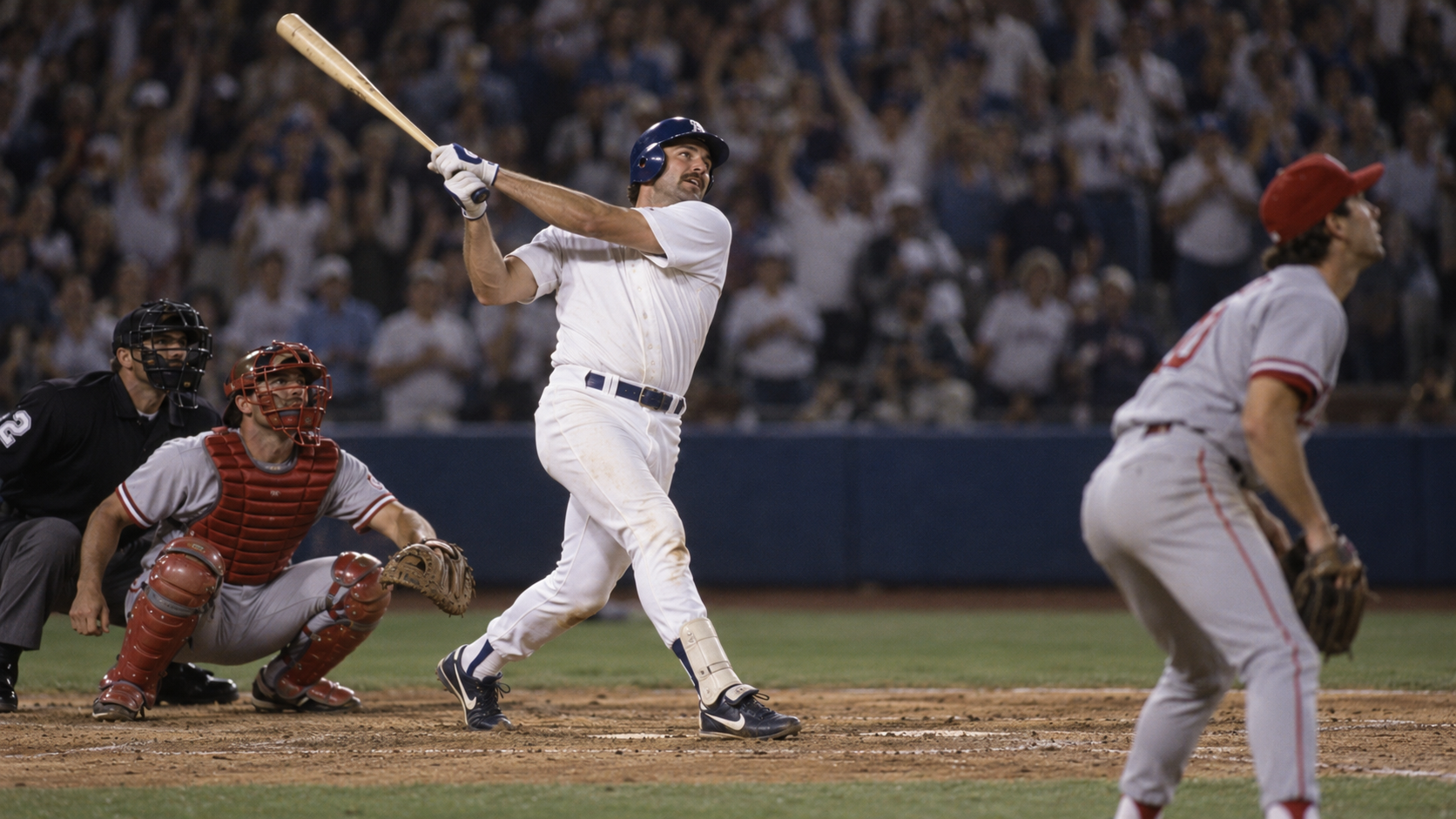
On This Day in Sports: October 15, 1988
On October 15, 1988, Kirk Gibson hit a two-out, two-run walk-off home run to give the Los Angeles Dodgers a 5-4 victory in World Series Game 1. The injured pinch hitter drove Dennis Eckersley's backdoor slider into the right-field pavilion at Dodger Stadium. The Dodgers won 5-4. Gibson entered as a pinch hitter. Those details establish the result and its setting, but the day's importance came from the larger historical pressure surrounding the competition and the people who carried it through.
Gibson had injuries to both legs and was not expected to play, while Oakland's Eckersley was the dominant closer of the season. Los Angeles trailed by one with Mike Davis on base in the ninth. Dennis Eckersley was pitching. The count was full with two outs. Together, those points show how preparation, rules, institutions and public expectations shaped the circumstances before the decisive action began. They also separate the documented background from later legend and retrospective interpretation.
Gibson worked the count full, anticipated the slider and connected. He limped around the bases and pumped his right fist as the crowd erupted. Mike Davis scored ahead of Gibson. Los Angeles won the Series in five games. The immediate result therefore involved more than a single score or statistic: it changed a record, championship, career or institution and gave contemporary audiences a clear reason to understand that the moment was unusual.
It was Gibson's only plate appearance of the Series, and the Dodgers won the championship in five games. The homer became a model of postseason drama and preparation. Seen from today, the event remains useful because it connects a measurable sports outcome with the systems around it—teammates, opponents, officials, venues, media and rules. The outcome was not inevitable, and its meaning did not end when play stopped. Preserving the exact date and qualifications helps explain why later generations still return to it. It also prevents a famous image or headline from replacing the fuller story of what actually happened. Comparing contemporary accounts with later summaries helps distinguish what spectators knew at the time from meanings added afterward. That distinction matters when a performance becomes a symbol, because memory can compress many choices, conditions and consequences into one familiar scene. The best sports history holds achievement and limitation together, showing both the performance itself and the conditions that made it possible. That broader view preserves context without taking attention away from the people who performed under pressure. In that sense, October 15, 1988 still offers a focused view of how athletic excellence, public memory and institutional change can meet in a single day.
The Dodgers won 5-4.
Gibson entered as a pinch hitter.
Dennis Eckersley was pitching.
The count was full with two outs.
Mike Davis scored ahead of Gibson.
Los Angeles won the Series in five games.
Explore more "On This Day in Sports"
Discover more landmark games, records, championships, and turning points from sports history. Each day revisits the athletes, teams, and moments that shaped competition and culture.