

On This Day in Sports: November 1, 1959
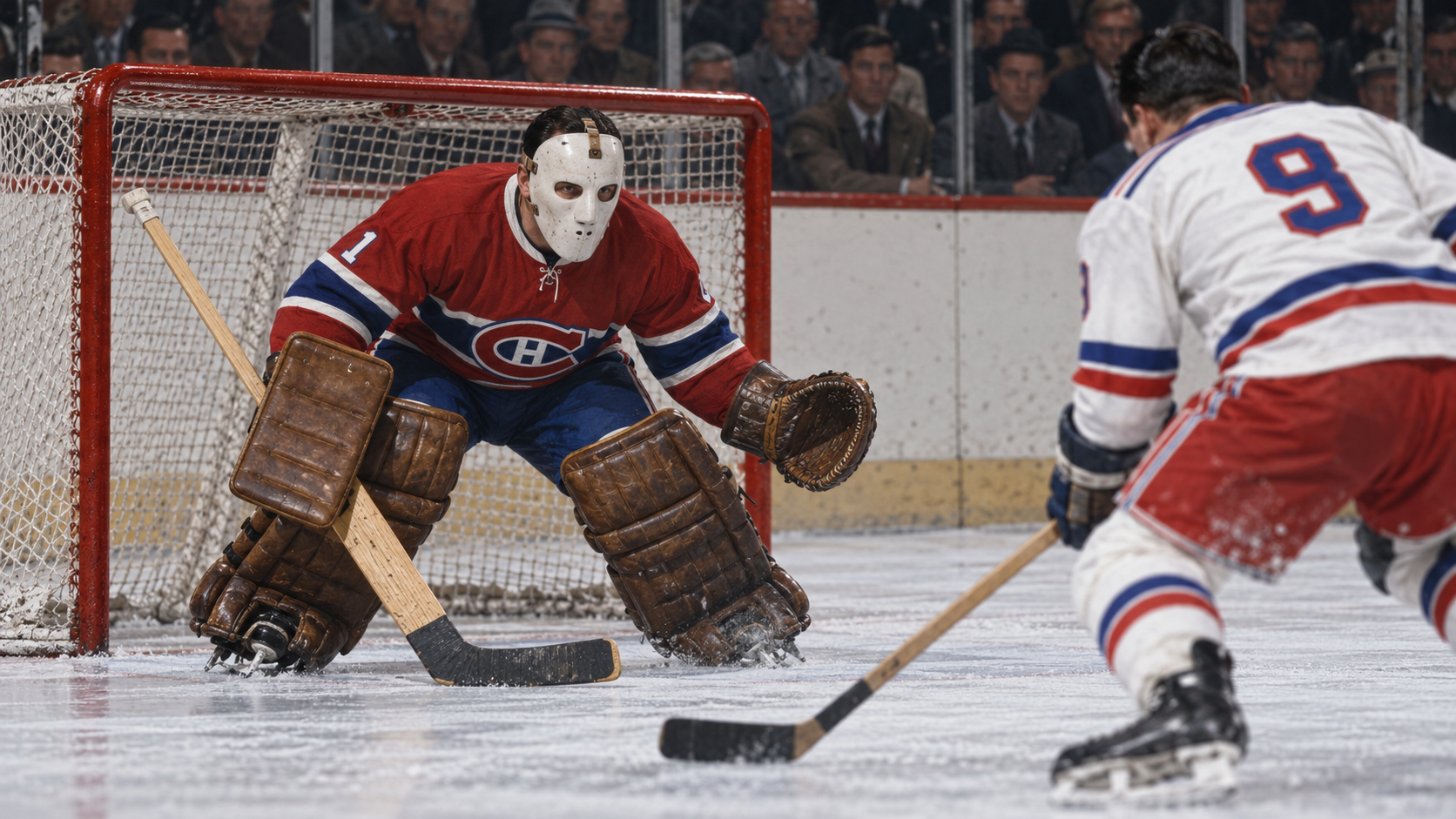
On November 1, 1959, Montreal Canadiens goaltender Jacques Plante returned to a game at Madison Square Garden wearing a fiberglass face mask. A shot by New York Rangers forward Andy Bathgate had cut Plante early in the first period, and he refused to resume play unless coach Toe Blake let him use the mask he had worn in practice. The incident occurred at Madison Square Garden. Bathgate’s shot struck Plante 3:06 into the first period. Those details establish the result and its setting, but the day’s importance came from the larger historical pressure surrounding the competition and the people who carried it through.
Goalies of the era usually played barefaced, and traditionalists argued that masks would restrict vision or signal fear. Plante had experimented with protection in practice but faced resistance from Blake and the wider hockey culture. Plante had already used the mask in practice. Montreal defeated New York 3-1. Together, those points show how preparation, rules, institutions and public expectations shaped the circumstances before the decisive action began. They also separate the documented background from later legend and retrospective interpretation.
After receiving stitches, Plante re-entered the game behind the molded mask and helped Montreal complete a 3-1 victory. His insistence turned an emergency measure into a regular part of his equipment. Plante continued to wear the mask after that night. By the end of 1973-74, no NHL goalie remained barefaced. The immediate result therefore involved more than a single score or statistic: it changed a record, championship, career or institution and gave contemporary audiences a clear reason to understand that the moment was unusual.
Other goaltenders gradually followed, and facial protection evolved from simple fiberglass shells into increasingly sophisticated masks and cages. Plante’s decision is remembered as a practical act that changed the acceptable balance between toughness and safety. Seen from today, the event remains useful because it connects a measurable sports outcome with the systems around it—teammates, opponents, officials, venues, media and rules. The outcome was not inevitable, and its meaning did not end when play stopped. Preserving the exact date and qualifications helps explain why later generations still return to it. It also prevents a famous image or headline from replacing the fuller story of what actually happened. The best sports history holds achievement and limitation together, showing both the performance itself and the conditions that made it possible. That broader view preserves context without taking attention away from the people who performed under pressure. In that sense, November 1, 1959 still offers a focused view of how athletic excellence, public memory and institutional change can meet in a single day.
The incident occurred at Madison Square Garden.
Bathgate's shot struck Plante 3:06 into the first period.
Plante had already used the mask in practice.
Montreal defeated New York 3-1.
Plante continued to wear the mask after that night.
By the end of 1973-74, no NHL goalie remained barefaced.
Explore more "On This Day in Sports"
Discover more landmark games, records, championships, and turning points from sports history. Each day revisits the athletes, teams, and moments that shaped competition and culture.