

On This Day in Sports: November 9, 1989
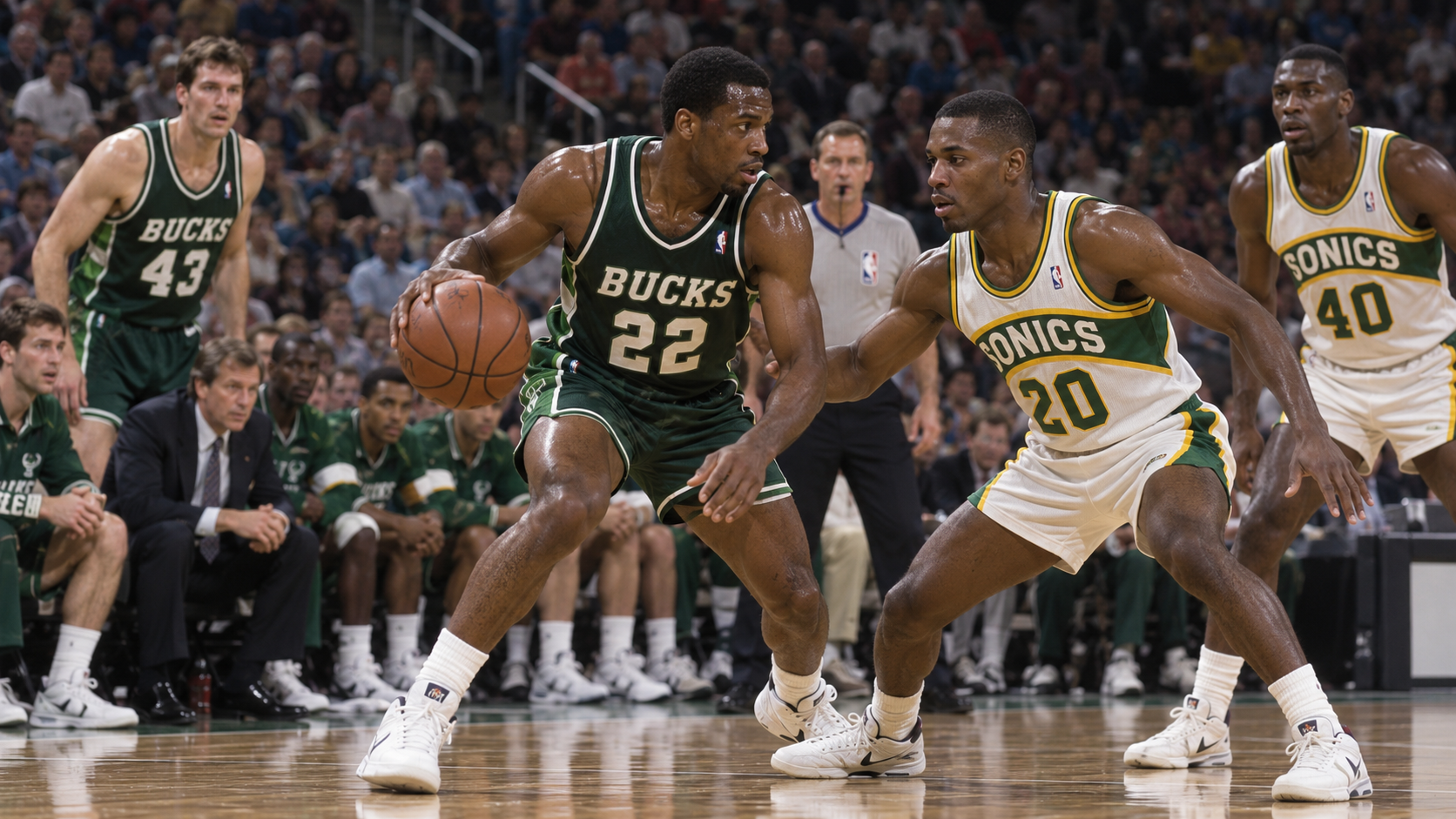
On November 9, 1989, the Milwaukee Bucks defeated the Seattle SuperSonics 155-154 after five overtime periods. The 73-minute contest matched the second-longest game in NBA history and became the longest played after adoption of the 24-second shot clock. Milwaukee won 155-154. The game required five overtimes. Those details establish the result and its setting, but the day’s importance came from the larger historical pressure surrounding the competition and the people who carried it through.
The shot clock, introduced in 1954, had made marathon games far less likely by forcing possessions to end with attempts. Milwaukee and Seattle nevertheless stayed within one possession through repeated extra periods. It lasted 73 minutes of playing time. Dale Ellis played a record 69 minutes. Together, those points show how preparation, rules, institutions and public expectations shaped the circumstances before the decisive action began. They also separate the documented background from later legend and retrospective interpretation.
Players managed fatigue and foul trouble as the game extended far beyond regulation. Seattle’s Dale Ellis logged an NBA-record 69 minutes, while Milwaukee finally protected the last one-point advantage. The teams combined for 309 points. It was the longest NBA game of the shot-clock era. The immediate result therefore involved more than a single score or statistic: it changed a record, championship, career or institution and gave contemporary audiences a clear reason to understand that the moment was unusual.
The combined 309 points and extraordinary workload made the game a statistical landmark as well as a test of endurance. It remains a reminder that overtime records depend on both competitive balance and the ability of multiple athletes to keep executing deep into exhaustion. Seen from today, the event remains useful because it connects a measurable sports outcome with the systems around it—teammates, opponents, officials, venues, media and rules. The outcome was not inevitable, and its meaning did not end when play stopped. Preserving the exact date and qualifications helps explain why later generations still return to it. It also prevents a famous image or headline from replacing the fuller story of what actually happened. The best sports history holds achievement and limitation together, showing both the performance itself and the conditions that made it possible. That broader view preserves context without taking attention away from the people who performed under pressure. In that sense, November 9, 1989 still offers a focused view of how athletic excellence, public memory and institutional change can meet in a single day.
Milwaukee won 155-154.
The game required five overtimes.
It lasted 73 minutes of playing time.
Dale Ellis played a record 69 minutes.
The teams combined for 309 points.
It was the longest NBA game of the shot-clock era.
Explore more "On This Day in Sports"
Discover more landmark games, records, championships, and turning points from sports history. Each day revisits the athletes, teams, and moments that shaped competition and culture.