

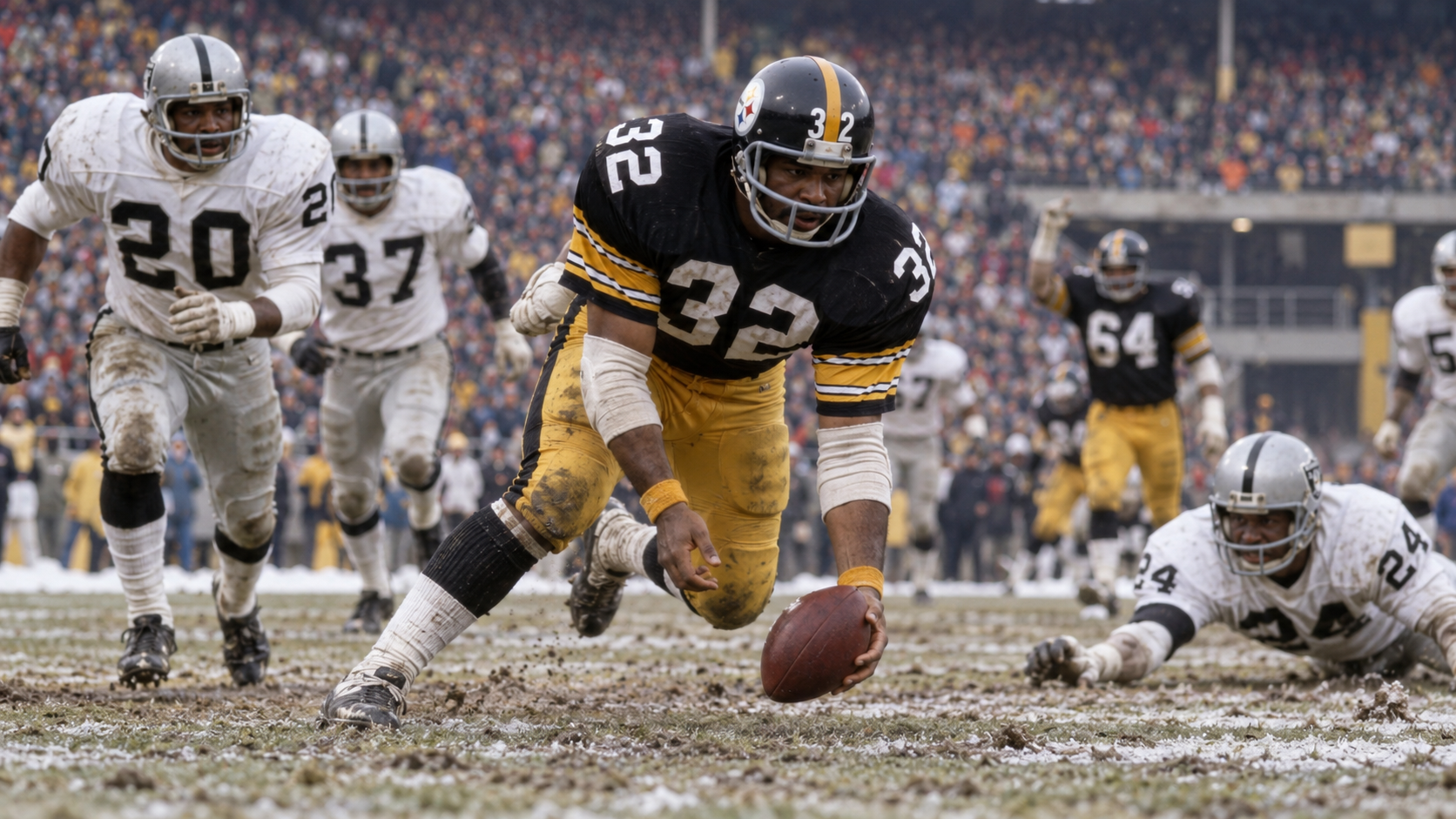
On This Day in Sports: December 23, 1972
On December 23, 1972, Franco Harris caught a deflected fourth-down pass and ran for the winning touchdown in Pittsburgh’s 13-7 playoff victory over Oakland. The last-minute play became known as the Immaculate Reception and delivered the Steelers’ first postseason win. Pittsburgh won 13-7. The play came on fourth-and-ten. Those details establish the result and its setting, but the day’s importance came from the larger historical pressure surrounding the competition and the people who carried it through.
Pittsburgh trailed 7-6 with 22 seconds left and faced fourth-and-ten from its own 40-yard line. Terry Bradshaw’s intended pass to John Fuqua entered a collision with Raiders safety Jack Tatum. Only 22 seconds remained before the snap. Terry Bradshaw threw the pass. Together, those points show how preparation, rules, institutions and public expectations shaped the circumstances before the decisive action began. They also separate the documented background from later legend and retrospective interpretation.
The ball ricocheted backward toward Harris, who gathered it near his shoes and sprinted down the left sideline. Officials ruled the catch and touchdown legal after a brief consultation. Franco Harris scored the winning touchdown. It was the Steelers’ first playoff victory. The immediate result therefore involved more than a single score or statistic: it changed a record, championship, career or institution and gave contemporary audiences a clear reason to understand that the moment was unusual.
The play transformed the identity of a franchise that had struggled for four decades before winning four Super Bowls in the 1970s. Debate about the exact deflection has only deepened its place in football memory. Seen from today, the event remains useful because it connects a measurable sports outcome with the systems around it—teammates, opponents, officials, venues, media and rules. The outcome was not inevitable, and its meaning did not end when play stopped. Preserving the exact date and qualifications helps explain why later generations still return to it. It also prevents a famous image or headline from replacing the fuller story of what actually happened. The best sports history holds achievement and limitation together, showing both the performance itself and the conditions that made it possible. That broader view preserves context without taking attention away from the people who performed under pressure. Contemporary reports and official records provide the firmest foundation for remembering the achievement without exaggerating what the participants could know at the time. In that sense, December 23, 1972 still offers a focused view of how athletic excellence, public memory and institutional change can meet in a single day.
Pittsburgh won 13-7.
The play came on fourth-and-ten.
Only 22 seconds remained before the snap.
Terry Bradshaw threw the pass.
Franco Harris scored the winning touchdown.
It was the Steelers' first playoff victory.
Explore more "On This Day in Sports"
Discover more landmark games, records, championships, and turning points from sports history. Each day revisits the athletes, teams, and moments that shaped competition and culture.