

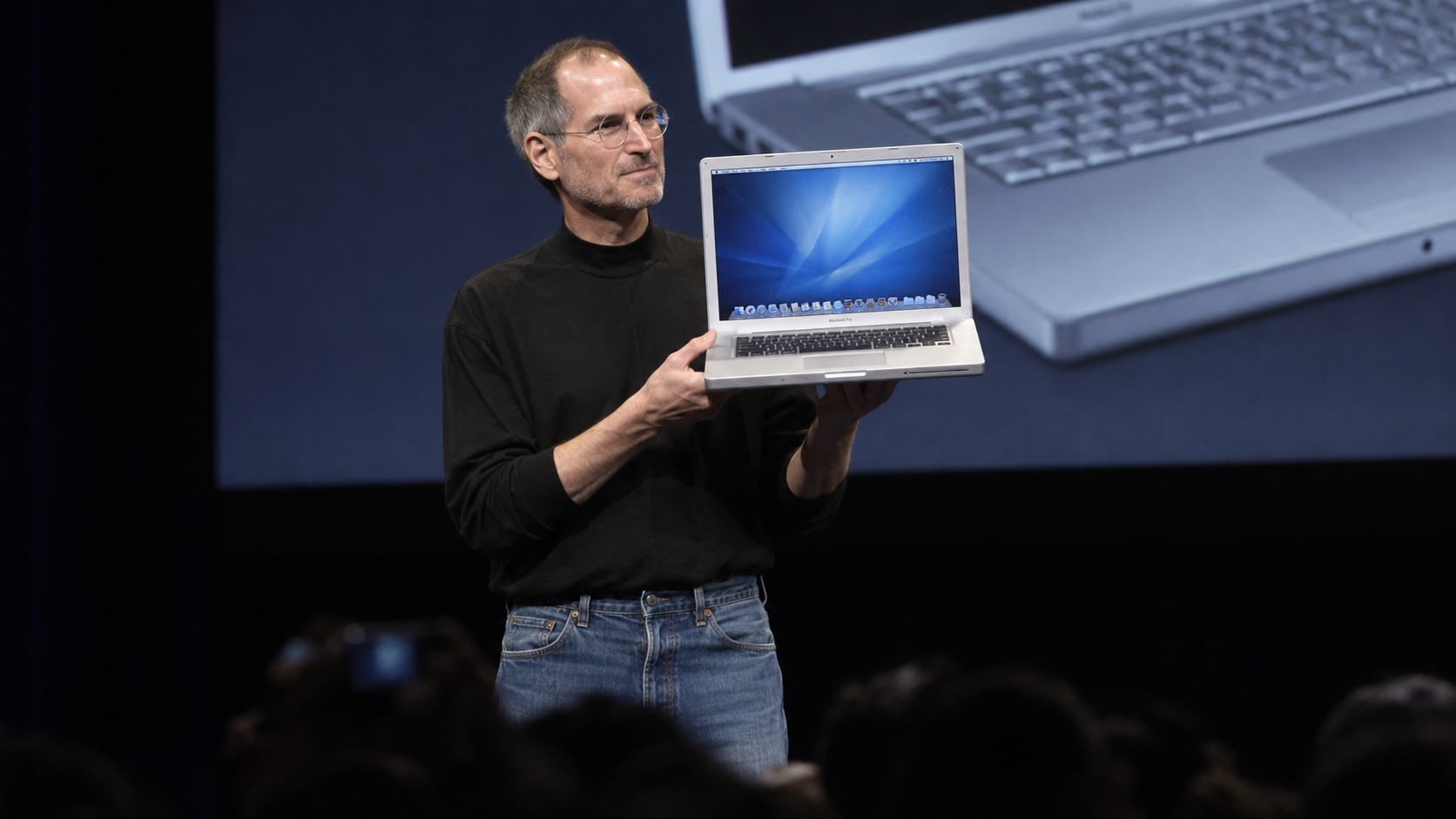
On This Day in Tech: January 20, 2006
On January 20, 2006, Apple made a pivotal announcement that would forever change the landscape of personal computing with the release of the MacBook Pro. This new laptop was the first in Apple’s lineup to feature Intel’s Core processors, signaling a major departure from the PowerPC chips that Apple had previously used. The switch to Intel processors was a bold move that not only enhanced the MacBook Pro’s performance but also marked the beginning of Apple’s shift towards using more standardized, industry-standard components in its devices. This was part of a broader strategy to improve the power, efficiency, and compatibility of its hardware.
The MacBook Pro was a game-changer in terms of design and functionality, with its sleek aluminum casing and powerful capabilities. It featured a 15-inch widescreen display, up to 2GB of RAM, and an ATI Mobility Radeon X1600 graphics card, making it one of the most powerful laptops available at the time. With the new Intel Core processors, the MacBook Pro delivered faster performance, better battery life, and the ability to run both macOS and Windows, thanks to the included Boot Camp software. This flexibility greatly expanded its appeal to professional users and students alike, who could now use a Mac while still being able to access Windows applications.
Apple’s decision to embrace Intel processors was a turning point for the company. It helped Apple bridge the gap between its own proprietary architecture and the larger PC market. For many users, the launch of the MacBook Pro solidified Apple as a serious competitor in the laptop market, moving beyond its previous reputation as a niche player. It also paved the way for future products, including the MacBook Air and the MacBook, which would follow in subsequent years, further solidifying the MacBook line as a staple of Apple’s product lineup.
The MacBook Pro’s success wasn’t just about raw power; it was also a statement of Apple’s design philosophy. The laptop was sleek, minimalist, and stylish, maintaining Apple’s commitment to aesthetics while delivering top-tier performance. It became a favorite among creative professionals, designers, developers, and business users, and over time, the MacBook Pro would go on to define Apple’s premium laptop offerings for over a decade. The introduction of the MacBook Pro on January 20, 2006, was a key milestone in Apple’s rise as a dominant force in the tech industry.
On January 20, 2000, Microsoft faced a critical antitrust ruling in a U.S. District Court case. The court found that Microsoft had used its dominant position in the personal computer operating system market to stifle competition, especially with its bundling of Internet Explorer to eliminate rival browsers like Netscape Navigator. The case was a landmark in tech history and reshaped the way the government would regulate major tech companies in the future.
The ruling was a direct result of a lawsuit filed by the U.S. Department of Justice, alleging Microsoft’s monopolistic practices in the software industry. This case would define the legal landscape for future antitrust litigation in the tech sector.
The ruling initially ordered Microsoft to be split into two separate entities, one focused on the operating system and the other on software applications. However, this decision was later altered through a settlement in 2001. While the company avoided the breakup, Microsoft was forced to adhere to stricter regulations, such as allowing third-party software to be installed on Windows-based computers and revising business practices to ensure fairer competition.
Though the original split was avoided, the case forced Microsoft to change how it engaged with competitors and consumers, particularly with regard to its market practices and product bundling strategies.
In the long run, the case established a new approach to antitrust enforcement in the technology sector, emphasizing the importance of competition in fostering innovation and protecting consumers. It influenced the way future antitrust cases involving tech giants, like Google and Apple, would be handled by regulators.
Additionally, the Microsoft antitrust case highlighted the growing role of technology in shaping global economies, setting the stage for future conversations about regulation, monopolies, and the power of Silicon Valley giants. The repercussions of this case are still being felt today as governments around the world grapple with regulating modern tech companies.
Explore more of "On This Day ..."
Discover more events from the same date across news, politics, technology, sports, and other fields. Each link highlights significant moments that shaped history on different fronts.