

On This Day in Tech: January 23, 1993
The launch of the Pentium processor was a pivotal moment in the evolution of computer technology. Prior to its release, Intel’s 486 processors had been the dominant force in the PC market, but they were starting to show signs of being outpaced by the increasing demands for faster and more powerful machines. The Pentium’s introduction marked the beginning of a new era for both personal computers and the computing industry as a whole. With clock speeds starting at 60 MHz and a more efficient pipeline, the Pentium allowed PCs to handle larger software applications and offered improved performance in graphics, gaming, and data processing.
Intel’s Pentium processor also set the stage for future generations of processors. Its architecture laid the foundation for subsequent innovations in chip design, leading to even faster and more capable processors in the years to come. The Pentium’s success contributed to Intel’s dominance in the processor market, a position the company would maintain for many years. As PCs became faster and more reliable, businesses, consumers, and industries were able to harness the power of these machines in new and innovative ways, including more immersive multimedia experiences and complex data analysis.
The Pentium also made Intel a household name, and its release marked the beginning of a new level of competition in the tech world. The powerful performance of the Pentium processor was critical in keeping Intel ahead of competitors like AMD and Motorola. Over the next few years, the Pentium family of processors would evolve with new versions offering even higher speeds, better capabilities, and more integration with other hardware components, further shaping the personal computer industry into what it is today
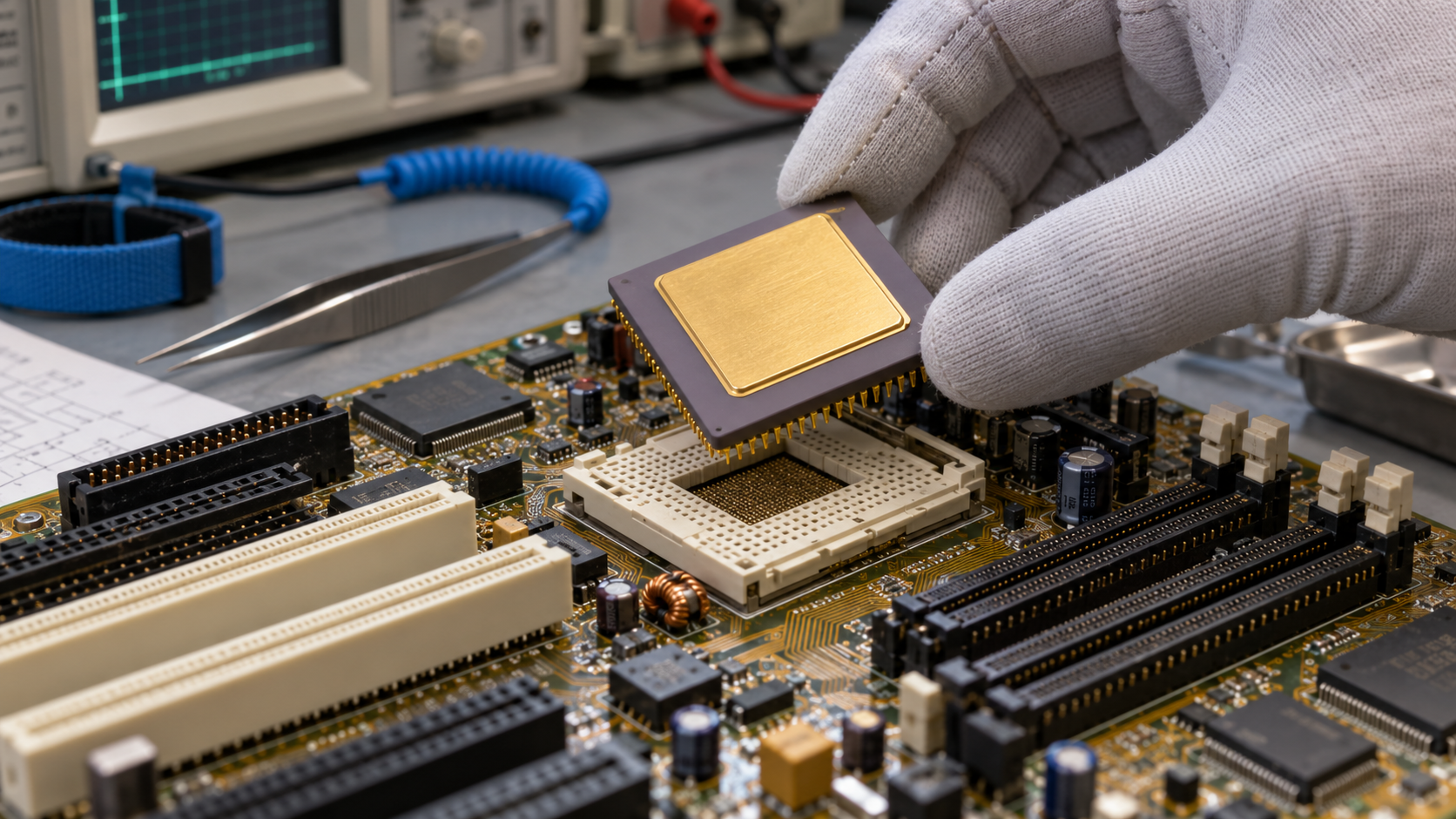
On January 23, 1993, Intel launched the Pentium processor, a revolutionary advancement in computer architecture that significantly improved processing speeds, multitasking capabilities, and the overall user experience. The Pentium chip introduced superscalar architecture, allowing it to execute multiple instructions per clock cycle, paving the way for faster and more powerful personal computers.
The introduction of the Pentium processor marked a major leap forward in computing, replacing the 486 processor and setting new standards for the industry. It was designed to handle complex tasks such as graphics rendering, gaming, and data processing with much greater efficiency than its predecessors.
While the Pentium processor was a game-changer, its immediate impact was not without some limitations. At its launch, the chip was considered cutting-edge, offering speeds up to 60 MHz. However, there were still hardware compatibility issues as the industry had to adapt to the new architecture. The transition from the older 486 chips to Pentium-based systems was not instantaneous, and it took some time for software developers to fully exploit the processor’s capabilities.
Despite these challenges, the Pentium quickly gained traction in the market, offering a significant boost in personal computing performance. It played a crucial role in enabling more powerful PCs that could handle advanced tasks like video editing, 3D gaming, and complex data analysis.
The launch of the Pentium processor was a key moment in the ongoing evolution of computing technology. It laid the groundwork for future innovations, influencing subsequent generations of microprocessors that would continue to push the boundaries of speed, power, and efficiency. The Pentium’s architectural advancements set the stage for the development of even more powerful processors, including Intel’s later Core series and beyond.
On a broader scale, the Pentium processor represented a shift in how the world approached computing. It accelerated the growth of personal computers, making them more capable and accessible for businesses and individuals alike. Over the years, the Pentium chip became synonymous with high-performance computing, and its legacy continues to impact modern processors that power everything from smartphones to servers.
Explore more of "On This Day ..."
Discover more events from the same date across news, politics, technology, sports, and other fields. Each link highlights significant moments that shaped history on different fronts.