

On This Day in Tech: January 31, 1958
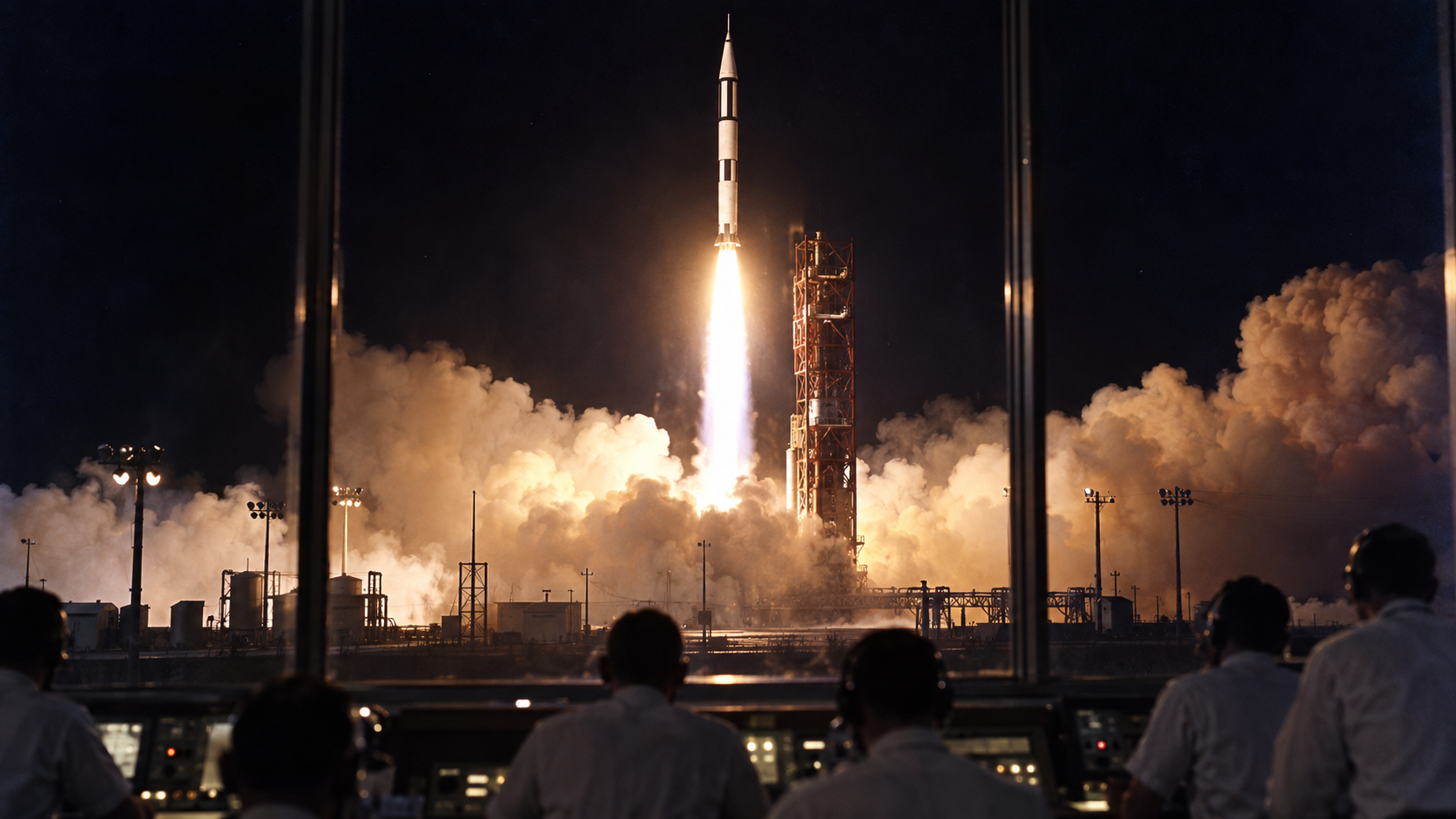
In the tense years of the Cold War, the night sky became a new arena for technological rivalry. On January 31, 1958, the United States answered the Soviet Union’s Sputnik with the launch of Explorer 1, its first successful satellite. Riding into orbit atop a modified Jupiter-C rocket from Cape Canaveral, Explorer 1 instantly shifted the balance of prestige in the early space race. For the teams at the Army Ballistic Missile Agency and the Jet Propulsion Laboratory, who designed and built the slender, pencil-shaped spacecraft in a matter of months, the launch was both a technical triumph and a much-needed political statement that the U.S. could compete in space.
Though it weighed only about 30 pounds, Explorer 1 carried instruments that made it far more than a symbolic reply. At its heart was a cosmic-ray detector developed by physicist James Van Allen and his colleagues, supplemented by temperature sensors and a micrometeorite detector. As the satellite circled Earth again and again, its data revealed puzzling gaps and spikes in radiation counts. These odd patterns were eventually recognized as evidence that the detector was being overwhelmed by intense belts of charged particles trapped by Earth’s magnetic field. The finding led to the identification of what are now known as the Van Allen radiation belts, one of the earliest major scientific discoveries of the Space Age and a foundational insight for understanding how near-Earth space affects both satellites and astronauts.
Explorer 1 transmitted science data for several months before its batteries finally failed, but its legacy extended far beyond its limited operational life. The mission helped establish many of the engineering practices that would define early satellite design, from structural testing to reliable radio telemetry. It underscored how even relatively small spacecraft could return results with global scientific and strategic significance. Politically, the success strengthened arguments for a centralized civilian space program, contributing to the creation of NASA later in 1958 and setting the stage for more ambitious robotic and crewed missions. Explorer 1 itself remained in orbit for more than a decade before reentering the atmosphere in 1970, but the program it began continued, with later Explorer satellites probing everything from solar winds to distant X-ray sources. The launch of Explorer 1 on January 31 stands as a defining moment when technology, science, and geopolitics converged to open a new era above the Earth.
By January 31, 1958, the United States was under intense pressure in the early Space Race. The Soviet Union had stunned the world with the launches of Sputnik 1 and Sputnik 2 in late 1957, while the first U.S. attempt to launch a satellite, Vanguard TV3, had failed dramatically on the launch pad. In response, the Army Ballistic Missile Agency and the Jet Propulsion Laboratory were tasked with rapidly preparing an alternative mission.
On the night of January 31, a modified Jupiter-C rocket lifted off from Cape Canaveral carrying Explorer 1, a slender, lightweight satellite designed and built in just a few months. Its successful insertion into orbit made Explorer 1 the first U.S. satellite and signaled that American rocketry and space technology could compete on the world stage, easing political concerns about falling behind in science and defense.
Explorer 1 was modest in size—about 30 pounds—yet it carried a carefully chosen set of instruments, including a cosmic-ray detector designed by physicist James Van Allen, as well as temperature and micrometeorite sensors. Its launch provided an immediate boost to U.S. morale and credibility, demonstrating that the country could place and track a satellite in orbit and return useful scientific data.
The mission also had clear technical constraints. Explorer 1 relied on battery power, so its radio transmissions lasted only a few months. It lacked onboard tape recorders, limiting the ability to capture continuous data. Despite these limitations, the readings it did return were enough to show puzzling patterns in radiation levels—clues that something significant was happening in near-Earth space.
Analysis of Explorer 1’s data led to the discovery of the Van Allen radiation belts, regions of charged particles trapped by Earth’s magnetic field. This was one of the first major scientific achievements of the Space Age and reshaped understanding of how radiation in space affects satellites, communications, and human spaceflight. The discovery proved that even small, focused missions could fundamentally advance space science.
The success of Explorer 1 also influenced policy and technology on the ground. It strengthened the case for a coordinated civilian space program, contributing to the creation of NASA later in 1958, and helped establish engineering standards for future satellites. Subsequent Explorer missions built on this foundation, studying everything from solar winds to X-ray sources, while the original January 31 launch became a symbolic turning point in the history of American space and technology leadership.
Explore more of "On This Day ..."
Discover more events from the same date across news, politics, technology, sports, and other fields. Each link highlights significant moments that shaped history on different fronts.