

On This Day in Tech: February 5, 1971
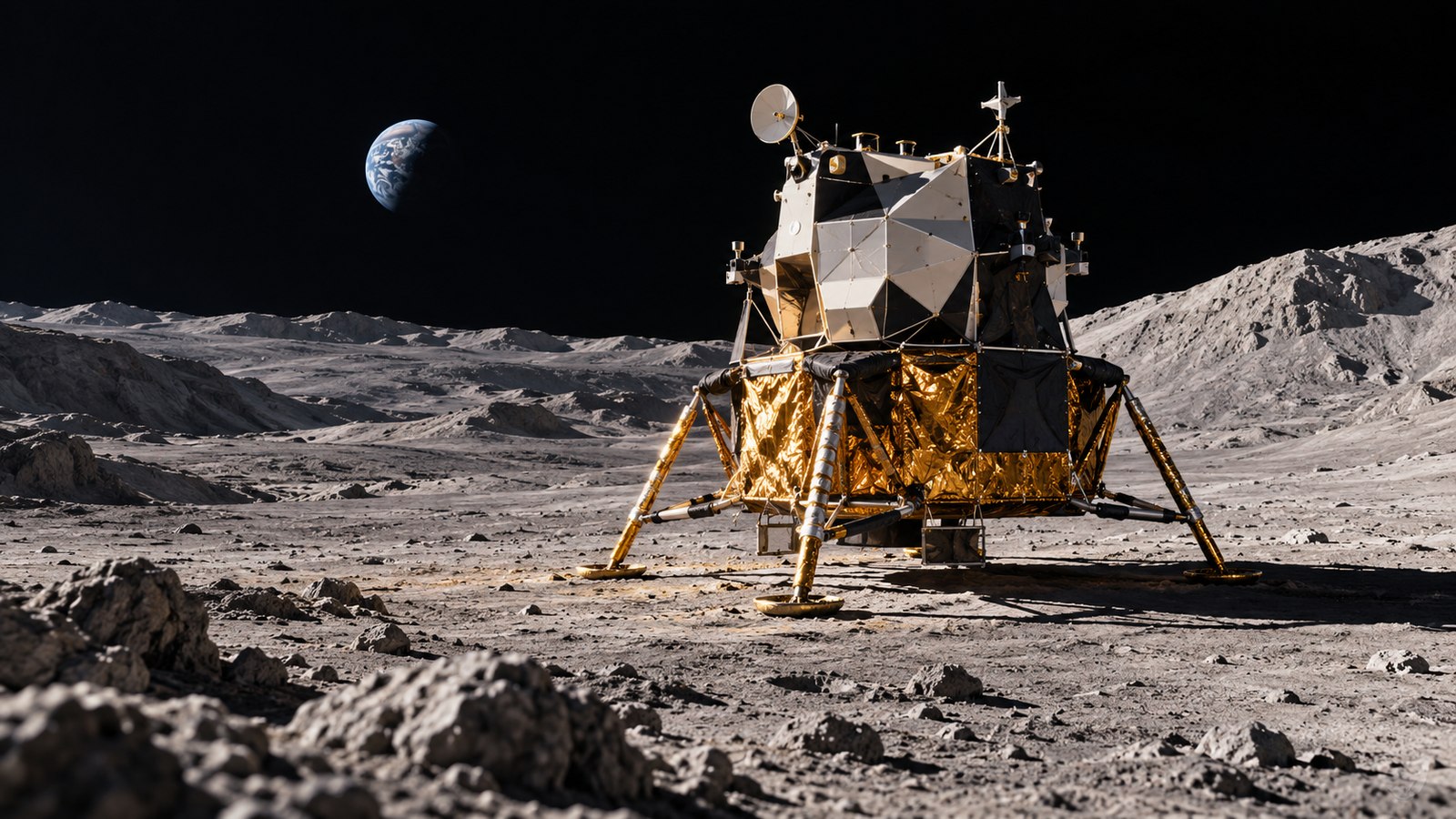
On February 5, 1971, in the Fra Mauro highlands of the Moon, Apollo 14 astronauts Alan Shepard and Edgar Mitchell descended in the lunar module Antares while Stuart Roosa remained in orbit. Antares landed safely, beginning the third successful crewed exploration of the lunar surface. The mission reached a region originally targeted by Apollo 13 and focused on collecting material linked to the Imbrium impact basin. The event emerged from a specific set of technical goals rather than from a single flash of invention. Engineers, operators, and institutions had spent years translating laboratory ideas into equipment that could work under real conditions. What happened that day gave the public a clear, observable milestone, while the larger project still depended on testing, funding, training, and careful coordination.
Apollo 13’s accident had interrupted the landing sequence and prompted NASA to review spacecraft systems and emergency procedures. The crew faced navigation demands, uneven terrain, a balky docking mechanism earlier in the mission, and a computer signal that threatened descent. Engineers developed procedures to work around the abort signal, while the lunar module’s guidance, radar, engine, and landing gear handled the approach. That background matters because the milestone joined hardware, software, standards, and human judgment into one working system. The design had to perform reliably enough for practical use, not merely demonstrate an isolated principle. Earlier experiments had established pieces of the solution, but the February event showed how those pieces could be combined at a scale or level of confidence that changed what planners believed was possible.
Shepard guided Antares past the hazard, landed near the planned site, and prepared with Mitchell for two moonwalks. The astronauts deployed experiments, gathered rock samples, and traveled toward Cone Crater using a hand-pulled equipment carrier. The successful landing restored confidence after Apollo 13 and showed the program could adapt quickly to technical anomalies. The outcome was important on its own terms, yet it should not be mistaken for the final form of the technology. Performance limits, cost, safety, access, and competing approaches still shaped what came next. Even so, the date provided evidence that specialists, policymakers, businesses, or consumers could evaluate, and it moved the idea from proposal toward an operational path.
NASA resumed lunar surface science with improved tools, mobility planning, and a longer stay than earlier landing missions. The crew did not reach the rim of Cone Crater as planned, and lunar operations remained constrained by time, terrain, suit mobility, and communications. Apollo 14 returned valuable geological samples and reinforced procedures later used on the more ambitious Apollo 15, 16, and 17 expeditions. Later improvements often looked very different from the equipment used on the anniversary itself, but they built on the same underlying breakthrough in capability, organization, or public acceptance. The legacy also includes lessons about how technology spreads: success depends on institutions, standards, and users as much as on a machine. Remembering the event precisely helps separate the verified achievement of that day from developments that followed months or years later.
The key setting was the Fra Mauro highlands of the Moon. The people and institutions most directly involved were Apollo 14 astronauts Alan Shepard and Edgar Mitchell descended in the lunar module Antares while Stuart Roosa remained in orbit, connecting research with practical operations.
Before the anniversary, Apollo 13’s accident had interrupted the landing sequence and prompted NASA to review spacecraft systems and emergency procedures. The unresolved challenge was clear: The crew faced navigation demands, uneven terrain, a balky docking mechanism earlier in the mission, and a computer signal that threatened descent.
The technology at the center of the story can be summarized this way: Engineers developed procedures to work around the abort signal, while the lunar module’s guidance, radar, engine, and landing gear handled the approach. It supplied the practical foundation for the milestone.
The immediate result was documented in concrete terms: The astronauts deployed experiments, gathered rock samples, and traveled toward Cone Crater using a hand-pulled equipment carrier. Still, The crew did not reach the rim of Cone Crater as planned, and lunar operations remained constrained by time, terrain, suit mobility, and communications.
The longer significance rests on more than novelty. Apollo 14 returned valuable geological samples and reinforced procedures later used on the more ambitious Apollo 15, 16, and 17 expeditions.
The event connects to a broader pattern in technology history: reliable systems mature through testing, standards, investment, and use. Later versions changed, but the verified accomplishment on February 5, 1971 remained the reference point.
Explore more of "On This Day ..."
Discover more events from the same date across news, politics, technology, sports, and other fields. Each link highlights significant moments that shaped history on different fronts.