

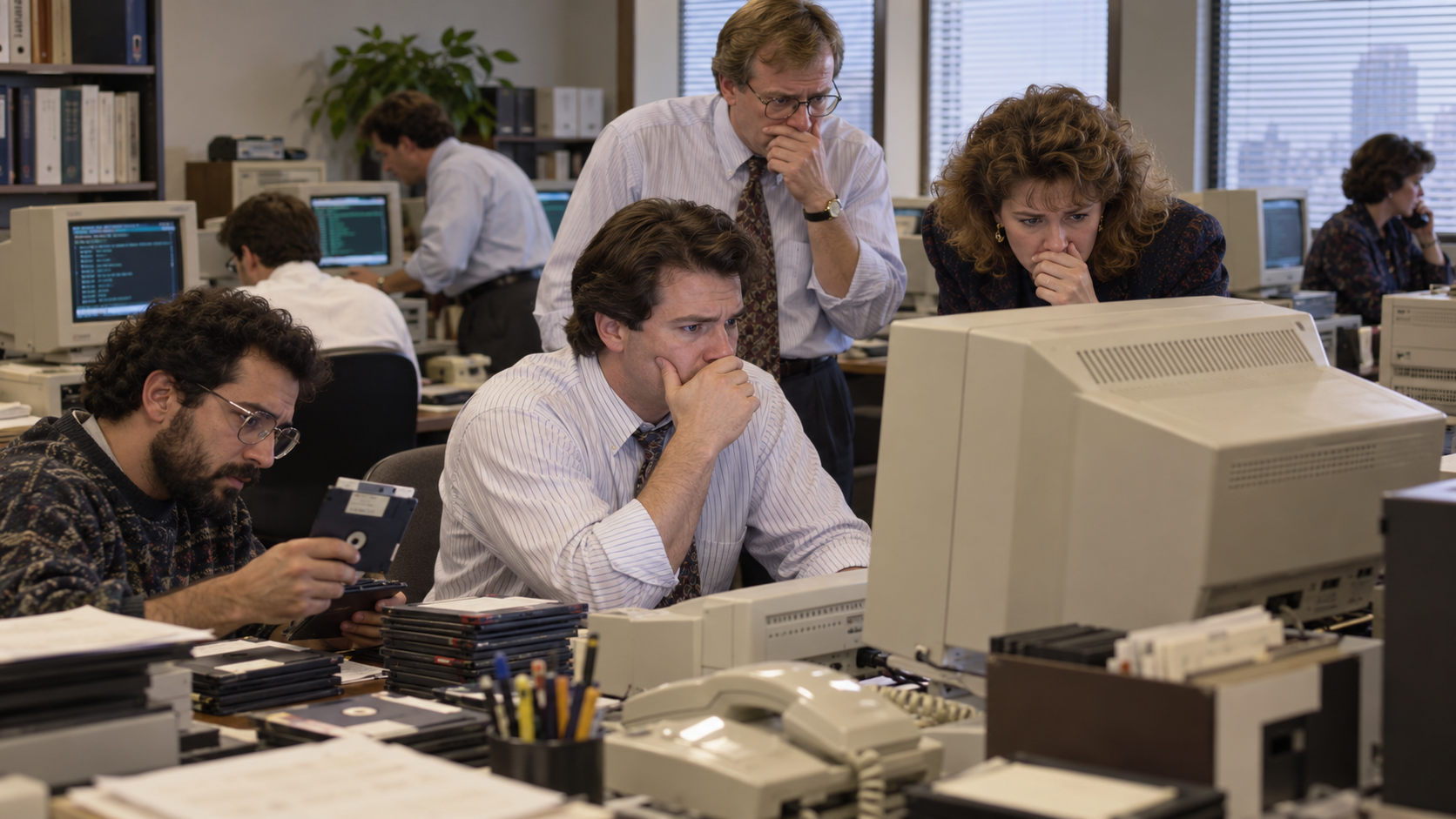
On This Day in Tech: March 6, 1992
On March 6, 1992, in computer systems worldwide, the Michelangelo boot-sector virus reached its programmed activation date after months of warnings that it could overwrite data on infected DOS computers. The people and institutions at the center of the milestone were personal-computer users, antivirus researchers, governments, and news organizations. The date matters because it captures a specific moment when an idea, device, network, or business decision moved beyond preparation and became visible in practice. It also offers a useful boundary between what was achieved that day and improvements that came later. Contemporary technology stories are often compressed into a single breakthrough, but this event depended on earlier experiments, skilled work, and an environment ready to test or adopt something new.
The essential background began with a practical problem. personal computers were spreading rapidly while removable floppy disks made it easy for malicious code to move between otherwise unconnected machines. The central technology can be summarized clearly: the virus infected disk boot sectors, remained dormant, and was designed to overwrite portions of attached storage on March 6. Engineers still had to balance performance, cost, reliability, compatibility, and the needs of real users. Those constraints explain why the milestone was not inevitable and why apparently small design or organizational choices carried long consequences. Earlier work had supplied important pieces, but the participants had to combine them into a system or decision that could operate outside a narrow demonstration.
On the anniversary itself, organizations scanned systems and distributed detection tools before the date, sharply reducing the number of damaged machines. the feared disaster proved far smaller than early estimates, but the episode brought computer security into mainstream public discussion. The immediate result was important without being the final form of the technology. sensational forecasts obscured uncertainty about infection levels and encouraged both preparation and unnecessary panic. That qualification is essential: technical progress rarely moves in a straight line, and publicity can run ahead of evidence. Even so, the event supplied a concrete result that researchers, companies, governments, or consumers could evaluate. It changed expectations about what the technology could do and gave later teams a tested point of departure rather than only a proposal.
The longer legacy reached beyond the original equipment and participants. the scare helped establish antivirus software, incident communication, and routine defensive scanning as normal parts of personal computing. Later products often looked very different, but they inherited methods, standards, markets, or lessons established around this milestone. The story also shows that technology develops through networks of people: inventors and programmers matter, but so do manufacturers, institutions, users, and rules that determine access. Remembering the exact date helps preserve that complexity. It allows the achievement of March 6, 1992, to stand on its own while keeping subsequent successes, limitations, and reinterpretations in the proper chronology.
The key setting was computer systems worldwide. The central participants were personal-computer users, antivirus researchers, governments, and news organizations, working within the technical and institutional limits of 1992.
personal computers were spreading rapidly while removable floppy disks made it easy for malicious code to move between otherwise unconnected machines. That unresolved need created the conditions for the anniversary milestone.
the virus infected disk boot sectors, remained dormant, and was designed to overwrite portions of attached storage on March 6. On the day itself, organizations scanned systems and distributed detection tools before the date, sharply reducing the number of damaged machines.
the feared disaster proved far smaller than early estimates, but the episode brought computer security into mainstream public discussion. Still, sensational forecasts obscured uncertainty about infection levels and encouraged both preparation and unnecessary panic.
the scare helped establish antivirus software, incident communication, and routine defensive scanning as normal parts of personal computing.
The milestone remains useful because it separates a verified accomplishment on March 6, 1992, from improvements and consequences that unfolded later.
Explore more of "On This Day ..."
Discover more events from the same date across news, politics, technology, sports, and other fields. Each link highlights significant moments that shaped history on different fronts.