

On This Day in Tech: September 14, 1959
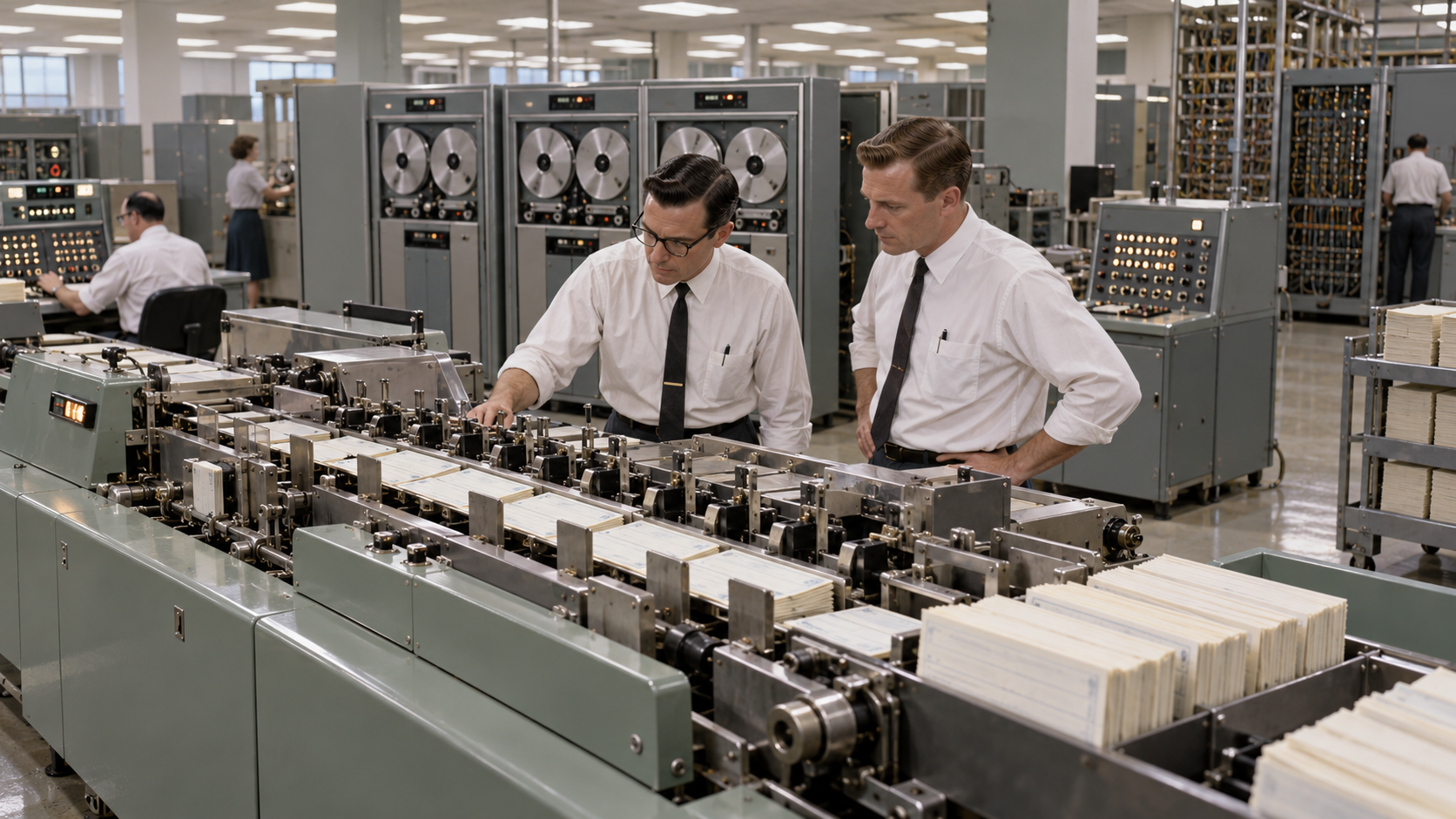
On September 14, 1959, Bank of America accepted ERMA, the Electronic Recording Method of Accounting. Developed at Stanford Research Institute, the system used magnetic-ink character recognition to automate the processing of checks.
ERMA connected specialized scanners with a large computer system, allowing account numbers printed in magnetic ink to be read automatically. It addressed the growing volume of paper checks that was overwhelming manual bank-processing operations.
The system helped establish machine-readable banking documents and large-scale transaction automation. Its magnetic-ink approach remains visible in the routing and account characters printed along the bottom of checks.
Bank of America’s expanding customer base created far more checks than traditional clerical workflows could process efficiently.
ERMA was designed around an entire operational problem: reading, sorting, posting, and tracking transactions at scale.
A scanner read characters printed with magnetic ink, reducing dependence on manual data entry and physical sorting.
The system combined computing hardware, document standards, and redesigned banking procedures.
ERMA demonstrated how computers could transform routine service infrastructure rather than remain limited to scientific calculation.
Source: Computer History Museum.
Explore more of "On This Day ..."
Discover more events from the same date across news, politics, technology, sports, and other fields. Each link highlights significant moments that shaped history on different fronts.