

On This Day in Tech: September 28, 2008
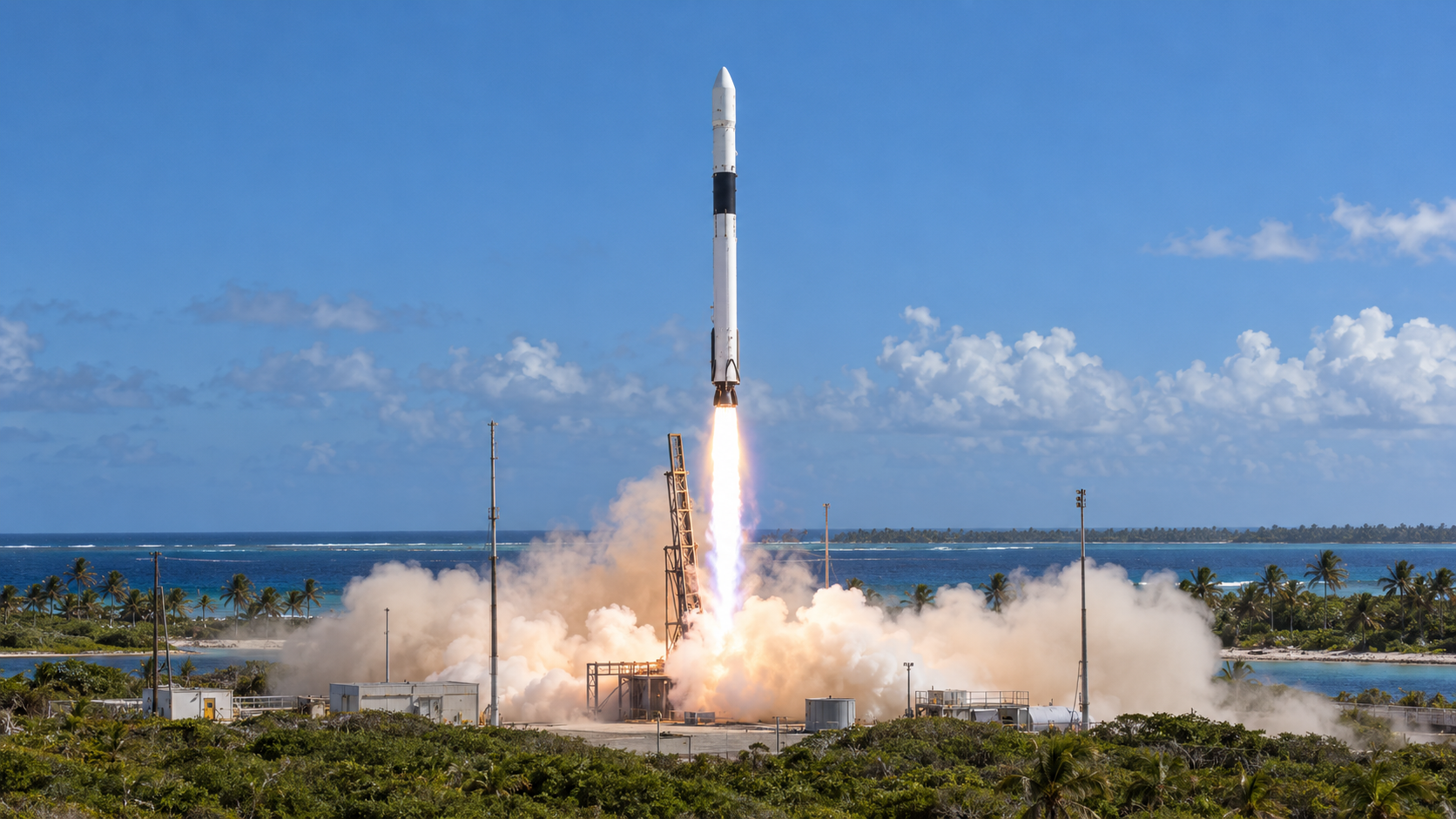
On September 28, 2008, a Falcon 1 rocket lifted off from Omelek Island in the Kwajalein Atoll and reached Earth orbit. It was the fourth flight of the small two-stage vehicle and the first success after three unsuccessful attempts. The achievement made Falcon 1 the first privately developed liquid-fueled rocket to enter orbit. That distinction mattered because orbital launch had previously been dominated by national programs and large government contractors. A young company had now designed, assembled, tested, and operated a complete orbital launch system with a comparatively small team and budget.
Falcon 1 used liquid oxygen and refined kerosene in both stages. Its first stage was powered by a Merlin engine, while a smaller Kestrel engine propelled the upper stage. The fourth flight carried a demonstration payload often called RatSat rather than an operational satellite. NASA’s annual aeronautics and space report recorded an orbit of roughly 622 by 643 kilometers, with a period of about 97 minutes. Reaching that path required accurate steering, stage ignition, and velocity control long after the rocket had disappeared from observers on the island. The payload did not separate from the upper stage, but the launch vehicle had completed the essential task: accelerating through the atmosphere and placing its upper stage into a stable orbit.
The success was especially significant because rocket development exposes small flaws with unforgiving speed. Falcon 1’s earlier flights had revealed problems in launch operations, propulsion, stage separation, and timing. Engineers revised the vehicle and procedures between attempts, using actual flight data rather than treating each failure as the end of the program. Flight four demonstrated the value of that iterative approach. It also showed prospective customers and public agencies that a new commercial entrant could perform a mission that required precision across engines, guidance, structures, communications, and ground control.
Falcon 1 flew only once more, successfully carrying Malaysia’s RazakSAT satellite in 2009, before the program ended. Its greater legacy was the knowledge, hardware experience, and organizational confidence that fed later vehicles. The larger Falcon 9 and Dragon programs expanded commercial access to orbit, cargo delivery, crew transportation, and reusable launch operations. Those later achievements used different hardware and far greater capacity, so Falcon 1 should not be credited with accomplishing them directly. Still, the September 28 flight was a clear threshold moment: a privately developed liquid-fueled rocket had reached orbit and widened expectations about who could build and operate space transportation systems.
Orbital launch required coordinated performance from propulsion, guidance, structures, communications, and ground systems. In 2008, those capabilities were still associated mainly with governments and established aerospace contractors.
Falcon 1's fourth flight launched from Omelek Island on September 28 after three unsuccessful attempts. The small two-stage rocket carried a demonstration payload rather than an operational satellite.
The upper stage reached a stable orbit of roughly 622 by 643 kilometers. Although the demonstration payload did not separate, the vehicle achieved the mission's central launch-development objective.
The flight made Falcon 1 the first privately developed liquid-fueled rocket to reach Earth orbit. It validated an iterative program that had revised hardware and procedures using lessons from earlier flights.
Falcon 1 completed one additional successful mission in 2009 before the program ended. Its engineering and operational experience informed the larger launch systems that followed.
The milestone helped demonstrate that new commercial organizations could develop orbital transportation. It widened expectations for competition, public-private partnerships, and faster iteration in launch technology.
Explore more of "On This Day ..."
Discover more events from the same date across news, politics, technology, sports, and other fields. Each link highlights significant moments that shaped history on different fronts.