

On This Day in Tech: December 6, 1957
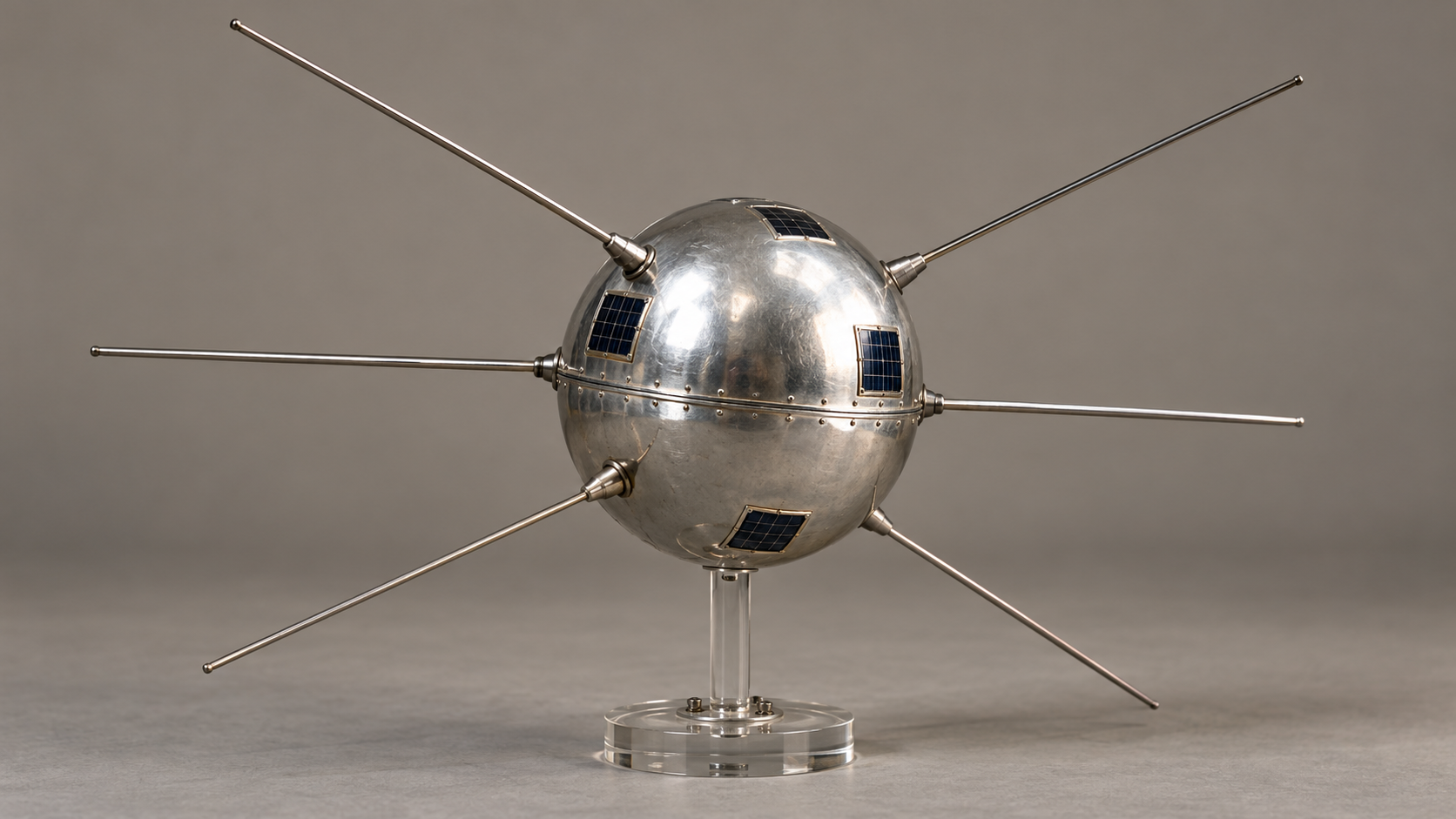
On December 6, 1957, the United States attempted to place a small satellite in orbit with Vanguard Test Vehicle 3 at Cape Canaveral, Florida. The Naval Research Laboratory led the Vanguard program, while the Martin Company developed the launch vehicle. The rocket began to rise, lost thrust almost immediately, and fell back onto the launch pad, where its propellants burned. The satellite was thrown clear and recovered, but it never reached orbit. This was an uncrewed test conducted before NASA existed, not a failed NASA astronaut mission. Its dramatic public visibility made a technical setback into a national embarrassment during the opening months of the space age.
Vanguard had been selected as an American contribution to the International Geophysical Year, a coordinated international effort to study Earth and its environment. Its three-stage launch vehicle was intended to accelerate a lightweight satellite to orbital speed. Earlier test vehicles had examined parts of the system; TV3 brought together three live stages in an attempt to orbit its small spherical payload. Launching a satellite required more than reaching a great height. The vehicle also needed sufficient horizontal velocity and a carefully controlled trajectory, with propulsion, staging, guidance, and tracking all working together under demanding conditions.
The political setting intensified expectations. The Soviet Union had launched Sputnik 1 in October 1957 and Sputnik 2 in November, demonstrating orbital capability before either American effort succeeded. American newspapers attached mocking names to the Vanguard failure, but the images of the burning pad did not explain every engineering detail. Accounts differ about precisely how high the rocket rose, and the essential result is clearer than any single reported measurement: the first stage failed to sustain the ascent. A competing Army and Jet Propulsion Laboratory effort subsequently placed Explorer 1 in orbit in early 1958. Vanguard’s unsuccessful test did not mark the end of American satellite development.
The Vanguard program itself achieved orbit with Vanguard 1 on March 17, 1958. That later success must be distinguished from the failed December launch and from the creation of NASA in 1958. Vanguard also developed tracking methods and engineering experience useful beyond one vehicle. The recovered TV3 satellite became a museum artifact, preserving a physical connection to an attempt that was publicly unsuccessful but technically informative. December 6 illustrates a central difficulty of early spaceflight: an integrated machine can fail even when many individual components have already been tested. Progress required examining such failures, correcting weaknesses, and demonstrating performance through further flights rather than treating a single televised setback as a final verdict.
Vanguard was connected with the International Geophysical Year, whose scientific investigations extended across national boundaries. The effort included developing the ability to measure the environment beyond the atmosphere.
TV3 was an integrated three-stage test rather than the first occasion on which every Vanguard component had been fired. Combining stages introduced problems that separate tests could not fully settle.
The payload was recovered after the pad accident, but recovery did not turn the flight into an orbital success. Its intended mission had not taken place.
Published accounts give different small liftoff heights. This article avoids choosing a disputed precise figure and focuses on the agreed sequence of thrust loss and collapse.
Explorer 1's successful launch and Vanguard 1's later orbit belonged to different American efforts. Their achievements should not be merged into the December test.
Vanguard's tracking infrastructure and engineering experience outlasted TV3. The program's history includes both the failure that attracted headlines and the subsequent work that delivered usable capability.
Explore more of "On This Day ..."
Discover more events from the same date across news, politics, technology, sports, and other fields. Each link highlights significant moments that shaped history on different fronts.