

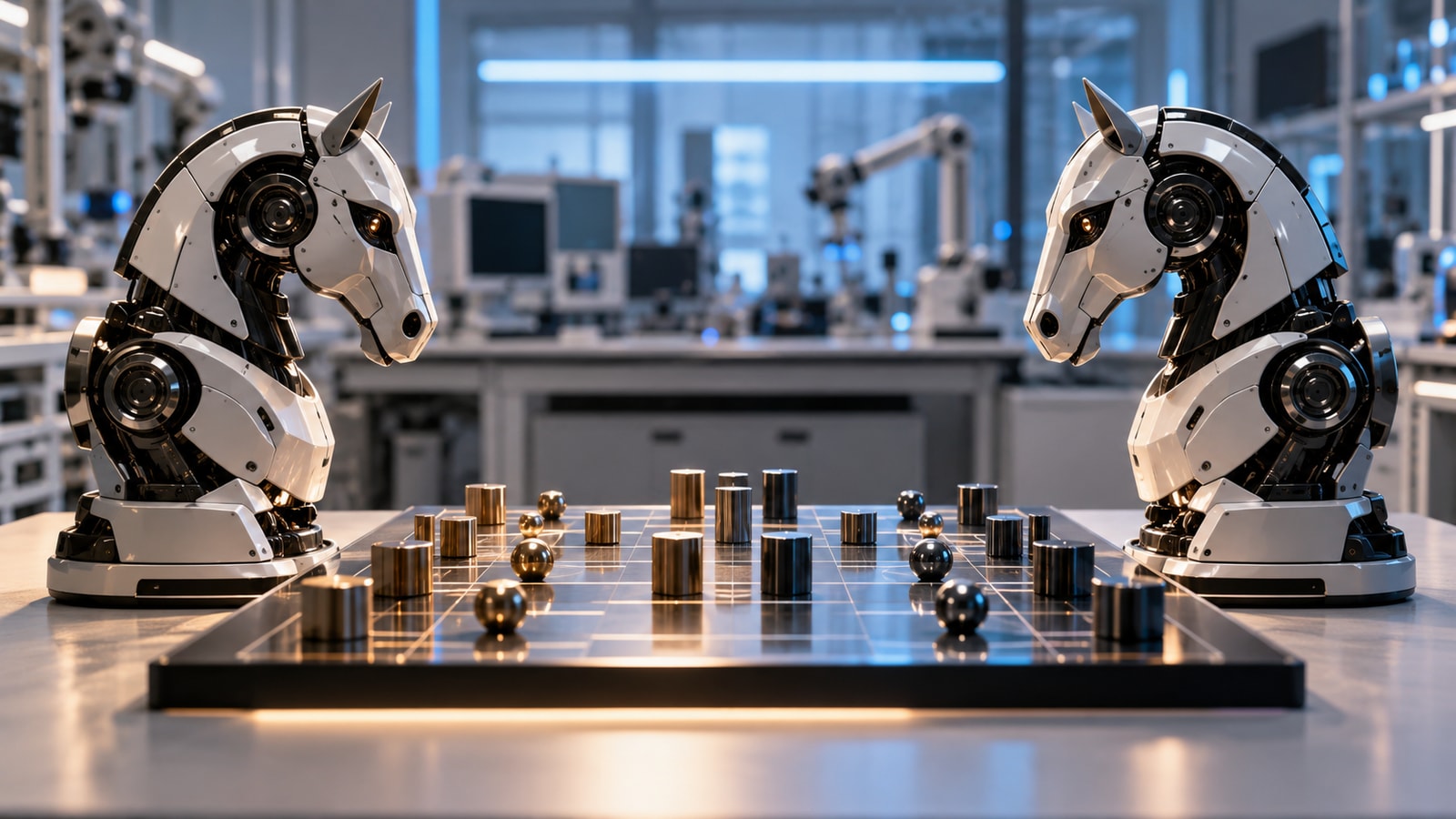
Self-Play in Artificial Intelligence Explainer
Self-play is a training approach in which an agent learns through games or interactions against copies, variants, or earlier versions of itself. As the agent improves, its opponents can improve too, creating an automatic curriculum.
Training data come from the agents’ own experience rather than a fixed collection of expert moves. Systems may combine self-play with search, reinforcement learning, league-style opponent pools, or checkpoints that prevent the latest policy from forgetting older strategies.
Self-play has produced strong results in board games, poker, video games, and simulated multi-agent control. It is especially useful when the rules and outcomes are clear but comprehensive demonstrations are unavailable or would limit discovery.
A population can cycle, overfit to its own strategies, exploit simulator flaws, or miss behaviors no opponent discovers. Compute costs can be high. Evaluation against diverse fixed opponents and real-world constraints is therefore essential.
Self-play trains an agent by having it compete or interact with copies and past versions of itself.
Key terms include self-play, policy, opponent pool, curriculum, checkpoint, search, game, exploitability and simulation.
Copies and historical versions create challenges matched to the learner’s current ability.
Opponent pools can preserve strategic diversity and reduce forgetting or cycles.
Agents may become strong against themselves while remaining vulnerable to unfamiliar strategies.
External opponents, simulator audits, and deployment tests reveal blind spots.
Explore more "Explainers"
Discover additional explainers across politics, science, business, technology, and other fields. Each explainer breaks down a complex idea into clear, everyday language—helping you better understand how major concepts, systems, and debates shape the world around us.