

Neural Radiance Field Explainer
A neural radiance field, usually called NeRF, represents a three-dimensional scene with a neural function. Given a 3D location and a viewing direction, the function predicts density and the color of light traveling toward the camera.
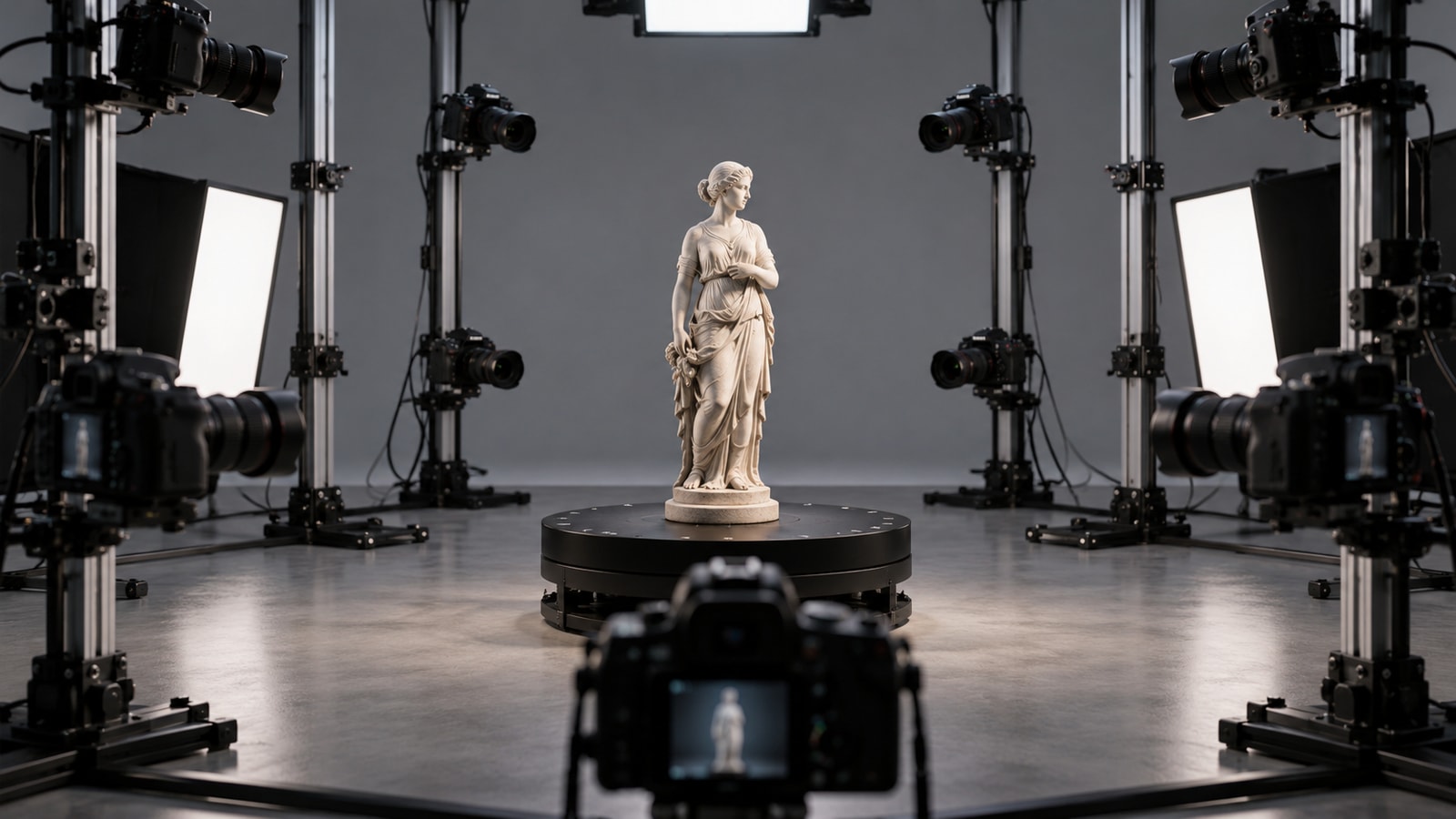
Training uses photographs of a mostly static scene and estimated camera poses. For each pixel, the system samples points along a camera ray and applies volume rendering to compare a predicted color with the observed image.
After training, NeRF can synthesize views from camera positions that were not in the original set. The idea has influenced virtual production, cultural preservation, robotics, mapping, and interactive 3D capture.
Classic NeRF training and rendering can be slow, and results may fail in areas hidden from every camera. Motion, reflections, transparent materials, inaccurate poses, and lighting changes add difficulty. Later systems improve speed and quality, but capture conditions still matter.
A neural radiance field learns a continuous 3D scene representation from photographs taken at known camera viewpoints.
Key terms include NeRF, radiance field, camera pose, viewing direction, density, camera ray, volume rendering and novel view.
A neural function predicts color and density at sampled points in space.
Volume rendering combines those predictions along each camera ray to reproduce training images.
The model interpolates most reliably where photographs provide overlapping evidence.
Hidden surfaces, motion, reflections, and pose errors can create artifacts.
Explore more "Explainers"
Discover additional explainers across politics, science, business, technology, and other fields. Each explainer breaks down a complex idea into clear, everyday language—helping you better understand how major concepts, systems, and debates shape the world around us.