

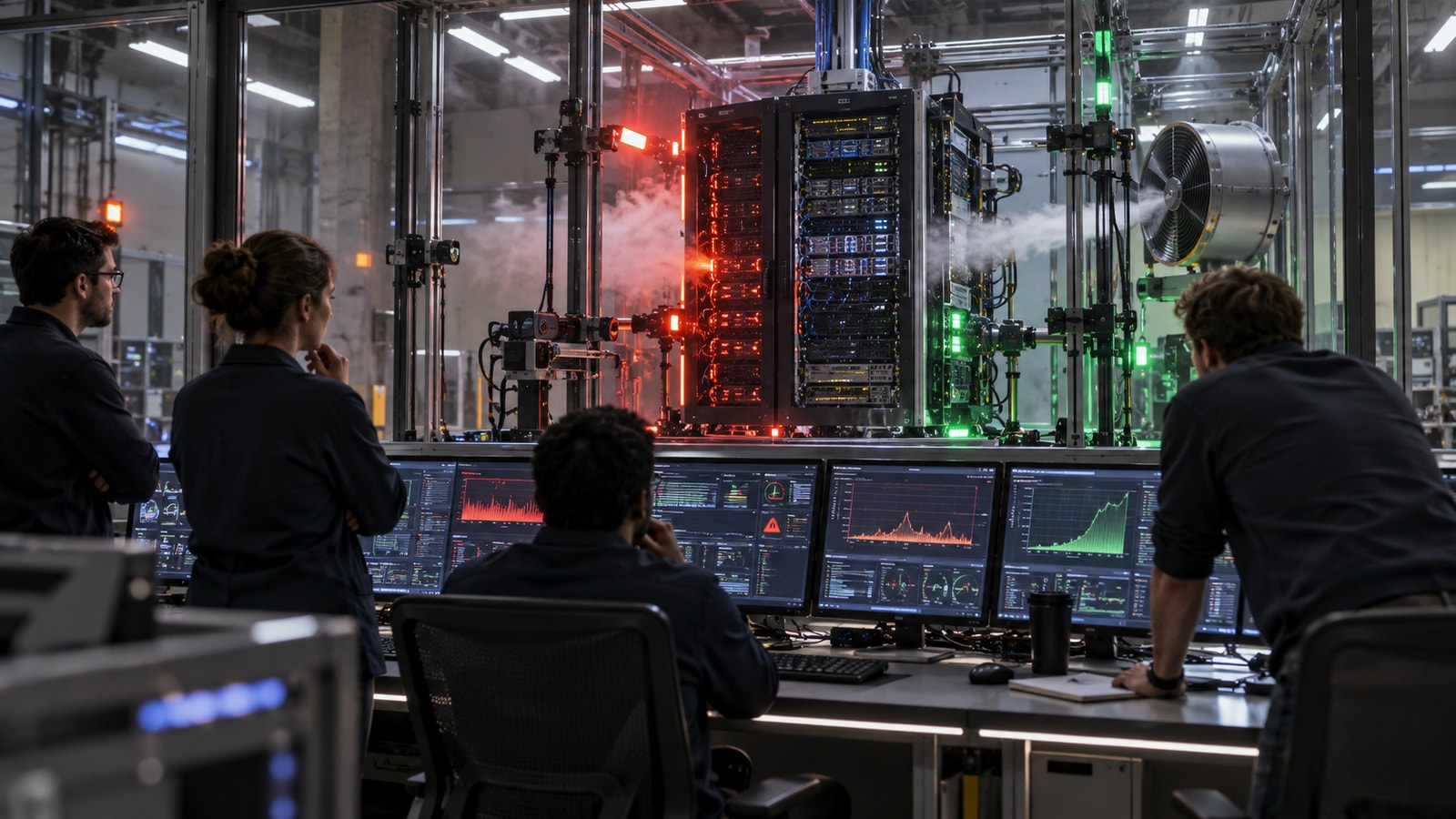
AI Stress Testing Explainer
AI stress testing deliberately places an AI system under demanding, unusual, or adverse conditions. The aim is to expose limits, cascading failures, unsafe outputs, or operational breakdowns that ordinary evaluation may not reveal.
Scenarios can include heavy traffic, long inputs, repeated tool calls, missing dependencies, corrupted data, conflicting instructions, adversarial users, rare combinations, or simultaneous failures across several parts of the system.
A useful stress test defines the scenario, expected safety properties, load, duration, stopping conditions, and recovery criteria. Observers measure quality, latency, cost, error handling, resource exhaustion, containment, and restoration after the pressure ends.
Stress testing is not random chaos. Scenarios should connect to the system’s architecture and risk analysis. Findings may lead to resource limits, circuit breakers, degraded modes, isolation, rollback plans, or a smaller approved deployment scope.
AI stress testing pushes a system toward demanding or adverse conditions to discover breaking points, cascading failures, and unsafe behavior before real incidents.
Key terms include stress test, adverse scenario, breaking point, cascading failure, load, containment, degraded mode, recovery and circuit breaker.
Evaluators increase pressure or combine failures beyond routine operating conditions.
The purpose is to observe how the system fails, contains damage, and recovers.
Architecture, users, dependencies, and prior incidents guide the most valuable stress cases.
Results should update limits, safeguards, monitoring, and recovery plans.
Explore more "Explainers"
Discover additional explainers across politics, science, business, technology, and other fields. Each explainer breaks down a complex idea into clear, everyday language—helping you better understand how major concepts, systems, and debates shape the world around us.