

Body Composition Explainer
Step on a scale, and you get a single number. Body composition asks a deeper question: what actually makes up that number? Instead of focusing only on total weight, body composition breaks the body into components like fat mass, lean mass (including muscle and organs), bone, and body water. That breakdown gives a clearer picture of health risk than weight or body mass index (BMI) alone, because two people can weigh the same but have very different proportions of muscle and fat. It shifts the conversation from being “lighter” to being stronger, more resilient, and better supported by healthy tissues.
Health professionals pay close attention to excess body fat, particularly around the abdomen, because it is linked with higher risks of heart disease, type 2 diabetes, fatty liver disease, sleep apnea, and certain cancers. At the same time, too little muscle or bone can also be a problem, especially with aging. Loss of muscle (sarcopenia) and bone density (osteopenia or osteoporosis) can increase frailty, falls, and fractures even in people whose weight or BMI appears “normal.” Body composition helps reveal these hidden patterns by highlighting how weight is distributed across tissues and how those tissues support movement, metabolism, and everyday function.
There are many ways to measure body composition, and each has trade-offs in cost, convenience, and accuracy. Techniques like DEXA (dual-energy X-ray absorptiometry) scans and air displacement systems such as Bod Pod can estimate fat, lean mass, and bone with relatively high precision, but they usually require specialized equipment. Bioelectrical impedance devices, which send a tiny electrical current through the body, are more widely available in clinics, gyms, and consumer scales, though their results can be influenced by hydration, recent meals, and exercise. Simple methods such as waist circumference, waist-to-hip ratio, and skinfold calipers do not directly measure body composition but still provide useful clues about fat distribution and health risk when used consistently over time.
Because no method is perfect, trends over time often matter more than a single reading. Many health guidelines emphasize combining body-composition insights with other information: blood pressure, blood sugar, cholesterol levels, fitness testing, diet, and lifestyle factors. For some people, especially those with eating disorders, body-image concerns, or significant medical conditions, detailed tracking of body composition may not be appropriate and should be guided by a health professional. Used thoughtfully, however, body composition is one more tool—alongside how a person feels, functions, and lives day to day—for assessing health beyond the number on the scale and supporting long-term well-being.
Body composition looks beyond the number on a scale to describe what the body is made of—typically fat mass, lean mass (including muscle and organs), bone, and body water. Instead of focusing only on weight or body mass index (BMI), it highlights how different tissues are distributed throughout the body.
Interest in body composition grew as clinicians and researchers saw that people with the same weight or BMI could have very different health risks depending on how much muscle or fat they carried and where that fat was stored. This concept has become central in sports science, weight management, aging research, and preventive medicine, because it connects more directly to strength, metabolism, and disease risk than weight alone.
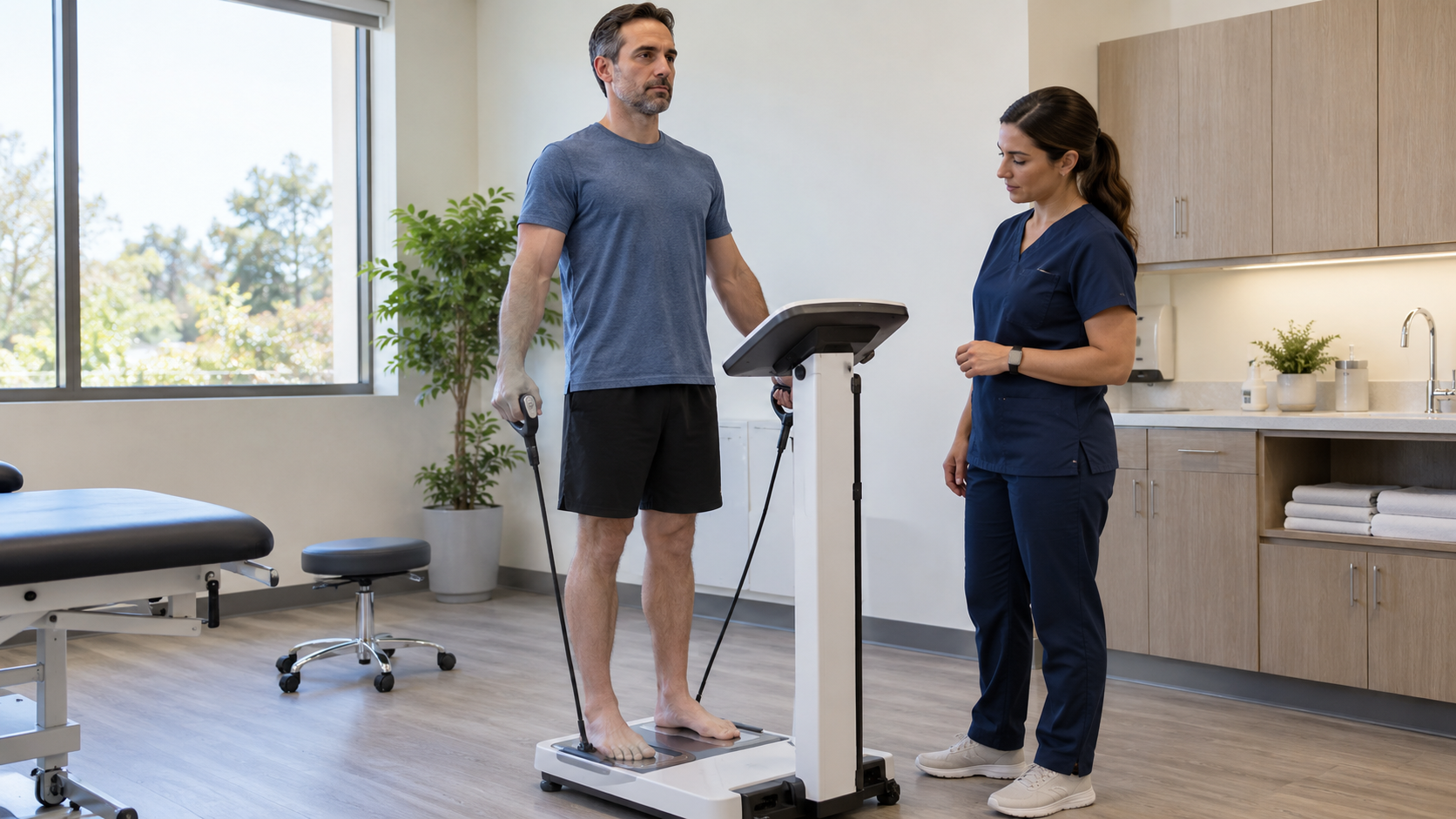
In practice, body composition can be assessed with a range of tools. More advanced methods like DEXA scans and air-displacement systems estimate fat, lean mass, and sometimes bone with relatively high precision, but they require specialized equipment. Bioelectrical impedance devices, including many home scales and gym analyzers, send a small current through the body to estimate body water and infer fat and lean mass.
Simpler approaches, such as waist circumference, waist-to-hip ratio, and skinfold calipers, do not measure every tissue separately but still provide useful clues about fat distribution and cardiometabolic risk. In clinics, sports programs, and wellness settings, these measurements are often combined with fitness tests, lab results, and medical history to guide training plans, nutrition strategies, and monitoring of chronic conditions.
Body composition metrics are informative, but they are not perfect. Hydration, recent meals, exercise, and device quality can all affect readings, especially with consumer bioimpedance tools. A single number—such as body fat percentage—may oversimplify complex health realities and can be misleading if viewed without context or trends over time.
There is also concern that frequent tracking can fuel anxiety, body image issues, or disordered eating for some people. Many experts emphasize using body composition as one piece of a broader picture that includes strength, stamina, lab markers, mental health, and quality of life. The ongoing debate focuses on how to use these measurements to support long-term health without encouraging obsessive monitoring or unrealistic ideals.
Explore more "Explainers"
Discover additional explainers across politics, science, business, technology, and other fields. Each explainer breaks down a complex idea into clear, everyday language—helping you better understand how major concepts, systems, and debates shape the world around us.