

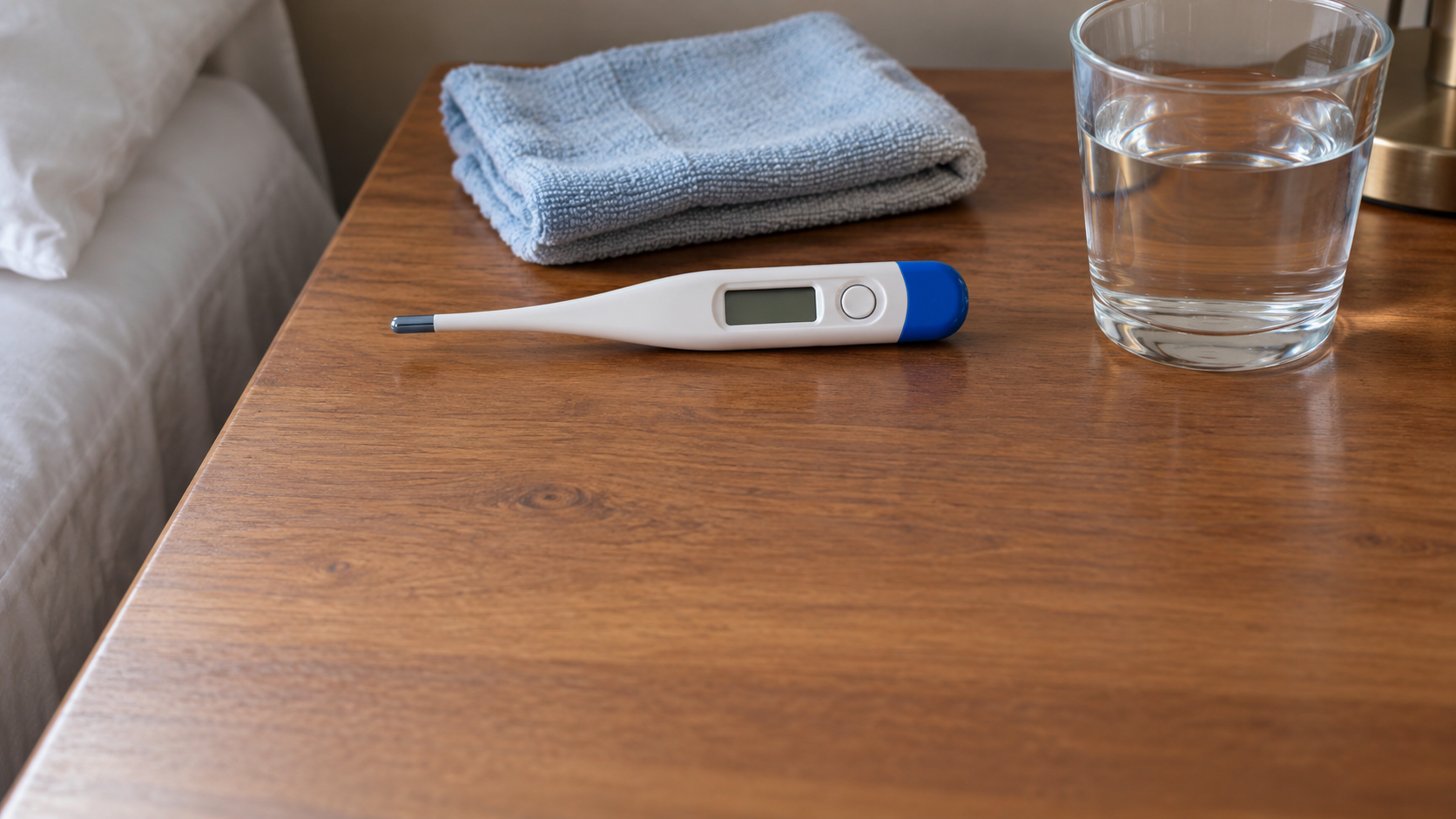
Fever Explainer
Fever is a rise in body temperature associated with the body’s response to illness, commonly an infection. It is a sign rather than a disease in itself. Normal temperature varies with the person, time of day, and measurement method, so one familiar number is not an exact boundary for every situation. The reading is useful information, but it does not identify the cause. A person’s age, medical history, symptoms, and overall condition help determine what the temperature means and whether assessment is needed.
The immune response and temperature regulation are connected. Fever can occur with many infections, and some inflammatory conditions or medicines can also produce it. Feeling hot after exercise or being overheated in a hot environment is not automatically the same clinical situation. A serious illness can sometimes occur without a high fever, particularly in vulnerable people. Treating the thermometer as a severity meter therefore has limits. How someone is breathing, responding, drinking, and moving can be as important as the number displayed.
Temperature measurement depends on the device and the body site used. Oral, ear, forehead, underarm, and rectal readings are not perfectly interchangeable. Correct technique and the device’s instructions matter, and a clinician should know how a reported temperature was obtained. Repeat readings using a consistent method can clarify a pattern without measuring constantly. Young infants require particular caution, and age-specific advice should guide the response. A fever accompanied by difficulty breathing, marked confusion, a stiff neck, or inability to wake normally requires urgent help.
Management addresses comfort, fluid needs, and the underlying cause. Fever-reducing medicines may help discomfort, but lowering the temperature does not prove that an infection is harmless or cured. The suitability of a medicine depends on age and medical circumstances, and children with fever should not be given aspirin. Persistent or worsening symptoms deserve reassessment. Understanding fever as one part of an illness makes the reading more useful: it helps describe what is happening without replacing observation of the whole person or assessment of the cause.
A familiar normal temperature is an average, not a fixed value that every healthy person maintains all day. Physical activity, the time of day, and individual differences affect readings. The threshold used to describe fever also depends on the method and clinical setting. That context helps avoid interpreting small differences between devices as evidence of a major change in health.
Fever commonly accompanies infection but is not specific to one germ or organ. Other symptoms and the medical history help narrow the possibilities. A low reading does not exclude serious illness, and a higher reading does not by itself identify a bacterial infection. Antibiotic decisions require an assessment of the likely cause rather than an assumption based only on temperature.
Thermometers measure temperature in different ways, so instructions about placement and timing should be followed. A forehead scanner and an underarm measurement can produce different results even when both were taken correctly. Reporting the value, measurement site, and device helps a clinician interpret the information. Switching between methods without recording them can make an apparent trend difficult to understand.
Age and health conditions change the level of concern. A fever in a very young infant needs prompt clinical advice, and people with weakened immune systems may have a specific action plan. Breathing problems, unusual drowsiness, confusion, a seizure, or a stiff neck deserve urgent attention. These features should not be ignored while waiting for another temperature reading.
Comfort measures and suitable fluids can support someone during illness, but treatment depends on the cause and their condition. Medicines should be used according to appropriate instructions, including age restrictions and warnings. Combining products can accidentally duplicate an ingredient. Questions about suitability are especially relevant for children, pregnancy, and people who have kidney, liver, or other ongoing medical problems.
Observation should include whether the person is drinking, urinating, breathing comfortably, and becoming more alert or less well. A persistent or worsening illness needs review even if medicine temporarily lowers the temperature. The goal is to respond to the illness and support recovery. Reaching a particular number on the thermometer is not the only measure of improvement.
Explore more "Explainers"
Discover additional explainers across politics, science, business, technology, and other fields. Each explainer breaks down a complex idea into clear, everyday language—helping you better understand how major concepts, systems, and debates shape the world around us.