

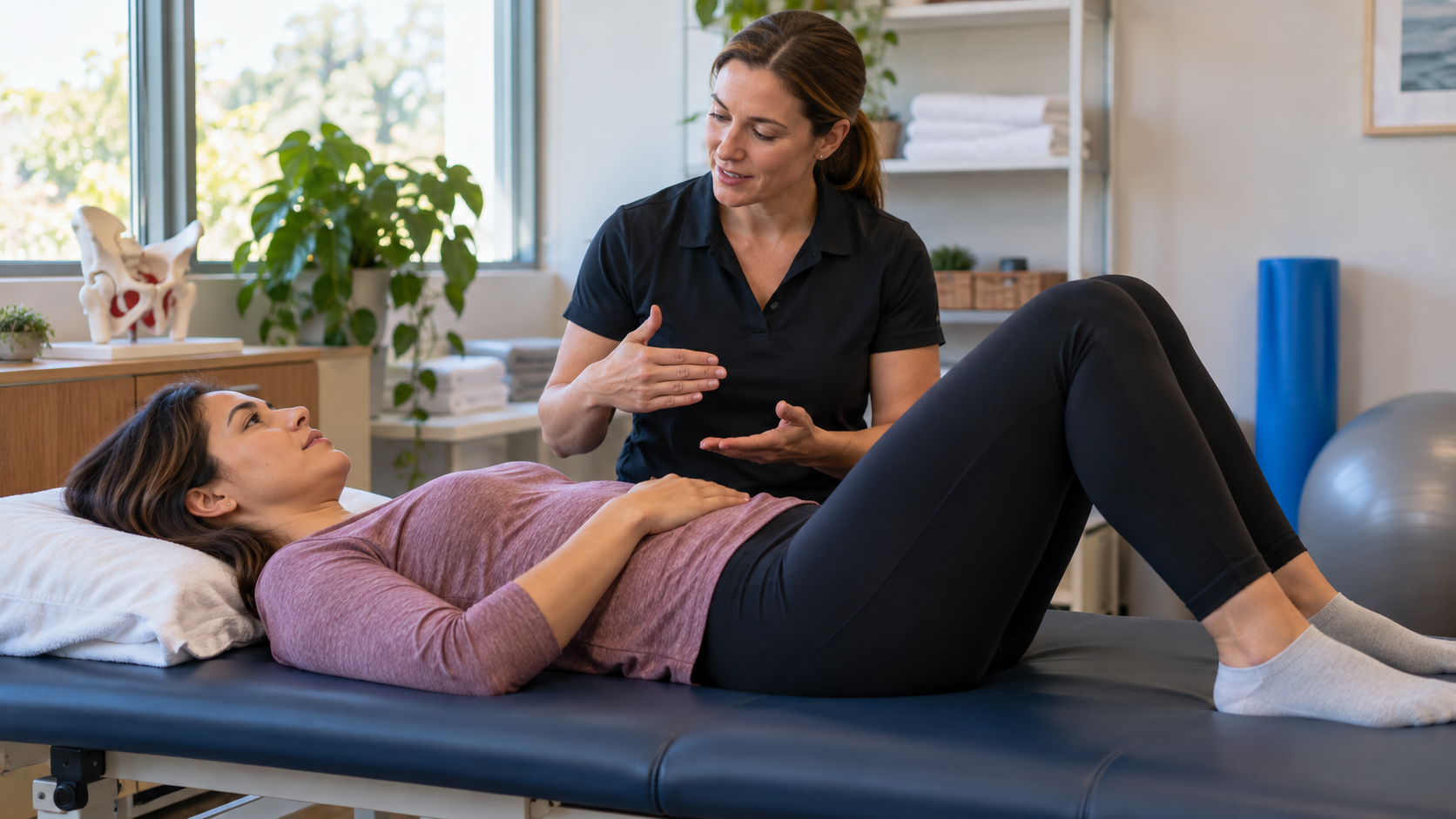
Pelvic Floor Muscles Explainer
The pelvic floor is a group of muscles and supporting tissues across the base of the pelvis. It helps support pelvic organs and contributes to control of the bladder and bowel. People of all sexes have a pelvic floor. Its work is less visible than the movement of an arm or leg, but it matters during ordinary activities such as coughing, lifting, using the toilet, and sexual activity.
Healthy function depends on coordination as well as strength. These muscles need to contract when support is required and relax when appropriate. A weak pelvic floor can contribute to leakage or reduced support. A floor that remains excessively tense can also cause trouble, including pain or difficulty emptying. Those patterns can overlap, so symptoms do not reveal the correct exercise simply by themselves.
Pregnancy, childbirth, aging, surgery, and other circumstances can affect pelvic support or muscle function. However, problems are not confined to people who have given birth. Urine leakage, bowel control difficulties, pelvic discomfort, or a sense of heaviness can have several causes. Treating every symptom as inevitable aging can delay help, while assuming every problem comes from the pelvic floor can miss another condition.
Assessment helps identify whether care should emphasize strengthening, relaxation, coordination, or another treatment. Pelvic health physiotherapy may be one part of a plan, with bladder or bowel management, medicines, devices, or procedures considered when appropriate. Improvement usually requires an approach matched to the problem. A generic instruction to do more squeezes cannot replace understanding which muscles are involved and what they are doing.
Pelvic muscles help maintain closure around the urinary and anal outlets and support organs against downward pressure. They do not work in isolation from the rest of the body. Breathing, posture, and the demands of an activity can influence how support is coordinated. The aim of treatment is useful function, such as better control or less discomfort, rather than the largest possible number of repetitions.
Excessive tension can interfere with normal relaxation. Someone may experience pelvic pain, discomfort with sexual activity, or difficulty passing urine or stool. These symptoms also occur for other reasons, including problems that need medical investigation. A clinician should evaluate the pattern rather than assume that pain proves tight muscles. Strengthening exercises can be unsuitable when the immediate need is to reduce tension and restore coordination.
A consultation can cover leakage, bowel habits, pain, previous operations, pregnancy history where relevant, and how symptoms affect daily life. Examination or tests are selected to answer particular questions. An intimate examination should be explained, agreed to, and handled with appropriate privacy. People can discuss their preferences and ask what the assessment would contribute before deciding how to proceed with the clinician.
Pelvic organ prolapse describes a change in support that allows an organ to bulge toward or into the vagina. It can cause heaviness or a noticeable bulge, but symptoms and severity vary. Leakage or urgency alone does not establish prolapse. Assessment distinguishes support problems from bladder conditions, muscle coordination difficulties, and other explanations, helping people understand why two apparently similar complaints may receive different treatment plans.
When strengthening is appropriate, a professional can help identify the correct contraction and check that surrounding muscles are not doing all the work. Relaxation between contractions matters. Regularly stopping the flow of urine is not a recommended training habit because it can interfere with emptying. Progress should be reviewed rather than judged by an online timetable or an assumption that discomfort means an exercise is effective.
Treatment for tension may include learning relaxation and coordinated breathing with specialist guidance. Other problems may need different measures, including a support device or medical treatment. Persistent or worsening symptoms deserve review, especially when a plan is not helping. The useful question is what improves control, comfort, and participation for this person. Pelvic floor care works best when it addresses the actual pattern instead of prescribing one routine to everyone.
Explore more "Explainers"
Discover additional explainers across politics, science, business, technology, and other fields. Each explainer breaks down a complex idea into clear, everyday language—helping you better understand how major concepts, systems, and debates shape the world around us.