

Spirometry Explainer
Spirometry is a breathing test that measures how much air a person can breathe out and how quickly they can do it. A spirometer records the exhalation through a mouthpiece. The test can help investigate symptoms such as persistent cough or breathlessness and support assessment of conditions including asthma and chronic obstructive pulmonary disease. It measures airflow and volume; it is not a chest image or a direct measurement of blood oxygen.
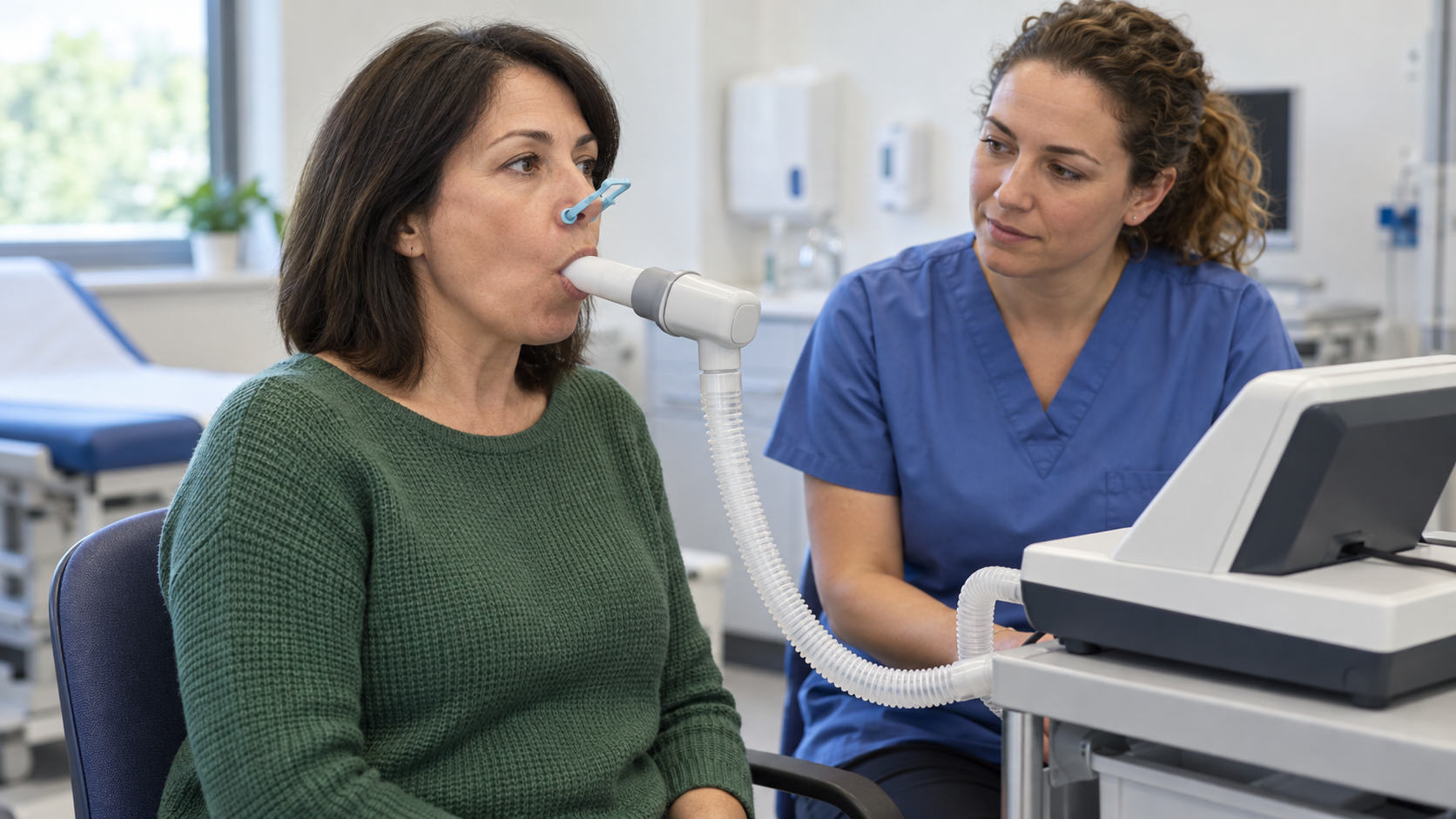
During the test, a trained professional explains the maneuver and checks technique. The person usually takes a deep breath, seals their lips around the mouthpiece, and blows out forcefully for as long as instructed. A nose clip may help keep air from escaping through the nose. Several attempts are commonly needed. The aim is a reliable recording that reflects breathing ability, with coaching and appropriate rest between efforts.
Some assessments include a bronchodilator, a medicine that helps open the airways, followed by another set of measurements. Comparing the recordings gives clinicians additional information about how airflow responds. Results are interpreted alongside symptoms, history, and other findings. One reading does not identify every cause of breathlessness. A clinician may need other lung function tests or investigations when spirometry does not fully answer the clinical question.
Preparation and safety instructions matter. Tell the testing service about recent illness, surgery, heart problems, or other relevant conditions so it can decide whether the test should proceed. Follow its advice about food, smoking, activity, and inhalers. Do not independently stop prescribed medicines to prepare. Severe or sudden breathing difficulty needs urgent medical assessment rather than waiting for a routine spirometry appointment.
The recording describes both the amount of air exhaled and the speed of airflow. Clinicians compare measurements with reference values suited to factors such as age and height. A result should not be treated as a contest to produce the biggest number. Different measurements answer different questions, and their relationship can help characterize a breathing problem. Interpretation belongs with the clinical history and the quality of the recorded attempts.
Spirometry may be used to support diagnosis, monitor an established respiratory condition, or evaluate breathing before some procedures. Its purpose influences how the findings are used. A test performed to investigate a new symptom is different from a repeat measurement during ongoing care. Ask what question the clinician wants the test to answer and how the result will influence the next step. That context is more useful than a number alone.
A deep starting breath, a firm mouthpiece seal, and a strong sustained exhalation all affect the recording. Coughing, an incomplete breath, or stopping early can make an attempt harder to interpret. The professional can explain and repeat the maneuver when needed. Repetition is part of obtaining useful information, not necessarily evidence that the person has failed. Tell the operator if instructions are unclear or the effort causes discomfort.
The test can make some people feel briefly lightheaded because of the forceful breathing involved. Staff can pause and reassess how the person feels. Existing health circumstances may make postponement or a different approach appropriate. Sharing relevant information before starting helps the service assess this. A recently ill person should not assume that powering through will give a better result; ask the testing team about timing and safety.
Preparation instructions differ with the reason for testing and the medicines involved. A service may ask someone to avoid particular activities or to withhold an inhaler for a specified period. That should be an explicit instruction from the team, not a guess based on another person’s appointment. Bring information about regular medicines and explain any changes. Comfortable clothing that permits an unrestricted deep breath may make the maneuver easier.
A clinician explains what the measurements suggest and whether further testing is needed. Other lung tests can examine features that spirometry does not fully measure, so an additional appointment is not automatically a contradiction. Persisting symptoms deserve attention even when one result appears reassuring. Ask about follow-up, any treatment changes, and when to seek help if breathing worsens. The recording becomes useful when it informs an understandable plan.
Explore more "Explainers"
Discover additional explainers across politics, science, business, technology, and other fields. Each explainer breaks down a complex idea into clear, everyday language—helping you better understand how major concepts, systems, and debates shape the world around us.