

Tendinitis Explainer
Tendons connect muscles to bones and help transmit the force that moves a joint. Tendinitis, also spelled tendonitis, refers to inflammation or irritation involving a tendon. Pain may occur around the shoulder, elbow, knee, ankle, or another affected area. Repeated movements and changes in activity can contribute. Tendon pain is not a diagnosis based on location alone, because joints and other nearby tissues can cause similar discomfort.
Symptoms can include pain with movement, stiffness, swelling, and difficulty using the affected area. A tendon may become irritated after repeated stress or a rapid increase in training. The term tendinopathy is often used for ongoing tendon problems, particularly when changes in tendon tissue rather than inflammation alone are involved. This distinction helps explain why persistent pain is not always solved by simply treating inflammation or waiting a few days.
Assessment looks at symptoms, activity, and examination findings. Some people need imaging, but a scan is not automatically necessary for every tendon problem. Treatment commonly involves changing the activities that aggravate symptoms, appropriate pain relief, and rehabilitation suited to the tendon involved. A program for one location should not be assumed to suit every other location. The aim is to restore useful function while allowing an appropriate progression of activity.
Sudden severe pain, a popping sensation, or major loss of function can indicate a tendon tear rather than an ordinary gradual overuse problem. Seek prompt medical assessment if a rupture is suspected or pain is severe. Persistent symptoms also deserve review. Do not use pain relief simply to push through worsening exercise. A clear diagnosis and an individualized recovery plan are more useful than treating all discomfort as a minor strain.
An overuse problem can develop when activity places repeated demands on tissue without enough recovery. A sudden increase in the duration, intensity, or frequency of exercise may contribute. Repetitive tasks at work or during a hobby can matter too. Reviewing what changed before pain started can help identify a manageable adjustment. The issue is not limited to competitive athletes; ordinary routines can create repeated stresses that become difficult to tolerate.
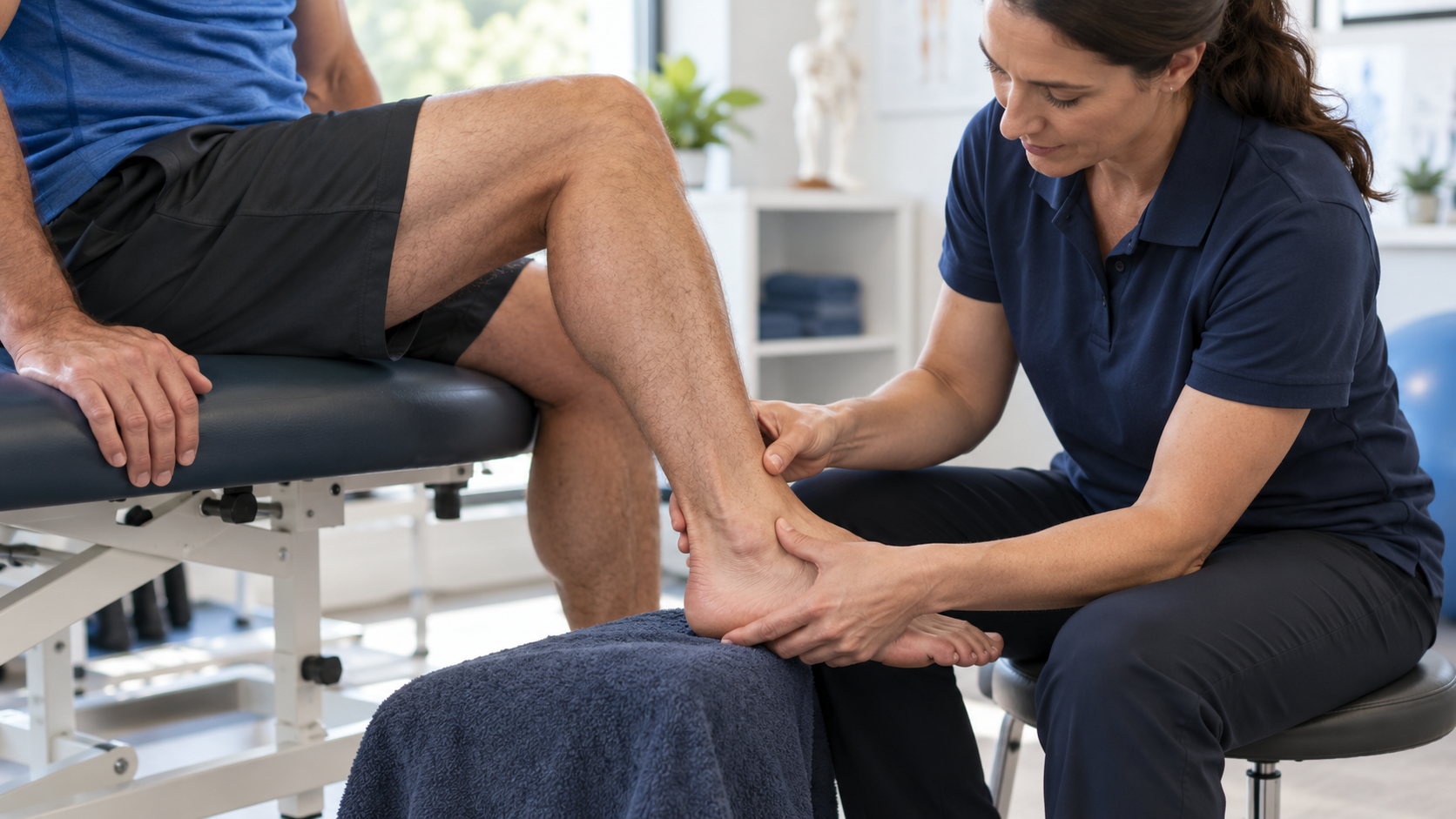
Tendon-related pain can feel different depending on its location and course. Achilles problems may involve stiffness on waking and discomfort around the back of the heel or lower leg. Other tendons are stressed by gripping, lifting, throwing, or repeated jumping. Tell the clinician which actions bring symptoms on and what happens afterward. This description is more helpful than assuming every painful movement means the same type or degree of tissue damage.
Short-term changes can reduce an irritating load while symptoms are assessed. For a mild recent injury, advice may include brief rest, a wrapped cold pack, or suitable support. Do not apply ice directly to skin or make a support excessively tight. Ask a pharmacist about appropriate pain relief. These measures address symptoms, but continuing or severe problems may need a different plan, including physiotherapy or specialist review.
Rehabilitation may include exercises to improve strength and function, selected for the particular tendon and stage of recovery. Technique matters. For example, some Achilles exercise approaches used for one location of the problem are unsuitable for another. Avoid copying an intensive program simply because it helped another person. A physiotherapist can explain the intended movement, how to progress it, and what response should trigger adjustment or further clinical assessment.
Recovery time varies. A mild recent injury may improve relatively quickly, while a persistent tendon problem can take considerably longer. Prolonged complete inactivity is not automatically the best answer for ongoing tendinopathy; discuss an appropriate return to movement with the care team. At the same time, reducing an aggravating activity is different from repeatedly testing it at full intensity. A gradual plan should consider both symptoms and the demands of daily life.
Preventive steps include sensible progression of activity, appropriate equipment, preparation for unfamiliar exercise, and breaks from repetitive tasks. These measures reduce avoidable strain but cannot guarantee that tendon problems never occur. Reassess a plan if pain worsens, movement remains limited, or recovery stalls. A sudden pop with severe pain or inability to use the limb needs urgent attention. Tendon care should support a sustainable return to function rather than a rushed deadline.
Explore more "Explainers"
Discover additional explainers across politics, science, business, technology, and other fields. Each explainer breaks down a complex idea into clear, everyday language—helping you better understand how major concepts, systems, and debates shape the world around us.