

Diabetic Retinopathy Explainer
Diabetic retinopathy affects blood vessels in the retina, the light-sensitive tissue at the back of the eye. Over time, diabetes can damage these small vessels, allowing leakage, bleeding or abnormal vessel growth. The condition can threaten vision, but early changes may cause no noticeable symptoms. Seeing clearly is therefore not a reliable way to decide whether the retina is healthy. Regular eye assessment is an important part of diabetes care, alongside treatment of blood glucose and other health risks.
As the condition progresses, symptoms may include blurred vision or dark floating spots and streaks. Fluid leaking into the macula, the central part of the retina used for detailed vision, can cause diabetic macular oedema. Advanced disease can also produce bleeding or scar tissue. These processes have different effects and may need different treatment. Report visual changes rather than deciding that a symptom must be harmless because diabetes has not previously caused an eye problem.
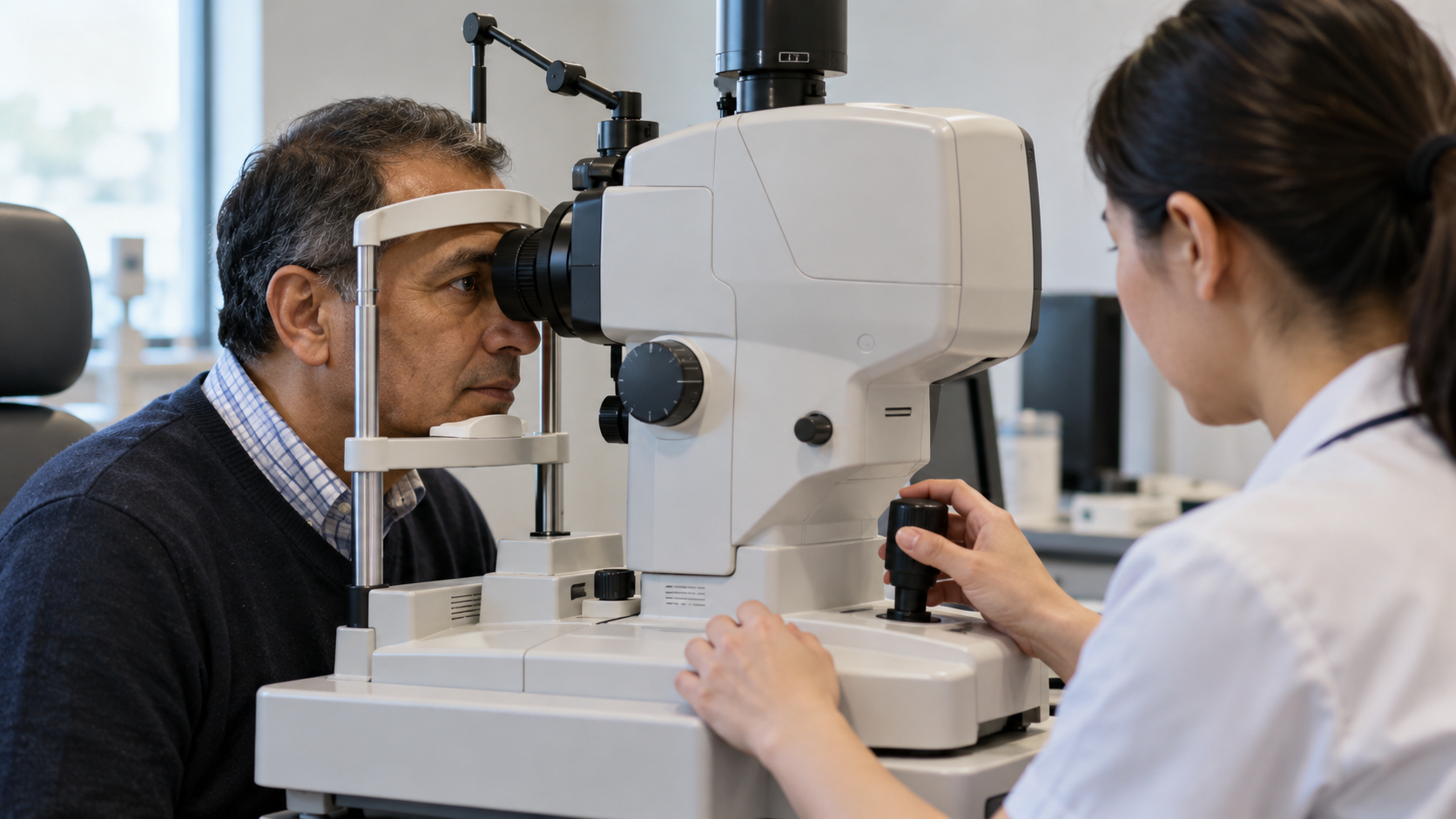
Eye professionals can examine the retina during a dilated eye examination and may use retinal photographs or additional tests when needed. The recommended schedule depends on diabetes type, previous findings and individual circumstances. Follow the care team’s plan even when there are no symptoms. Screening for retinal changes and a broader eye examination serve related purposes, but diabetes also increases the risk of other eye conditions. Ask which checks are needed rather than assuming one photograph covers every possible problem.
Early disease may need careful monitoring and attention to diabetes management, while more advanced changes can require injections, laser treatment or surgery. The objective is to protect vision and control the process causing damage. Some treatments can improve vision in particular circumstances, but they cannot guarantee reversal of all established damage. The specialist should explain what has been found, the recommended treatment, its likely benefit and the follow-up required. Continuing visits are important even after symptoms improve.
Managing blood glucose, blood pressure and cholesterol can reduce the risk of diabetic eye disease or slow its progression. Smoking cessation also supports health. Goals should be set with the care team, taking account of the person's circumstances and treatments. Eye appointments remain necessary because good intentions or a recent improvement in glucose do not establish that the retina has no existing changes.
The longer someone has diabetes, the greater the likelihood of retinal problems, although individual outcomes vary. Pregnancy in someone with pre-existing diabetes can require additional eye monitoring. Discuss plans or a current pregnancy with the diabetes and eye teams. The appropriate examination schedule is a clinical decision, and routine intervals should not replace a more frequent plan when findings or circumstances call for it.
Anti-VEGF medicines block a signal that can promote abnormal blood-vessel growth and leakage. They are given by an eye professional, often as a series of injections with later timing guided by response. Numbing and cleaning are part of the procedure. Ask how many visits are anticipated and how improvement will be assessed. A single injection should not be assumed to finish treatment permanently.
Steroid treatment may be used for selected swelling or inflammation problems, while laser or surgery can address other changes. These options have different benefits and risks. Steroids can increase the risk of cataracts or glaucoma, making monitoring important. The specialist chooses treatment according to the affected tissue and severity, rather than treating every person with diabetic retinopathy by the same method.
Seek urgent eye care for sudden worsening of vision, new flashes, many new floaters or a curtain-like shadow. These can signal a serious problem such as retinal detachment and should not wait for the next routine appointment. Symptoms do not identify the diagnosis on their own. Prompt examination is useful both when retinopathy is already known and when a person has never had retinal treatment.
After an eye injection, contact the treating team promptly if pain or vision problems are getting worse, because infection needs urgent attention. Follow the specific aftercare instructions and keep the planned reviews. If lasting vision loss affects everyday activities, ask about low-vision support and rehabilitation. Medical treatment and practical assistance can work together to help preserve function and make daily life more manageable.
Explore more "Explainers"
Discover additional explainers across politics, science, business, technology, and other fields. Each explainer breaks down a complex idea into clear, everyday language—helping you better understand how major concepts, systems, and debates shape the world around us.