

Healthcare-Associated Infections Explainer
Healthcare-associated infections, often shortened to HAIs, are infections that people acquire while receiving care or soon afterward. They can occur in hospitals, outpatient clinics, surgery centers, dialysis units, and long-term-care facilities. The term does not automatically mean that a particular worker or facility was careless. It describes an infection connected with health care and creates a common framework for surveillance, investigation, and prevention. Some infections become apparent only after a patient has gone home.
Care can create routes for microbes that would not otherwise be available. Surgery crosses the skin barrier; urinary catheters, central lines, and ventilators can provide pathways into the body; antibiotics can disrupt normal microbial communities and select for resistant organisms. Germs may come from another patient or worker, contaminated equipment or surfaces, or the patient’s own microbiome. Common tracked categories include surgical-site infections, central-line bloodstream infections, catheter-associated urinary tract infections, and ventilator-associated pneumonia.
Determining whether an infection is health care-associated requires standardized surveillance definitions. A positive culture alone is not enough, because colonization means a microbe is present without causing disease, and an infection may have been developing before admission. Programs such as CDC’s National Healthcare Safety Network use consistent time windows, clinical criteria, and laboratory findings so facilities can compare patterns and measure change. Those definitions are designed for surveillance and may not answer every question about the exact moment or source of transmission.
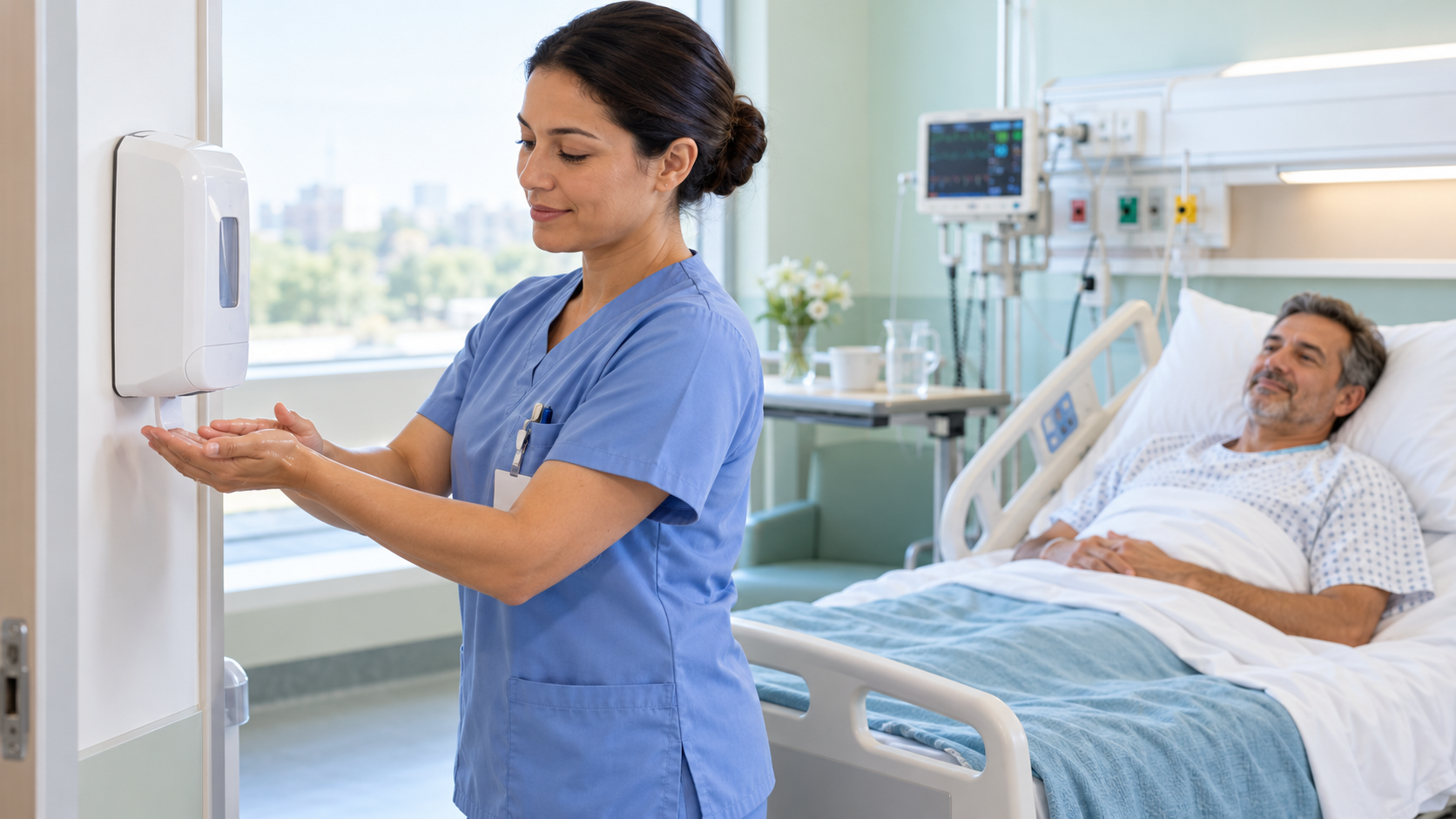
Prevention works as a bundle rather than a single gesture. Core practices include hand hygiene, appropriate protective equipment, safe injection and medication handling, cleaning and disinfection, respiratory hygiene, sterilization of reusable devices, and prompt removal of invasive devices that are no longer needed. Vaccination, antimicrobial stewardship, training, adequate staffing, and access to water and sanitation also matter. Zero risk is not realistic, but many HAIs are preventable. Tracking them turns scattered events into information that can reveal unsafe processes and guide improvement.
Medical devices can bypass normal defenses. A catheter enters the urinary tract, a central line reaches the bloodstream, and a ventilator supports the airway. The longer an invasive device remains, the more opportunities microbes may have to travel along it or contaminate connections.
Not every HAI is spread from one patient to another. A person's own skin or intestinal microbes can enter a surgical wound or device site. This is why prevention combines hand hygiene and environmental cleaning with sterile technique, skin preparation, and careful device management.
Surveillance definitions use consistent rules to count events across facilities and time. They help identify trends but do not by themselves prove exactly where a germ came from or whether an individual infection was avoidable. Clinical diagnosis and public reporting may use different criteria for different purposes.
Reliable comparison also requires attention to patient mix and exposure. A unit caring for very ill patients with many invasive devices faces different baseline risks from a low-acuity clinic. Good measurement adjusts interpretation without treating preventable harm as inevitable.
Hand hygiene is essential, but prevention also depends on supplies, training, staffing, cleaning, equipment maintenance, and protocols that make the safe action easy. Teams use checklists and bundles because several small defenses together are more reliable than one isolated rule.
Patients and caregivers can ask why a catheter or line is still needed and remind anyone who touches a device to clean their hands. That participation supports professional infection-control work; it does not transfer responsibility for safe care from the facility to the patient.
Explore more "Explainers"
Discover additional explainers across politics, science, business, technology, and other fields. Each explainer breaks down a complex idea into clear, everyday language—helping you better understand how major concepts, systems, and debates shape the world around us.