

One Health Explainer
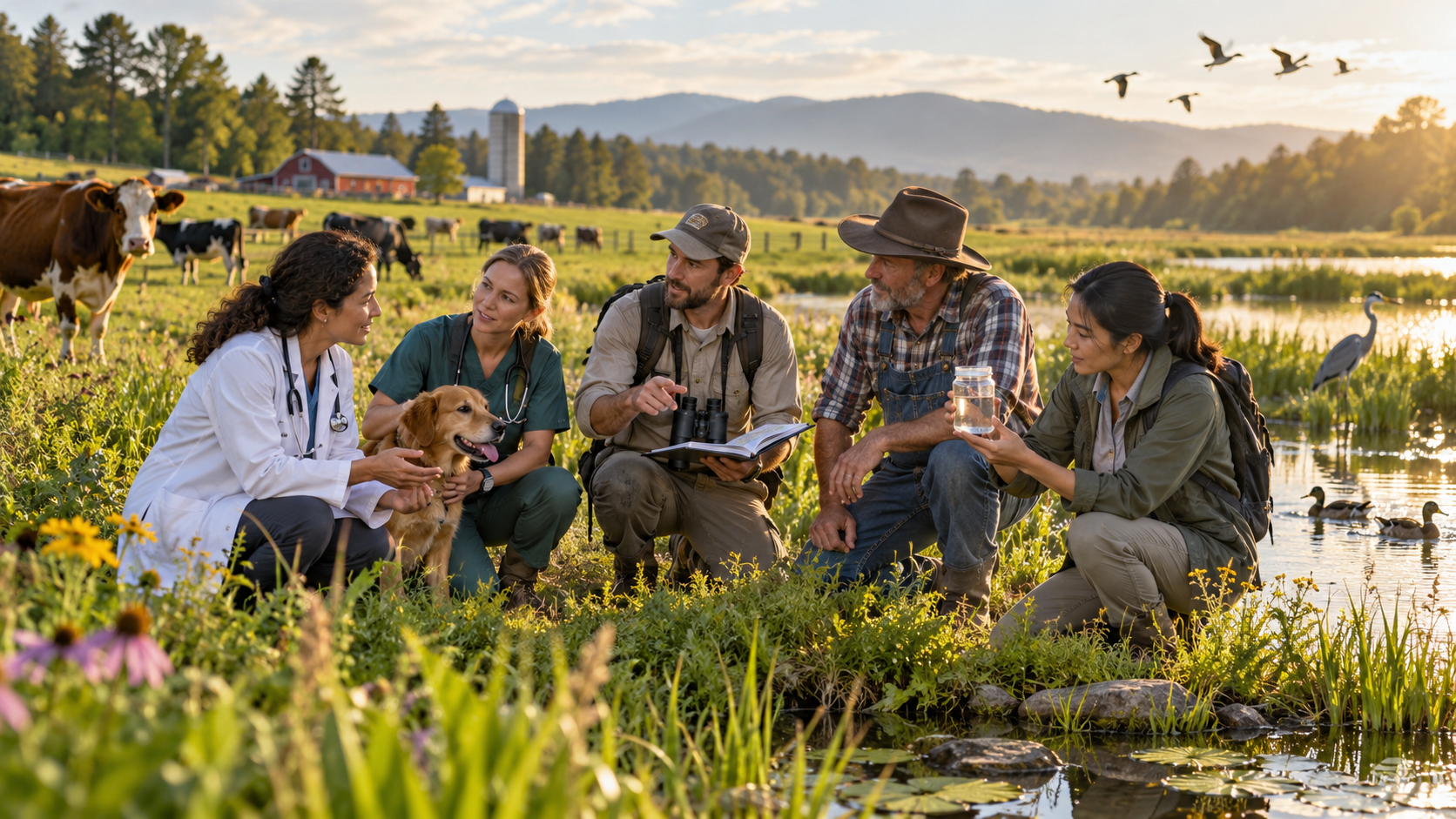
One Health is a collaborative approach that recognizes the health of people, animals, plants, and the environment as closely connected. It brings together public health professionals, clinicians, veterinarians, ecologists, laboratorians, agriculture experts, and communities to address problems that cross traditional boundaries.
The approach is especially important for zoonotic infections, food safety, antimicrobial resistance, vector-borne disease, and environmental hazards. Changes in land use, climate, trade, travel, farming, and wildlife contact can alter how pathogens and pollutants move among species and places.
One Health does not mean that every problem has the same cause or that human and animal interests are always identical. It is a way to share surveillance, expertise, and prevention planning so that one sector does not miss consequences in another. Joint investigations can reveal sources and transmission routes that isolated teams might overlook.
In practice, One Health may involve coordinated laboratory networks, vaccination programs, safe food systems, antimicrobial stewardship, habitat management, or outbreak response. Success depends on sustained relationships, data sharing, clear responsibilities, and participation from affected communities. The goal is earlier detection and more durable prevention across the connected system.
People share environments with domestic animals, wildlife, crops, insects, water, and soil. Changes in one part of that system can alter risks elsewhere.
Food production, land use, climate, and movement of people and goods make those links increasingly important.
Partners can include physicians, veterinarians, public health agencies, environmental scientists, farmers, wildlife officials, laboratories, and community organizations.
The right team depends on the problem, and local knowledge can be as important as technical expertise.
Shared surveillance and communication can detect threats earlier, coordinate testing, and align prevention across human and animal populations.
Joint planning also helps anticipate unintended effects, such as how antimicrobial use or habitat change may shift risk.
Explore more "Explainers"
Discover additional explainers across politics, science, business, technology, and other fields. Each explainer breaks down a complex idea into clear, everyday language—helping you better understand how major concepts, systems, and debates shape the world around us.