

Airborne Infection Isolation Rooms Explainer
An airborne infection isolation room, or AIIR, is a single-patient room designed to reduce the movement of infectious airborne particles into surrounding areas. It is often called a negative-pressure room because air should flow from the corridor into the room rather than outward when the door is closed.
Air is removed at a controlled rate and exhausted outdoors or appropriately filtered before recirculation. The room’s pressure relationship, air-change rate, door position, exhaust system, and leakage paths work together. Respiratory protection and other infection-control measures remain necessary; the room is one engineering control, not a complete program.
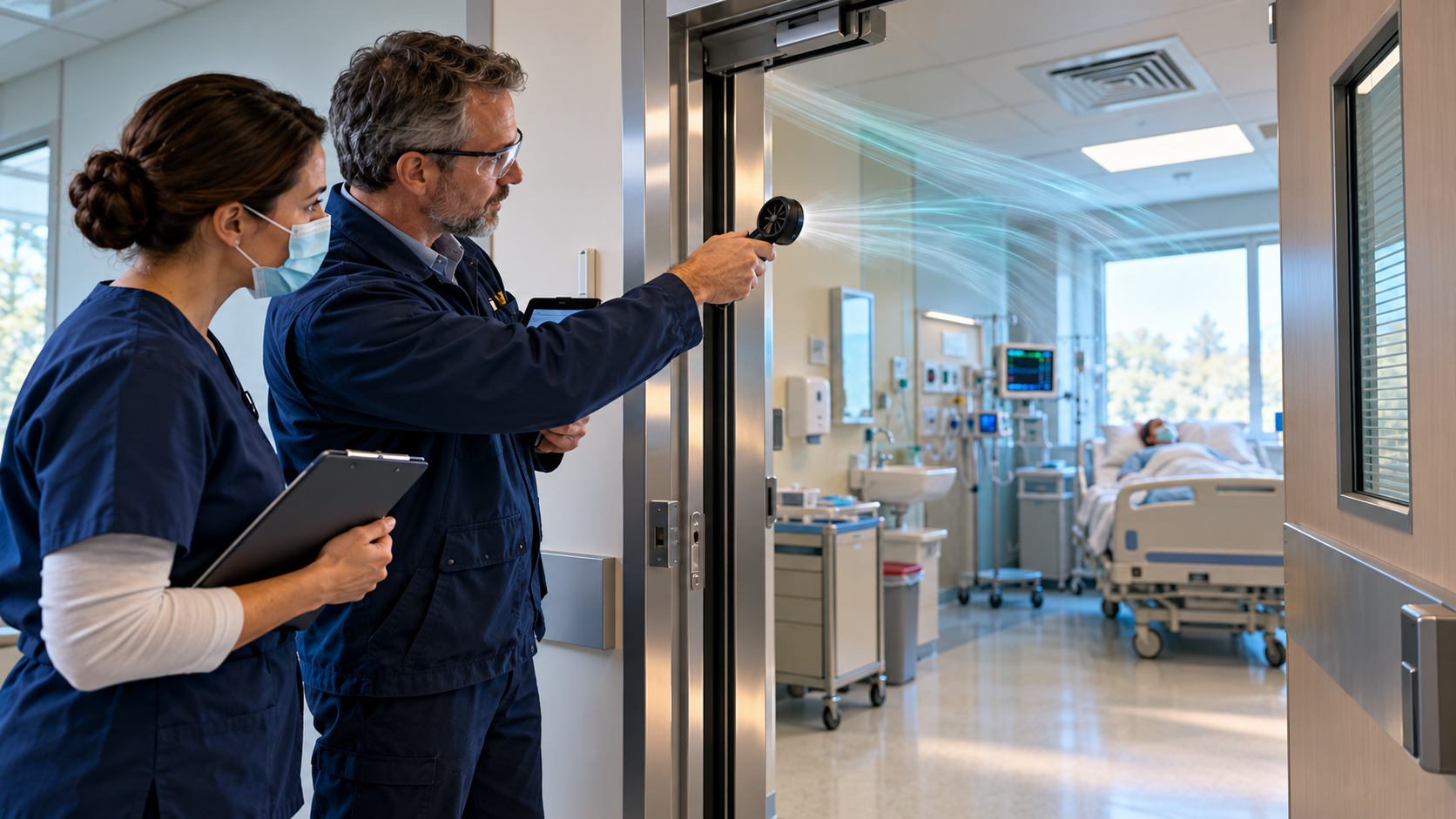
A displayed pressure value is only one signal. Doors left open, blocked grilles, construction changes, fan failures, or poor balancing can disrupt performance. Smoke visualization, pressure monitoring, airflow measurements, alarms, and maintenance schedules help verify that air is moving as intended.
AIIR placement should follow current infection-specific guidance and local assessment. Keeping someone in isolation longer than necessary can create care and communication burdens, while using an unverified room can provide false reassurance. Facilities need contingency plans for limited room capacity, patient transport, and equipment failure.
Air should move into the room from adjacent spaces when the door is closed.
That inward flow helps contain airborne particles generated inside the room.
Facilities use monitors, alarms, visual checks, airflow measurements, and preventive maintenance.
A sign on the door does not prove that the ventilation system is functioning correctly.
Room engineering works with respiratory protection, patient placement, source control, and safe procedures.
No single layer should be treated as a substitute for the others.
Explore more "Explainers"
Discover additional explainers across politics, science, business, technology, and other fields. Each explainer breaks down a complex idea into clear, everyday language—helping you better understand how major concepts, systems, and debates shape the world around us.