

Community Health Needs Assessment Explainer
A community health needs assessment describes a community’s health, the factors that shape it, and the priorities residents and organizations want to address. Public-health agencies and nonprofit hospitals use related assessment processes for planning, accreditation, accountability, and allocation of resources.
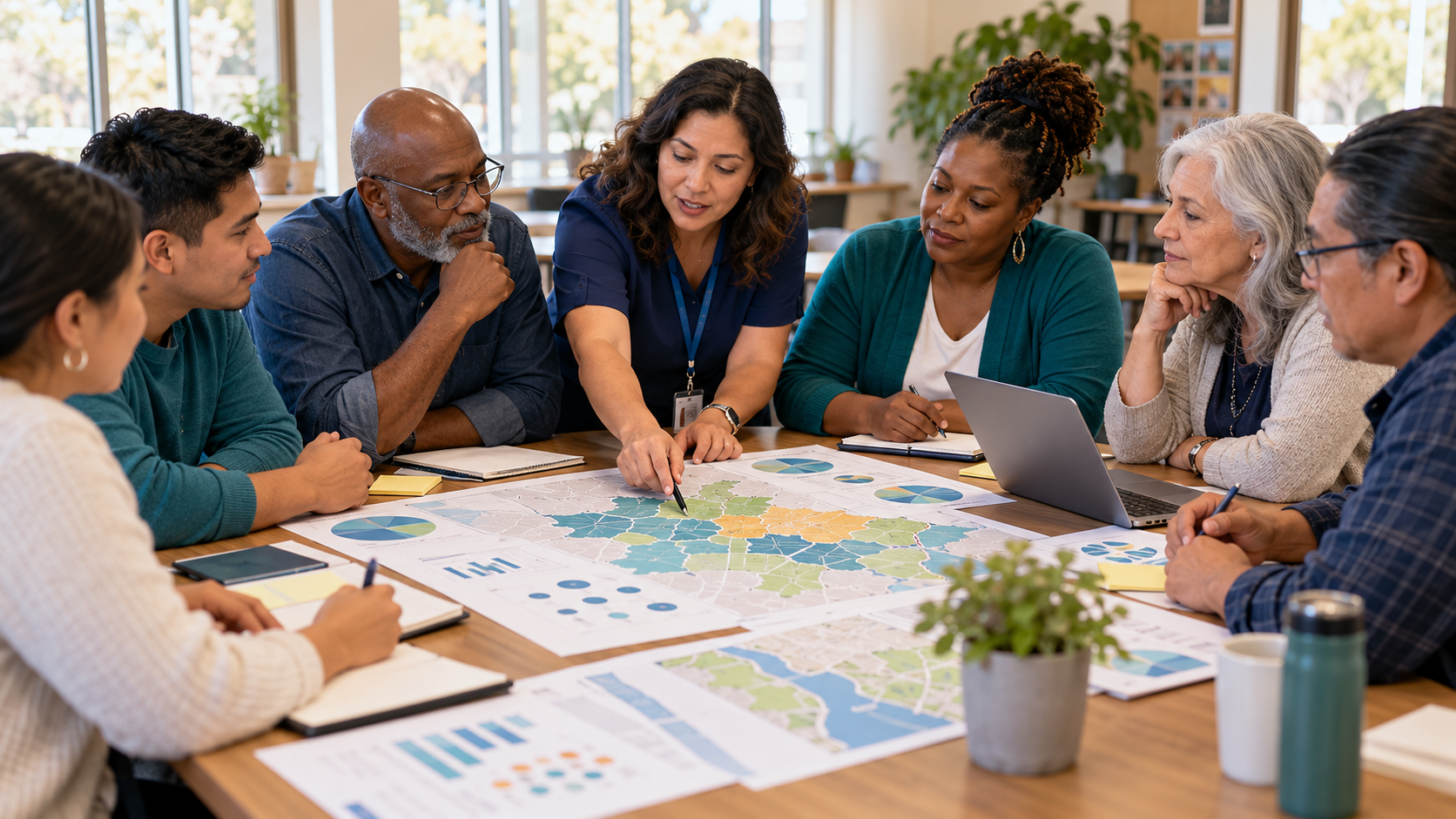
Assessments combine secondary data such as mortality, disease, environment, access, and demographics with primary information from surveys, interviews, listening sessions, and observation. Partners define the community, examine differences within it, identify assets as well as needs, and select priorities using explicit criteria.
The loudest voice or largest rate should not automatically become the top priority. Data can lag, small groups may disappear in averages, and people who face barriers may be underrepresented in engagement. Severity, trend, inequity, feasibility, community concern, available assets, and preventability all influence prioritization.
An assessment should lead to a shared improvement plan with responsibilities, resources, timelines, and measures. Publishing a report without follow-through can weaken trust. Repeating the process over time allows communities to monitor progress, revisit priorities, and explain why strategies changed. Public reporting should show both progress and remaining gaps so residents can hold participating organizations accountable.
Health indicators show patterns, while residents explain barriers, priorities, and local context.
Neither source is complete alone, so assessments intentionally combine them.
Teams can consider size, seriousness, inequity, trend, preventability, feasibility, and community concern.
Criteria should be stated before ranking so the process is understandable.
A useful process links each priority to strategies, partners, resources, timelines, and measures.
Progress reporting closes the loop with the community and supports course correction.
Explore more "Explainers"
Discover additional explainers across politics, science, business, technology, and other fields. Each explainer breaks down a complex idea into clear, everyday language—helping you better understand how major concepts, systems, and debates shape the world around us.