

Telehealth Explainer
Telehealth is the delivery of health-related services and information when the patient and professional are in different locations. It can include a live video or phone visit, secure messages exchanged at different times, review of photos or questionnaires, and remote monitoring data sent from home. Telemedicine usually refers more narrowly to remote clinical care, while telehealth can also include education and administrative services.
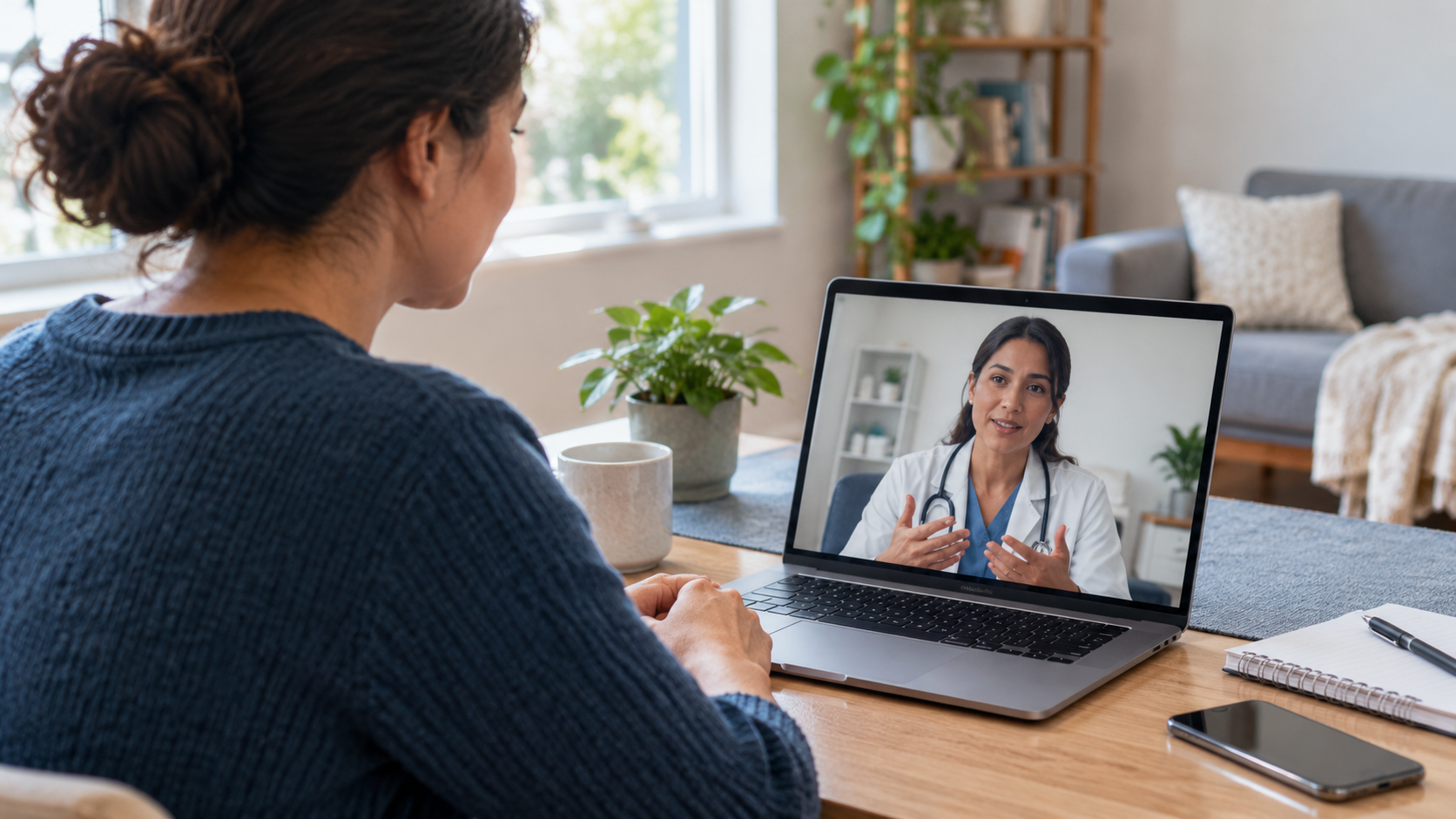
A telehealth visit follows many of the same clinical steps as an in-person encounter: confirming identity and location, reviewing symptoms and history, assessing available observations, explaining options, and planning follow-up. The clinician may ask the patient to position a camera, use a home device, or send information in advance. The technology, consent process, documentation, prescribing rules, coverage, and professional licensing requirements can vary by jurisdiction and service.
Remote care is convenient but not interchangeable with every office visit. A limited camera view cannot replace palpation, a complete physical examination, or on-site testing. Connection problems, privacy at home, language access, disability accommodations, and digital literacy affect quality. Clinicians need a plan for technical failure and for directing a patient to urgent or in-person care when the available information is insufficient.
Telehealth is strongest when the format fits the question. Follow-up conversations, medication reviews, behavioral health visits, and chronic-condition check-ins may work well remotely, while new severe symptoms or procedures often require direct examination. Patients can improve a visit by choosing a private, well-lit space, testing the connection, having medication lists and devices ready, and knowing how the clinician will reconnect if the call drops.
Care may happen by video, phone, secure message, uploaded information, or remote monitoring.
Some services are live, while others are reviewed later by the care team.
Remote observation can be useful, but it cannot reproduce every part of a physical examination or on-site test.
A clinician may recommend an in-person evaluation when the remote information is not enough.
Use a private, well-lit location and test the microphone, camera, and connection before the visit.
Keep medicines, home devices, questions, and a backup phone number within reach.
Explore more "Explainers"
Discover additional explainers across politics, science, business, technology, and other fields. Each explainer breaks down a complex idea into clear, everyday language—helping you better understand how major concepts, systems, and debates shape the world around us.