

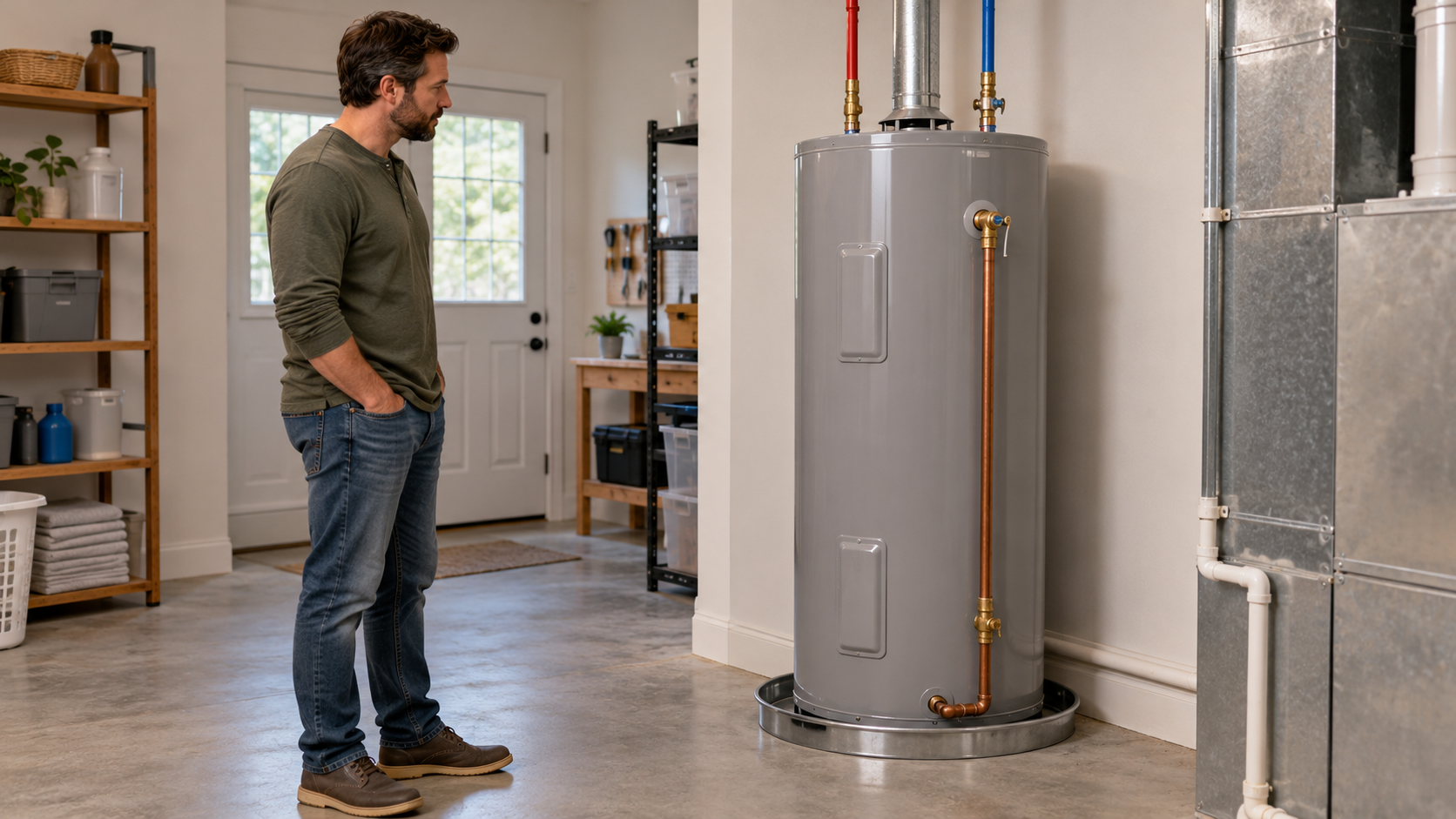
Household Water Heater Explainer
A household water heater raises the temperature of incoming cold water and sends it to fixtures through a separate hot-water line. In a conventional storage model, the plumbing supply fills an insulated tank while a gas burner or electric heating elements add energy. Hot water is drawn from near the top because heated water is less dense, and cold replacement water enters through a dip tube that directs it lower in the tank. A thermostat controls the heat source within a set range, reheating the stored supply as it cools or as use introduces colder water.
Gas storage heaters burn fuel in a combustion chamber and carry hot exhaust through a flue before venting it safely outdoors. Electric resistance models place sealed heating elements in the tank. Heat-pump water heaters use electricity to move heat from surrounding air into the stored water, similar to a refrigerator operating in reverse; they also cool and dehumidify the room. Every design has placement, ventilation, drainage, electrical, or fuel requirements. A model that is efficient in a suitable utility room may perform differently in a cramped, cold closet.
Tankless water heaters avoid a large stored supply. A flow sensor detects an opened hot-water tap, and a powerful burner or electric element heats water as it moves through a heat exchanger. The unit can provide a long sequence of hot water without emptying a tank, but it still has a maximum temperature rise at a given flow. Several simultaneous showers and appliances may exceed that capacity. There can also be a short wait while cool water already in the pipe travels out; tankless equipment does not remove distribution losses or create instant hot water at distant fixtures.
Temperature controls balance comfort, energy use, and scald risk. Higher storage temperatures increase standby loss and can injure skin quickly, while very low settings can create hygiene concerns under some conditions. Many homes use a moderate heater setting and, when needed, mixing valves that blend hot and cold water before delivery. The numbered mark on a control is not proof of the water temperature at every tap. A thermometer measurement and professional adjustment are safer than guessing, especially in homes with children, older adults, or people with limited sensation.
Safety components manage pressure and combustion hazards. Storage tanks have a temperature-and-pressure relief valve connected to an appropriate discharge pipe; that valve must never be capped. Gas units require sound venting and combustion air, and all units need correct electrical or fuel connections. Sediment can collect in a tank, reducing capacity or causing noise, while mineral scale can affect heating surfaces and valves. Maintenance recommendations vary by design, water chemistry, anode type, and manufacturer, so draining or servicing should follow the unit’s instructions and local code.
Selecting a heater is a demand problem as much as an efficiency comparison. Storage tanks are sized around capacity and recovery, tankless units around flow and temperature rise, and heat-pump models around space, air temperature, and condensate handling. Pipe insulation and efficient fixtures can reduce wasted heat and water regardless of heater type. The best system is one that safely meets the household’s peak demand without unnecessary standby loss, fits the available utilities and space, and can be maintained. Hot water feels simple at the tap because several controls, protections, and energy transfers operate out of sight.
A water heater transfers energy to incoming cold water, stores it or heats it on demand, and supplies fixtures through hot-water piping. Key terms include storage tank, dip tube, heating element, burner, heat exchanger, recovery rate, flow rate, thermostat, and relief valve.
It does not run out of stored water, but its heat exchanger has a maximum flow for a required temperature rise. Simultaneous fixtures can demand more hot water than the unit can heat at once.
Not necessarily. Controls cycle within a range, plumbing loses heat, and mixing changes delivery temperature. Measure carefully and use qualified help for adjustments, mixing valves, combustion, wiring, or relief-valve concerns.
Explore more "Explainers"
Discover additional explainers across politics, science, business, technology, and other fields. Each explainer breaks down a complex idea into clear, everyday language—helping you better understand how major concepts, systems, and debates shape the world around us.