

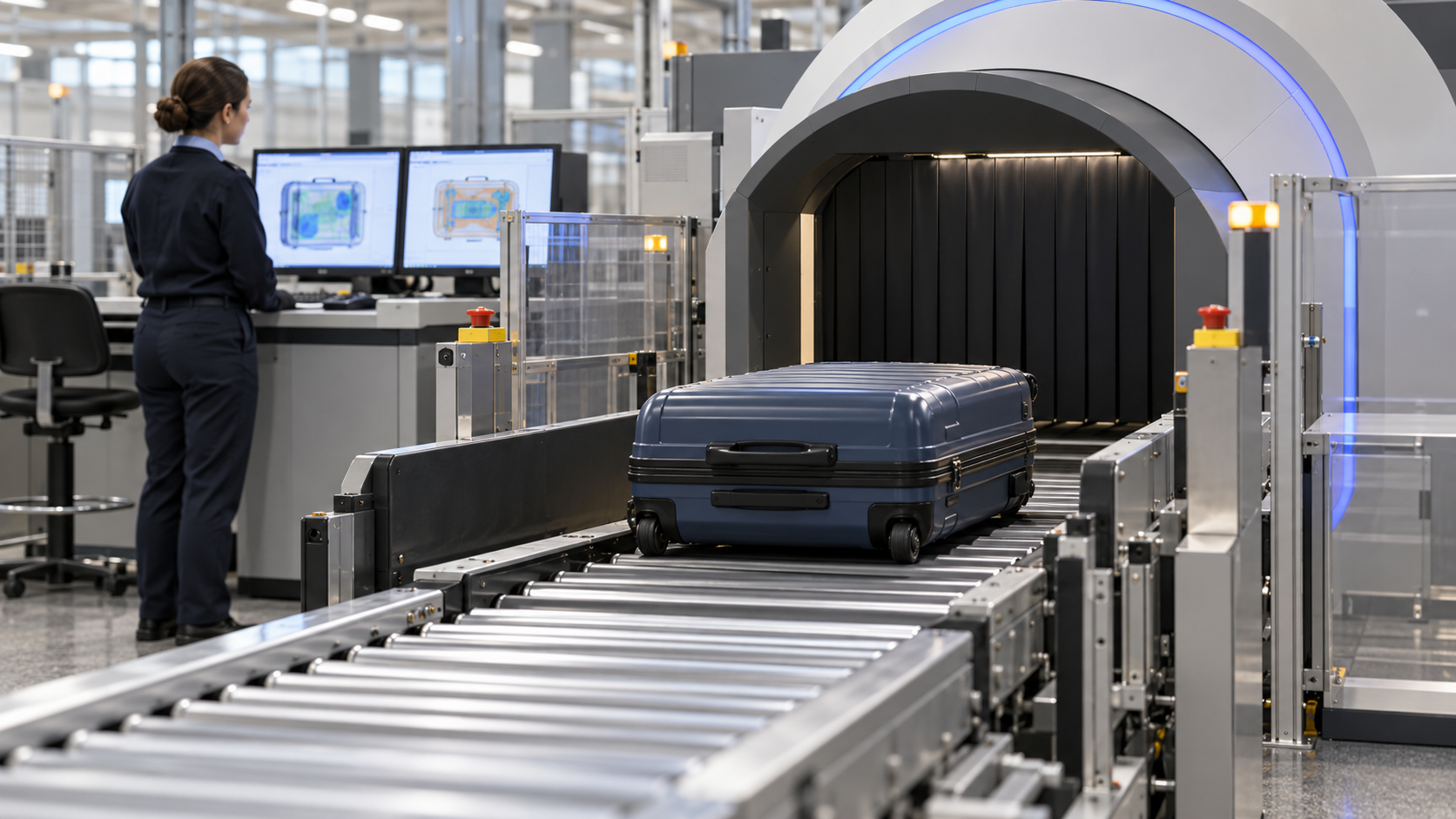
Checked Baggage Screening Explainer
Checked baggage screening begins after an airline accepts a bag and attaches a routing tag linked to the passenger’s itinerary. Conveyor systems move the bag into a controlled area, where security equipment examines its contents before it can be loaded on an aircraft. Many large airports use computed-tomography or other explosives-detection systems that create detailed images and apply automated detection algorithms. The purpose is not simply to view every object like a photograph; it is to identify combinations of material, density, shape, or other characteristics that require closer review.
A bag that produces no alarm continues through the handling system toward sorting. A bag with an unresolved alarm moves to another level. Security officers can examine images from different angles, use additional detection methods, or open the bag for a physical search under controlled procedures. Screening equipment and processes vary by airport, bag type, and security program, so travelers do not see a single universal sequence. The layered design allows routine bags to keep moving while staff concentrate on items that need resolution.
After security clearance, baggage-handling systems route the bag to the correct flight using the tag and conveyor controls. Automated scanners read the tag at decision points, but unreadable tags, tight connections, equipment disruptions, and manual transfers can require staff intervention. Bags are grouped for an aircraft and transported to the ramp, where weight, balance, destination, and connection plans affect loading. Screening clears a bag for security purposes; it does not guarantee the bag will make a connection or protect fragile contents from ordinary handling forces.
Packing choices can reduce complications. Prohibited items for checked baggage differ from carry-on rules, and some dangerous goods are forbidden in either location. Spare lithium batteries and power banks generally belong in carry-on baggage rather than checked luggage, subject to current limits. Firearms, tools, liquids, aerosols, food, and medical items each have specific rules. Travelers should consult the official list and airline policy before packing instead of assuming that anything rejected at the checkpoint can go into the hold.
Locks do not prevent a lawful inspection. If officers need to open a locked bag, compatible security locks may be opened with controlled tools; other locks may have to be cut. A notice is commonly placed inside after a physical inspection. Valuables, essential medicine, travel documents, keys, and irreplaceable items are safer in the traveler’s permitted carry-on because checked baggage can be delayed. Contact information can be placed inside as well as outside, without displaying more personal data than necessary.
The passenger usually interacts only with the airline counter or bag-drop system, but the suitcase passes through coordinated airline, airport, and security workflows. Screening is designed to find threats, while routing is designed to deliver the cleared bag to the correct aircraft; neither process replaces the other. Keeping the tag receipt, removing old routing stickers, using a durable distinctive bag, and allowing connection time improve traceability. The hidden trip from counter to cargo hold is a sequence of identification, screening, alarm resolution, sorting, and loading rather than one quick scan.
Checked bags move through explosives-detection imaging, automated analysis, and officer resolution before cleared bags enter airline sorting and loading. Key terms include bag tag, conveyor, computed tomography, alarm, resolution, physical inspection, sortation, and chain of custody.
Officers review the image and may use another detection method or open the bag under controlled procedures. The bag proceeds only after the alarm is resolved according to the security program.
No. Security clearance and airline routing are separate workflows. Tags, connections, equipment, and handling affect delivery, so keep essentials and irreplaceable items in an allowed carry-on.
Explore more "Explainers"
Discover additional explainers across politics, science, business, technology, and other fields. Each explainer breaks down a complex idea into clear, everyday language—helping you better understand how major concepts, systems, and debates shape the world around us.