

Silicone Caulk Curing Explainer
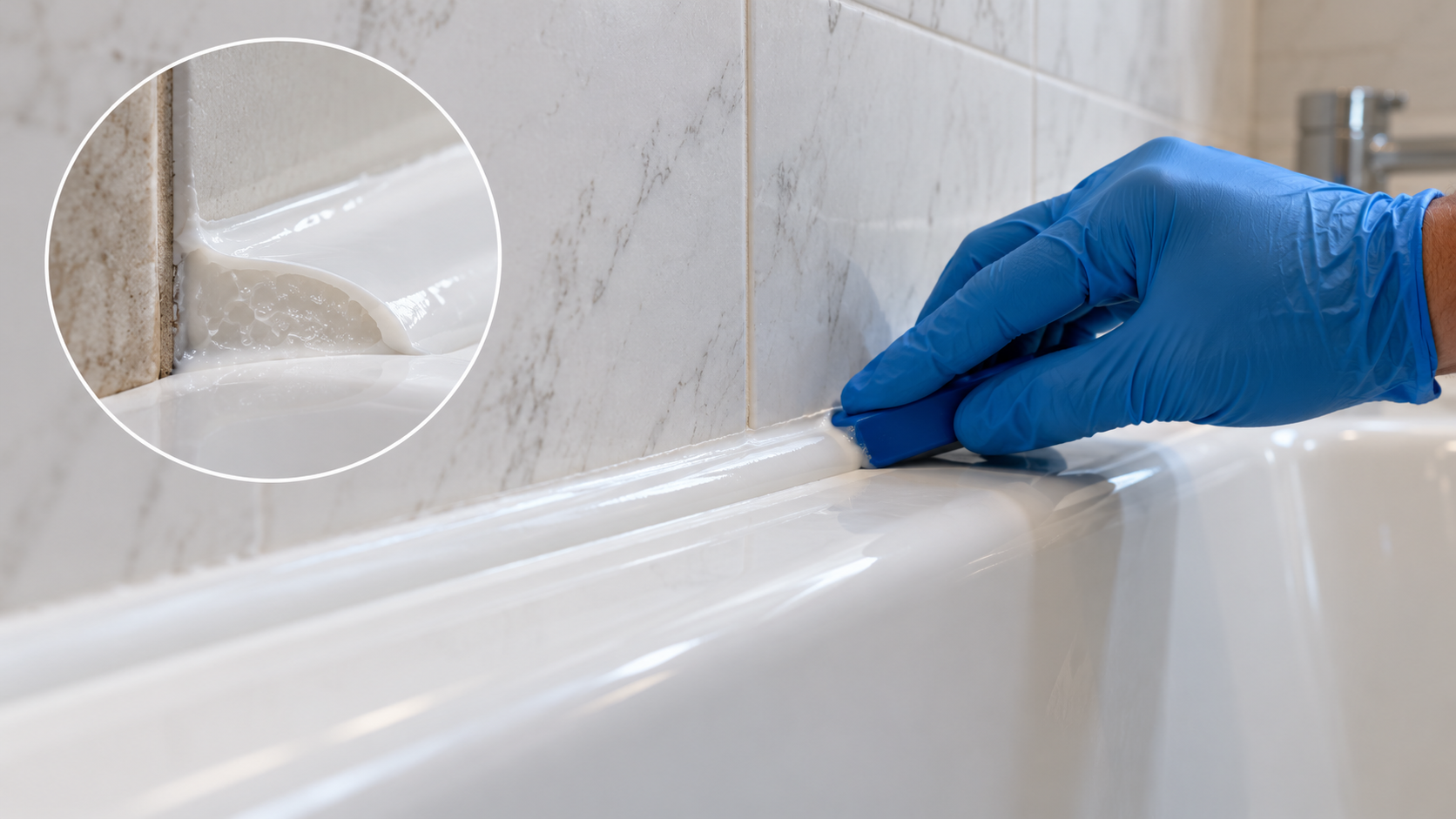
One-part silicone caulk begins as a thick paste that can be pushed into a joint and shaped. It does not harden simply because a solvent evaporates. Instead, moisture from the surrounding air reacts with special groups on the silicone polymer and with a cross-linking ingredient. That reaction joins long polymer chains into a three-dimensional network. The material changes from a workable paste into an elastic rubber that can adhere to surfaces while accommodating small joint movement.
Cure starts at the exposed surface because that is where water vapor arrives first. A thin skin forms, then moisture must diffuse through the newly cured layer to reach material deeper in the bead. By-products from the reaction also move outward. This outside-in process is why a bead can feel dry on top while remaining soft inside. Depth, temperature, humidity, and formulation determine full cure time; a thick joint cannot be judged only by its surface.
Acetoxy silicones release acetic-acid vapor and often smell like vinegar while curing. Neutral-cure products use different chemistry and release other by-products, making them more suitable for some metals, masonry, electronics, or odor-sensitive locations. Product labels specify compatible substrates and whether the sealant is intended for kitchens, bathrooms, glazing, exterior weathersealing, or structural work. “Silicone” describes a family, not one interchangeable product for every joint.
Clean, dry, sound surfaces are essential. Dust, soap film, oil, old sealant, and standing water prevent intimate contact. A correctly sized joint gives the rubber enough cross-section to stretch but exposes enough surface area to cure. Backer rod can control depth and prevent adhesion to the bottom of a deep gap, allowing the sealant to flex between two sides. Tooling before the skin forms presses material against the edges and produces a smooth profile.
More heat does not automatically solve a curing problem if it dries the air or exceeds the manufacturer’s range. Enclosed joints with little access to atmospheric moisture cure slowly, and material trapped between impermeable surfaces may remain uncured for a long time. Paint, water exposure, or heavy movement should wait for the stated cure, not just the tack-free time. Ventilation is important, and uncured sealant should be kept off skin and out of eyes according to the safety sheet.
A cured bead works because the cross-linked silicone network combines adhesion with flexibility. It resists ordinary water exposure and movement better than a brittle filler, yet it still depends on joint design and surface preparation. The practical sequence is chemical: moisture reaches the bead, reactive groups form links, a skin develops, and the cure front advances inward. Giving that process the required geometry, atmosphere, and time is what turns a neat-looking line into a durable seal.
Atmospheric moisture triggers cross-linking in one-part silicone, turning paste into flexible rubber from the exposed surface inward. Key terms include polymer, cross-link, moisture cure, skin time, cure depth, acetoxy, neutral cure, and backer rod.
The surface receives moisture first and skins over. Water vapor must then diffuse through that cured layer, so a thick bead takes longer at its center.
Acetoxy-cure silicone releases acetic acid as a reaction by-product. Neutral-cure formulations use different chemistry and have a different odor and compatibility profile.
Explore more "Explainers"
Discover additional explainers across politics, science, business, technology, and other fields. Each explainer breaks down a complex idea into clear, everyday language—helping you better understand how major concepts, systems, and debates shape the world around us.